
Reduced-Credit Applied Bachelor's Degrees

Trine University’s reduced-credit applied bachelor’s degrees offer a more focused path to earning your bachelor’s degree, with curriculum built specifically to prepare you for clear career goals. Whether you're looking to begin a career or meet the prerequisites for graduate or professional school, Trine's reduced-credit programs can help you save time and money while giving you the same degree and experience as our traditional programs.

How they compare:

Reduced-Credit Applied Bachelor's Degrees Traditional Bachelor's Degrees
Typically 90 to 95 total credit hours Minimum of 120 total credit hours
Emphasize courses and experiences connected to a specific professional or educational goal Greater flexibility to explore additional areas of interest
Fewer elective credit hours More elective credit hours
Less flexibility to add a minor, second major or coursework outside the primary field of study May provide more opportunities to add a minor, second major or coursework outside the primary field of study

Current reduced-credit programs

 
Student in front of building under construction

Bachelor of Applied Science in Construction Management

Trine’s Bachelor of Applied Science in construction management is a 95-credit program designed to prepare you for careers in the construction industry. This program may be a good fit if you want to pursue a career in construction management and prefer a focused path toward entering the workforce.
Explore the program
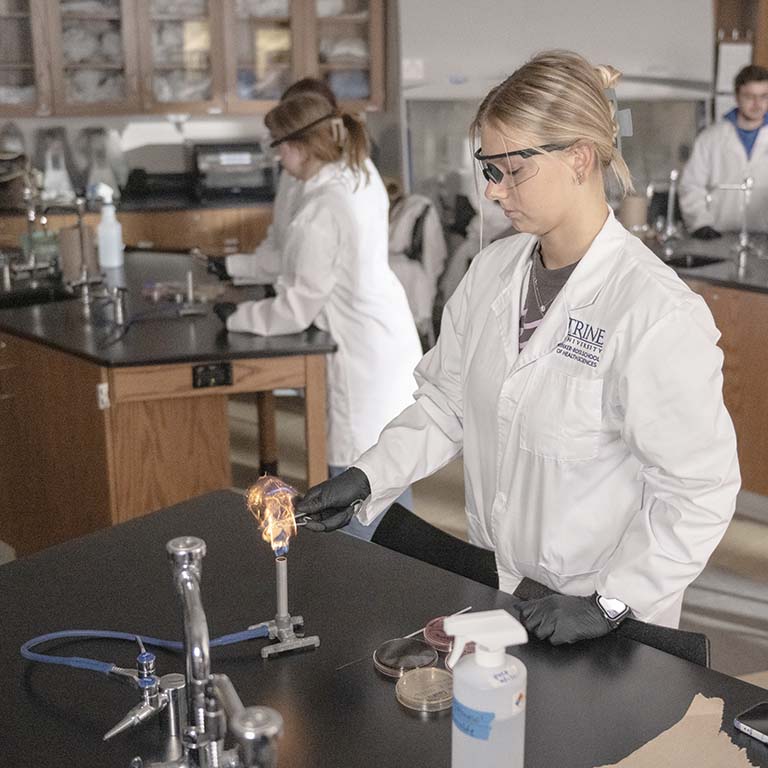
Students in chemistry lab

Bachelor of Applied Science in Pharmacology

Trine’s Bachelor of Applied Science in pharmacology is designed specifically for students who plan to continue to pharmacy school and earn a Doctor of Pharmacy degree. The curriculum includes the science coursework and typical undergraduate prerequisites required by Doctor of Pharmacy programs.
Explore the program

FAQs

“Applied” describes the focused purpose and structure of the degree. The curriculum is designed around the coursework and preparation you need for a clearly identified outcome.

For construction management, that outcome is preparation to enter the construction industry. For pharmacology, it is preparation to apply to a Doctor of Pharmacy program.

A reduced-credit applied bachelor’s degree may be a good option if you:

  • Have a clearly defined career or educational goal that aligns with one of Trine’s reduced-credit applied degree programs
  • Want to complete a bachelor’s degree in less time than a traditional bachelor's program
  • Are looking for a pathway that may reduce your overall educational time and costs
  • Prefer a focused curriculum with fewer elective requirements and a clear connection to your intended profession or next educational step

If you want additional flexibility to explore multiple interests, add a minor or second major or keep a wider range of career options open, you may find that a traditional bachelor's degree better fits your goals.

Because applied degrees require fewer total credit hours, you may be able to complete your degree in less time and, as a result, incur lower overall tuition costs.

Actual cost will depend on several factors, including:

  • The number of credits taken each semester
  • Tuition and fees in effect during enrollment
  • Housing, meals, books and other expenses
  • Scholarships and financial aid
  • Previously earned or transferred credits

You should work with Trine’s Office of Admission to compare the estimated cost of an applied program with other academic pathways.

The reduced number of required credit hours may allow you to graduate sooner than with a traditional 120-credit bachelor’s degree. The actual time to completion will depend on course availability, the number of credits taken each semester, transferred credits and successful progression through the required course sequence.
No. A reduced-credit applied bachelor's degree is a bachelor's degree, not an associate degree. Associate degrees typically require about 60 credit hours, reduced-credit applied bachelor's degrees typically require 90 to 95 credit hours and traditional bachelor's degrees generally require a minimum of 120 credit hours. If you complete a reduced-credit applied program, you will earn a bachelor's degree.

Because applied programs have a focused curriculum, fewer total credit hours and fewer elective credit hours, there is often less room to add a minor, second major or additional coursework outside the primary field of study.

If you are interested in a minor, second major or greater flexibility to explore other academic interests, you may find that a traditional bachelor's degree is a better fit.

Be sure to discuss your academic and career goals with an admission counselor to determine which pathway best aligns with your plans.

Yes, you can change majors after beginning an applied program. However, there is a possibility that some credits from the original degree program may not apply to the new program, depending on how closely aligned the two programs are and the specific requirements of the new major.

As with any student considering a change in major, changing programs may require additional coursework and could affect the time needed to complete a degree. If you are considering a change in major, meet with your academic advisor to review your options, understand how previously earned credits may apply and develop a plan for completing your new degree program.

Transfer policies vary by institution. The college or university you transfer to will determine which credits it accepts and how those credits apply to its degree requirements.

Many general education courses may be included in the Indiana Core Transfer Library (CTL), which identifies courses that are pre-approved for transfer among Indiana public colleges and universities and participating independent institutions.

The pharmacology program is structured to include the typical undergraduate prerequisites for Doctor of Pharmacy programs, but requirements vary by pharmacy school. Completing the applied bachelor’s degree does not guarantee admission to a Doctor of Pharmacy program.

Construction management graduates who wish to pursue graduate study should review the admission and credit-hour requirements of the specific graduate program.

Yes. Trine University is accredited by the Higher Learning Commission, and its reduced-credit applied bachelor’s degree programs have been approved through university and accreditation processes.

These programs lead to a bachelor’s degree from Trine University. The reduced number of credit hours reflects the focused design of the curriculum and does not change the level of the degree awarded.

No. Students applying to a reduced-credit applied bachelor’s degree follow Trine University’s undergraduate admission process and admission requirements.

Some programs may have additional academic expectations or progression requirements based on the specific field of study. An admission counselor can help you understand the requirements for the program you are considering.

Yes. Eligible students enrolled in Trine’s reduced-credit applied bachelor’s degree programs may qualify for federal, state and institutional financial aid, including scholarships and grants.

Financial aid eligibility varies by student. You should complete the FAFSA and work with Trine’s Financial Aid Office to understand your aid eligibility and estimated costs.

Students completing these programs earn a bachelor’s degree from Trine University. The diploma and academic transcript will identify the degree and academic program earned, such as the Bachelor of Applied Science.

“Reduced-credit” describes the structure of the program and is not a separate level of academic credential.

Yes. Eligible AP, dual-enrollment and transfer credits may apply toward an applied bachelor’s degree when they meet Trine University requirements and fulfill requirements within the specific curriculum.

Because these programs contain fewer electives and a more prescribed course sequence, you should work with Trine to determine exactly how previously earned credits will apply.

Yes. When you successfully complete the program, you will earn a bachelor’s degree from Trine University.

Employers and graduate or professional schools establish their own hiring and admission requirements. If you are considering a particular graduate or professional program, review that program’s requirements early to make sure your Trine curriculum aligns with your future plans.

Yes. Students enrolled in reduced-credit applied bachelor’s degree programs are Trine University undergraduate students and have access to the university’s academic support, student organizations, campus activities, career services and other student resources.

Eligibility for certain activities, including intercollegiate athletics or specialized programs, may have additional requirements.