Trine promotes faculty, staff
September 23, 2026
Trine University promoted faculty and staff members in multiple departments to new roles over the summer.
1/3
February 27, 2024
Trine University has once again set a record for spring enrollment, with a nearly 40 percent gain from spring 2023 reflecting increases across all locations and platforms.
Trine had 12,891 students enrolled in all programs for the spring 2024 semester in its official headcount, compared to 9,263 a year ago.
The figure reflects increased numbers in undergraduate programs on its Angola campus; dual enrollment programs; programs at the Brooks College of Health Professions in Fort Wayne; TrineOnline; and hybrid programs in Detroit, Phoenix and Reston, Virginia.
“An increasing number of students and their families recognize that, no matter the location or method of delivery, Trine University delivers a quality private education that prepares our graduates to succeed, lead and serve,” said John Shannon, Ph.D., Trine University president. “Our combination of career-focused curriculum, hands-on experience and personal attention in every undergraduate and graduate academic program continues to draw students from every stage of life.”
New academic programs designed to meet the needs of industry and society also are contributing to the university’s growth. Spring enrollment figures included students enrolled in Trine’s new pre-nursing and ASN programs, offered in collaboration with Cameron Memorial Community Hospital in Angola.
Trine also is seeing growth in its online RN-to-BSN program, one of the most affordable such programs in the region.
“We know that as our population ages, there will continue to be increasing demand for healthcare professionals,” said Kim Bennett, vice president for enrollment management. “We’re excited to help provide well-trained workers to meet this need in our region, and to equip our students for successful careers.”
Students also continue to be attracted to Trine by the career outcomes for its graduates. In November, Trine University announced that 99.5% of its Class of 2023 had obtained their desired career outcome within six months of graduation.
Trine’s placement average has been more than 99% over more than a decade.
Trine University promoted faculty and staff members in multiple departments to new roles over the summer.

The Phi Eta Sigma National Honor Society recently named Trine University pre-med biology student Lauren Hillin of Charlotte, North Carolina, its Foy-Sagabiel Undergraduate Scholar Leader of the Year.
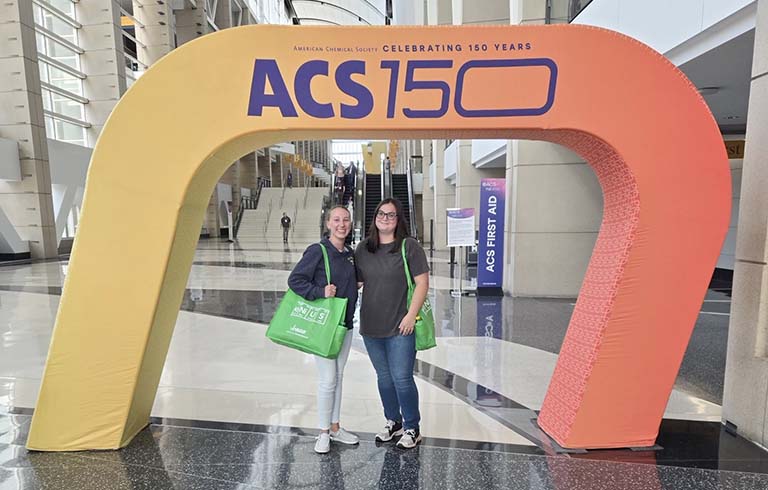
Two Trine University students — Chloe Laird, a chemical engineering major from Warsaw, Indiana, and Makenzie Amich, a forensic science major from Thorntown, Indiana — recently had the opportunity to connect with thousands of chemistry professionals and students from across the country at the American Chemical Society (ACS) national meeting in Chicago.