New Trine University programs offer quicker pathway to careers
October 14, 2026
Students who want to become pharmacists or construction managers will soon have a quicker, more cost-efficient pathway to those careers.
1/3
September 28, 2026
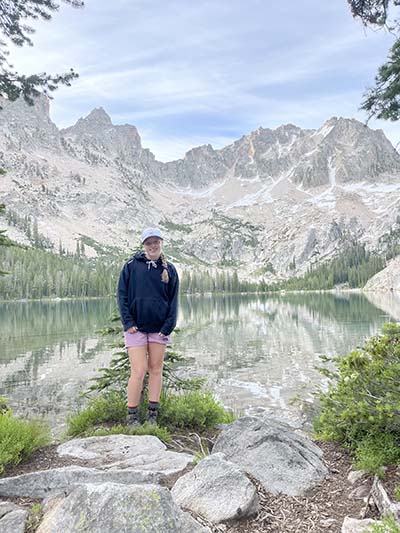
The Maple Grove, Minnesota, student found the opportunity through Trine’s Handshake app after a university recruiter contacted her. She applied through the INL website and interviewed with its Natural Resources team.
By the end of the week, the team offered her the position.
“I decided to apply because I wanted to gain professional field experience and challenge myself in a new environment,” Claire said.
Claire’s primary project involved monitoring sage-grouse habitat across the INL site. She collected vegetation data from 75 plots, measuring plant cover, height, density and species composition. She also identified more than 100 native, introduced and weedy plant species across approximately 890 square miles of sagebrush steppe.
The work took Claire into remote areas of the site, where she used maps, compasses, GPS and other technology to navigate between sampling locations and collect data.
“Another part of my internship was learning about the connection between science and environmental policy,” Claire said. “I presented an informational lecture on sage-grouse habitat monitoring and how the work supports a Candidate Conservation Agreement between the Department of Energy and the U.S. Fish and Wildlife Service.”
Claire worked with seven other interns throughout the summer. The group often started early and traveled into remote areas to complete fieldwork.
Mentorship, application
She also worked closely with mentors in ecology, wildlife biology, environmental management and natural resources.
“I cannot say enough good things about my mentors,” Claire said. “I had the opportunity to work with so many knowledgeable people who were willing to teach me [and] answer my questions… they made me feel supported while also giving me the independence to take ownership of my work.”
Her Trine coursework helped prepare her for the internship. Classes such as Field Ecology, Aquatic Biology, Environmental Biology and Conservation taught her species identification, field methods, ecological data collection and conservation practices.
“My Field Ecology experience in particular was very helpful because I had already learned how to collect ecological data and work outdoors in field settings,” Claire said. “The internship allowed me to take those skills and apply them to large-scale, professional environmental monitoring projects.”
Thinking forward
The internship also helped Claire define her career goals. She plans to attend law school and pursue a career in environmental policy.
“This internship gave me valuable insight into how science, environmental regulations and policy work together,” Claire said.
Working with environmental professionals also helped her understand potential career paths in environmental policy and natural resource management.
The experience changed how Claire views environmental laws such as the Endangered Species Act. Before the internship, she primarily saw environmental laws as regulations that organizations must follow. Her work at INL showed her how scientific research and collaboration inform environmental decisions.
“One of my favorite parts of the internship was getting to experience what environmental work looks like outside of a classroom,” Claire said. “I spent a lot of time outdoors in a rugged environment, traveling to remote areas and collecting data that contributes to real conservation and environmental compliance efforts.”
Claire said the summer internship gave her practical field experience, a clearer understanding of environmental careers and a stronger connection between her studies and her future goals.
“I am incredibly grateful to Trine for the academic foundation that prepared me for this opportunity and to everyone at INL who took the time to mentor me throughout the summer,” she said.
Students who want to become pharmacists or construction managers will soon have a quicker, more cost-efficient pathway to those careers.

Jeremy Goossens, director of esports and industry innovation at Trine University, was named Director of the Season by ECAC Esports, the comprehensive collegiate esports league where Trine competes, for spring 2026.
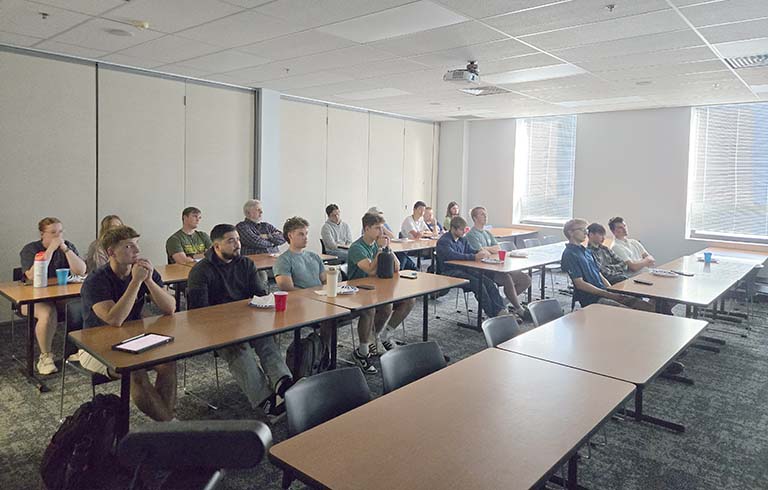
The head of the Indiana Department of Transportation (INDOT) joined Trine University students remotely to help launch its new Transportation & Development Institute (T&DI), part of the American Society of Civil Engineers (ASCE).