17
Months to complete the surgical technology program.
Associate
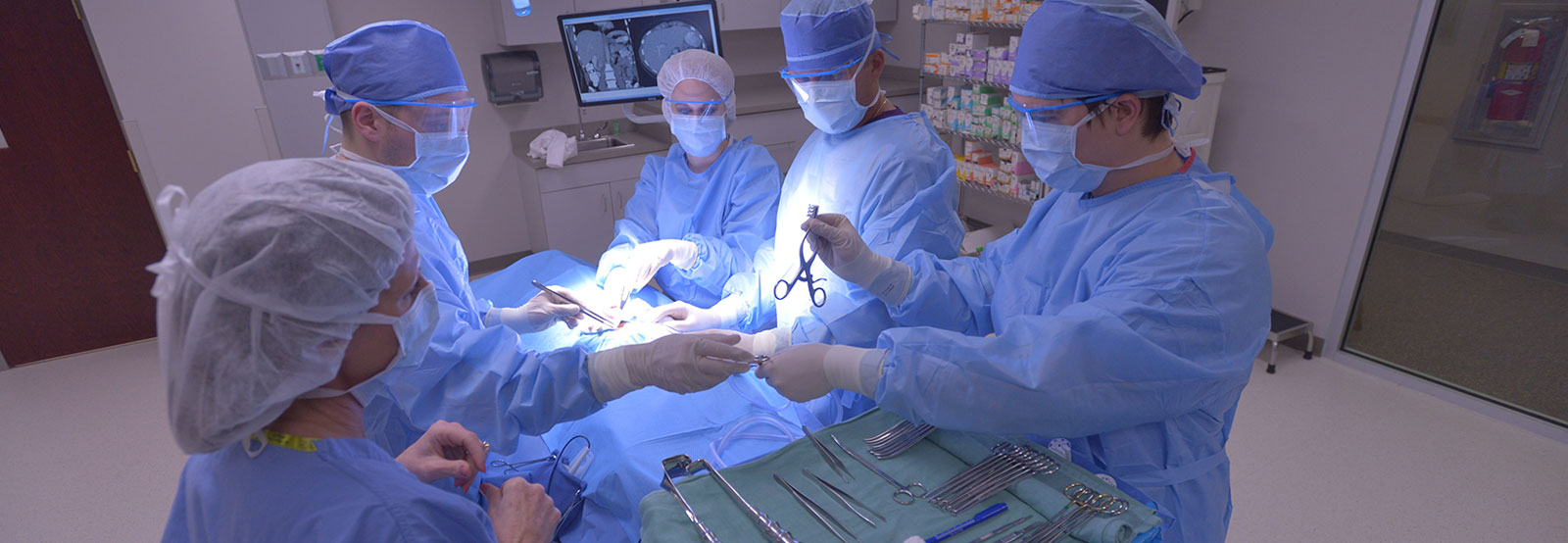
Trine University’s expanded hybrid surgical technology program offers the perfect blend of flexibility and hands-on learning. Students can complete online coursework from the convenience of home, while gaining valuable, in-person experience through immersive courses, lab sessions and clinical rotations.
The Associate of Applied Science in surgical technology program at Trine University is designed to prepare students to succeed, lead and serve the community and the Certified Surgical Technology profession.
The surgical technology program will be the beginning of a lifelong journey in the pursuit of knowledge, professional development and personal growth. The program is committed to maintaining the highest moral, ethical and academic standards.
In the operating room, surgical technologists work closely with surgeons, anesthesiologists, registered nurses and other personnel to provide direct patient care. Prior to a procedure, surgical technologists prepare the operating room by ensuring the proper equipment, instrumentation, supplies and solutions are available and ready. During a procedure, surgical technologists anticipate the needs of the surgeon by passing the appropriate instruments and supplies, managing the sterile field, and caring for specimens. Other duties include holding retractors, cutting sutures as directed, and measuring and passing medications and hemostatic agents.
Surgical technologists are experts in sterile technique, combining knowledge of human anatomy, surgical procedures, and medical tools and technologies to effectively assist physicians as they perform invasive procedures.
The new building amenities include:
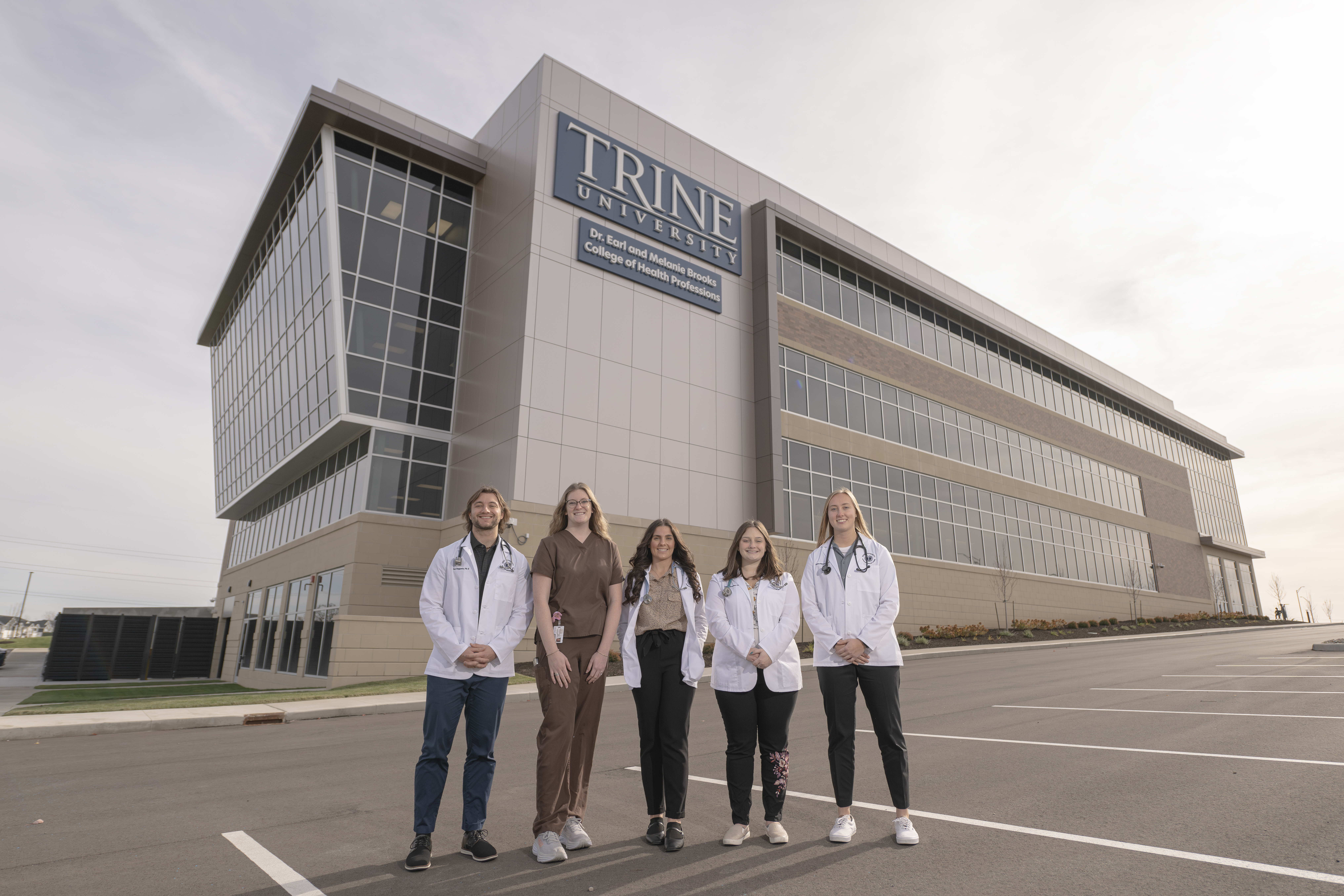
Students in the Associate of Applied Science in surgical technology program will:
For more information about this exciting field, contact Megan Rosswurm, director of Surgical Technology, at 260.702.8057 or surgicaltechnology@trine.edu.
Program Goals and Outcomes
The goals of the Surgical Technology program are to:
Program Learning Outcomes
At the conclusion of the program, students will be able to:
Cognitive Domain
Psychomotor Domain
Affective Domain
CST Examination First Attempt Pass Rate
| Year | Attempted | Passed | Percent |
|---|---|---|---|
| 2023 | 7 | 7 | 100% |
| 2024 | 5 | 5 | 100% |
| 2025 | 10 | 9 | 90% |
Job Placement Rate
| Year | Graduates Employed | Percent |
|---|---|---|
| 2023 | 7/7 | 100% |
| 2024 | 5/5 | 100% |
| 2025 | 10/10 | 100% |
I. Essential physical/neurological functions: Surgical Technology students must be able to accurately observe close-at-hand and at-a-distance to learn skills and to gather data. Students must possess functional use of the sense that permit such observation.
I-A. Tactile
|
Essential Functions
|
Clinical Examples
|
I-B. Visual
|
Essential Functions
|
Clinical Examples
|
I-C. Hearing
|
Essential Functions
|
Clinical Examples
|
I-D. Smell
|
Essential Functions
|
Clinical Examples
|
II. Essential motor skills: Students must have sufficient motor capacities and mobility to execute the various tasks and physical maneuvers that are required within the program. Students must be able to display motor function sufficient to fulfill the professional roles toward which the program educates.
II-A. Gross Motor Skills
|
Essential Functions
|
Clinical Examples
|
II-B. Fine Motor Skills
|
Essential Functions
|
Clinical Examples
|
II-C. Physical Endurance
|
Essential Functions
|
Clinical Examples
|
II-D. Physical Strength
|
Essential Functions
|
Clinical Examples
|
II-E. Mobility
|
Essential Functions
|
Clinical Examples
|
III. Essential communication skills: Surgical Technology students must be able to communicate effectively and efficiently. Students must be able to process and comprehend written and verbal material.
III-A. Communication
|
Essential Functions
|
Clinical Examples
|
IV. Essential judgment skills: Students must exercise good judgment and promptly complete all responsibilities required of the program. They must develop mature, sensitive and effective professional relationships with others. They must be able to tolerate taxing workloads and function effectively under stress. They must be able to adapt the changing environments, display flexibility and function in the face of uncertainties and ambiguities. Concern for others, interpersonal competence and motivation are requisite for the program.
IV-A. Judgment
|
Essential Functions
|
Clinical Examples
|
V. Essential intellectual and cognitive skills: Surgical Technology students must be able to measure, calculate, reason, analyze, synthesize, integrate, remember and apply and evaluate information. Creative problem-solving and clinical reasoning require all these intellectual abilities. In addition, students must be able to comprehend three-dimensional relationships and understand the spatial relationship of structure.
V-A. Reading
|
Essential Functions
|
Clinical Examples
|
V-B. Arithmetic Competence
|
Essential Functions
|
Clinical Examples
|
V-C. Analytical Thinking
|
Essential Functions
|
Clinical Examples
|
V-D. Critical Thinking
|
Essential Functions
|
Clinical Examples
|
VI. Essential Emotional Coping Skills: Surgical Technology students must have the emotional health to fully use their intellectual ability, exercise good judgment and complete all responsibilities requisite to the delivery of patient care. Students must be able to develop mature, sensitive and effective relationships with patients and colleagues and be adaptable, flexible and able to function in the face of uncertainty.
VI-A. Interpersonal Skills
|
Essential Functions
|
Clinical Examples
|
VI-B. Emotional Stability
|
Essential Functions
|
Clinical Examples
|
Work Environmental Factors
Incidents and Accidents
If a student decides to drop or withdraw after registering for classes:
Each student will be assigned to clinical practicum sites during their Clinical Experience courses for observation, second scrub and first scrub assignments. Please note the following:
Students may be employed at the surgical facility in another capacity, but the facility is not required to hire students as an apprentice during the clinical practicum experience or as a surgical technologist upon graduation. Students who are employed at the clinical sites must understand that offers of employment are not to be expected.
Students will not be substituted for personnel during the clinical component of the program.
Apprenticeships: Students are eligible to apply for apprenticeships. Students are not required to apply. Students who are offered, and accept, an apprenticeship are not guaranteed a position upon graduation. Cases completed in the apprenticeship role can be counted toward the 120 required cases.
Clinical Placement and Employment Considerations
Students may face difficulties in obtaining clinical placement, graduate employment, certification or licensure in occupations that, by law or institution policy, exclude people with certain criminal convictions.
Professional and state licensing boards may refuse to issue a license if an individual has a felony or other conviction on record. Prospective students are advised that a conviction of a criminal offense may affect externship or clinical eligibility, employment opportunities and/or eligibility to register for certification or licensing exams. Hospitals and surgery centers may require students to submit to fingerprinting, criminal background checks and drug screening to receive appropriate clearance before being permitted to participate in externship or clinical rotations at those institutions.
Clinical Site Requirements
Surgical Technology students must remain in compliance with all health clearance requirements prior to engaging in lab/clinical courses. Failure to do so will affect enrollment in clinical courses and may lead to withdrawal from the course. The requirements are set by the clinical facilities and are subject to change based on facility policies. Health clearance requirements include, but are not limited to:
The Trine University Surgical Technology Program is accredited by the Commission on Accreditation of Allied Health Education Programs (www.caahep.org) upon the recommendation of the Accreditation Review Council on Education in Surgical Technology and Surgical Assisting.
Commission on Accreditation of Allied Health Education Programs (CAAHEP)
9355 113th St N, #7709
Seminole, FL 33775
727-210-2350
https://www.caahep.org/
Accreditation Review Council on Education in Surgical Technology and Surgical Assisting
19751 East Mainstreet, Suite #339
Parker, CO 80138
303-694-9262
https://www.arcstsa.org/
Associate of Applied Science in Surgical Technology
67 credit hours
Undergraduate
Fort Wayne, IN
Trine University is now accepting applications from students who wish to enter its surgical technology program in fall 2027. Trine University’s first Associate of Science and Master of Science in nursing graduates, along with physician assistant and surgical technology graduates, received a welcome to the healthcare field from the leader of Cameron Health, herself a longtime nurse, during the university’s fall Commencement on Dec. 12. Parkview Health and Trine University are partnering to provide financial support, enhanced training and a seamless pathway to employment for students interested in a surgical technology career.
Surgical Technology News
All Surgical Technology Articles
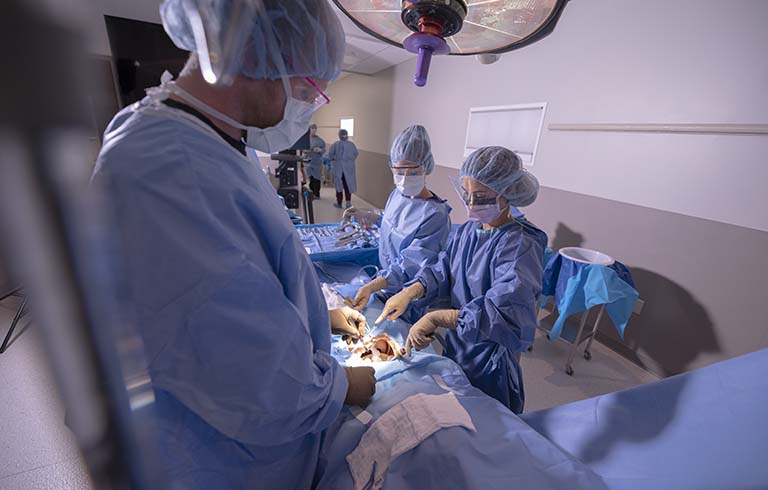
Trine surgical technology application now open for Fall 2027
September 1, 2026 1/3 
Fall Commencement: Cameron CEO tells BCHP graduates their care will make an impact
December 18, 2025 2/3 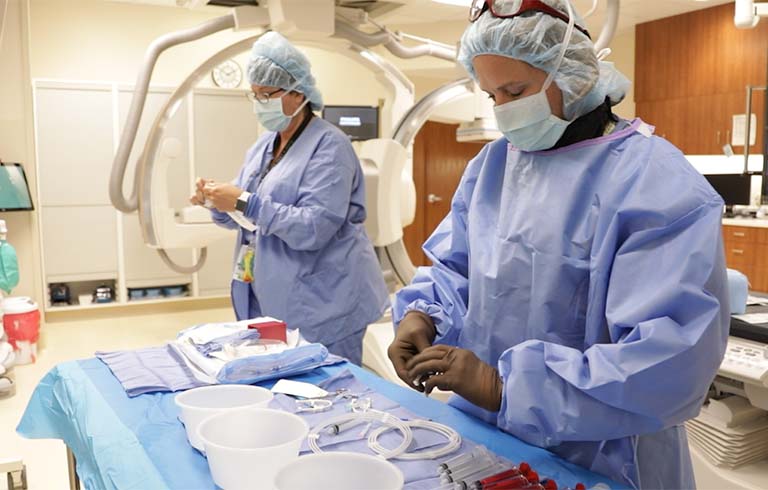
New Parkview, Trine program provides tuition, employment for surgical technology students
June 19, 2025 3/3