
Big Bad Voodoo Daddy brings jazz, swing to Furth
June 30, 2026
Cats who dig jazz and swing are in for a cool treat when Big Bad Voodoo Daddy blows into Trine University's T. Furth Center for Performing Arts on Friday, Aug. 7.
1/3
June 30, 2026
By Earl D. Brooks II, Ph.D.
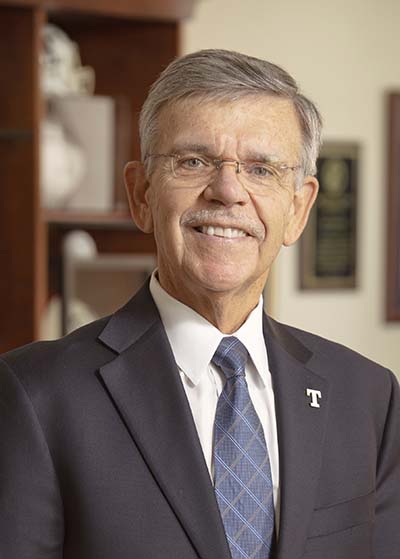 As we prepare to celebrate the 250th anniversary of our great nation’s independence, it’s helpful to look at the role
higher education played in our founding and reaffirm how it helps us continue to thrive
as a nation.
As we prepare to celebrate the 250th anniversary of our great nation’s independence, it’s helpful to look at the role
higher education played in our founding and reaffirm how it helps us continue to thrive
as a nation.
Higher education was established in the United States more than 100 years before the United States formed, when the Massachusetts Bay colonial legislature chartered Harvard College in 1636.
Many of our Founders were the products of higher learning and applied the principles they learned in that environment to set up the framework of our nation.
Of those who signed the Declaration of Independence, just under half — 27 of 56 — held college degrees in a time where such an achievement was rare. By the time of the Constitutional Convention in 1787, that proportion had grown, with 29 of the 55 delegates holding a degree.
Of the Founding Fathers who became president, only George Washington did not complete a college degree, although he earned a surveyor’s certificate from the College of William and Mary and later advocated for a national university as president.
John Adams graduated from Harvard, James Madison from Princeton and Thomas Jefferson also attended the College of William and Mary.
Many of the Founders stressed how vital education would be to the success of the new country, including John Jay, the first chief justice of the U.S. Supreme Court, who said that knowledge is the soul of a republic.
Continued impact
That recognition of the value of higher education has led to tremendous growth in the industry over the last 250 years.
In 1776, there were nine colleges and universities serving a population of about 2.5 million. If you do the math, that meant one college per 277,000 people. The number of high education institutions reached a peak of more than 4,700 in 2012-13 — a proportion of one college for every 67,000 people — before contracting in recent years.
Of our 45 U.S. presidents, 33 have held a college degree, including every president within the last 70 years.
I’ve been privileged to see the growth, change and impact of higher education during my decades in the field, and especially in my 25 years as president of Trine University.
Today, a college education remains a crucial element of social mobility and economic opportunity. Statistics show that those who graduate from college earn millions of dollars more over their lifetime than their peers.
College graduates have a higher employment rate and are more likely to hold jobs that include health insurance, a retirement plan and other important benefits. Our graduates at Trine University are an outstanding example, with more than 99% employed over the past 13 years.
Those who complete a college degree not only benefit themselves economically, but also those they employ, providing economic opportunities to millions of workers in some cases. More than 90% of business founders hold at least a bachelor's degree, with college graduates launching familiar companies such as Amazon, Google, Nike and Starbuck’s.
There is also research that shows college graduates enjoy longer marriages, which provides more stability to our society. Those with a degree have also been shown to be more likely to serve as volunteers, cast votes in elections and participate in community service organizations.
Higher education has always played and continues to play a vital role in our health as a nation. As we celebrate 250 years of this Great Experiment we call the United States of America, let’s recognize and be reminded of the vital role that colleges and universities have in keeping our democracy strong.
Earl D. Brooks II, Ph.D., is chancellor of Trine University.
Cats who dig jazz and swing are in for a cool treat when Big Bad Voodoo Daddy blows into Trine University's T. Furth Center for Performing Arts on Friday, Aug. 7.
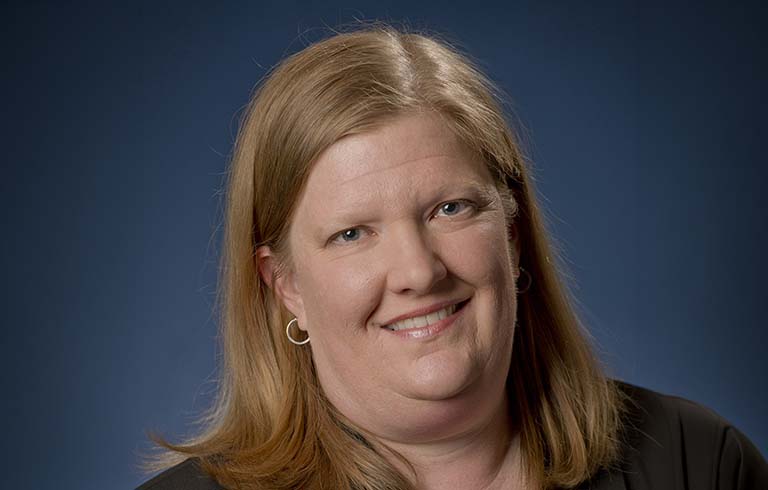
Cat Benson, dean of the Ketner School of Business, was part of a video series that was recently featured on the home page of the PGA Magazine website.
The Higher Learning Commission (HLC), an independent agency that accredits degree-granting institutions throughout the United States, has continued and reaffirmed the accreditation of Trine University, with the next reaffirmation of accreditation set for 2035-36.