2021 Engineering Design Expo
Innovative research for real needs
The Allen School of Engineering and Computing works in collaboration with many individuals, companies and organizations who have contributed so much of their time, talent, materials and support to make the Engineering Design Expo an outstanding success. We are extremely appreciative of our industry sponsors that account for the majority of our total projects. Despite the recent challenges in our world, we are continuing to grow in our ability to offer innovative research and industry-based projects for our students.
Jim and Joan Bock Department of Biomedical Engineering
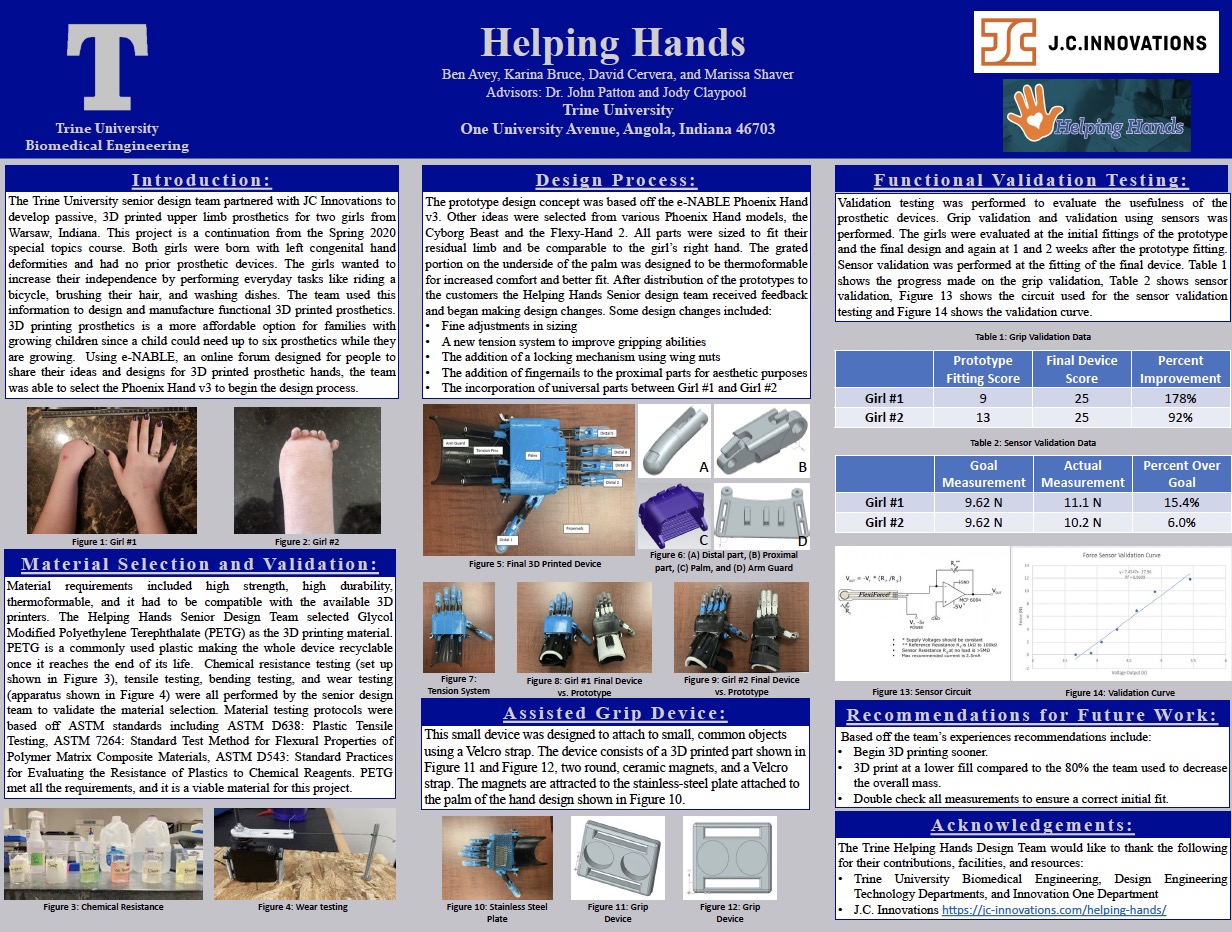
The Trine University senior design team partnered with JC Innovations to develop passive, 3D-printed upper limb prosthetics for two girls from Warsaw, Indiana. This project is a continuation from the Spring 2020 special topics course. Both girls were born with left congenital hand deformities and had no prior prosthetic devices. The girls wanted to increase their independence by performing everyday tasks like riding a bicycle, brushing their hair and washing dishes. The team used this information to design and manufacture functional 3D-printed prosthetics. 3D printing prosthetics is a more affordable option for families with growing children, since a child could need up to six prosthetics while they are growing.
Members: Ben Avery, Karina Bruce, David Cervera and Marissa Shaver
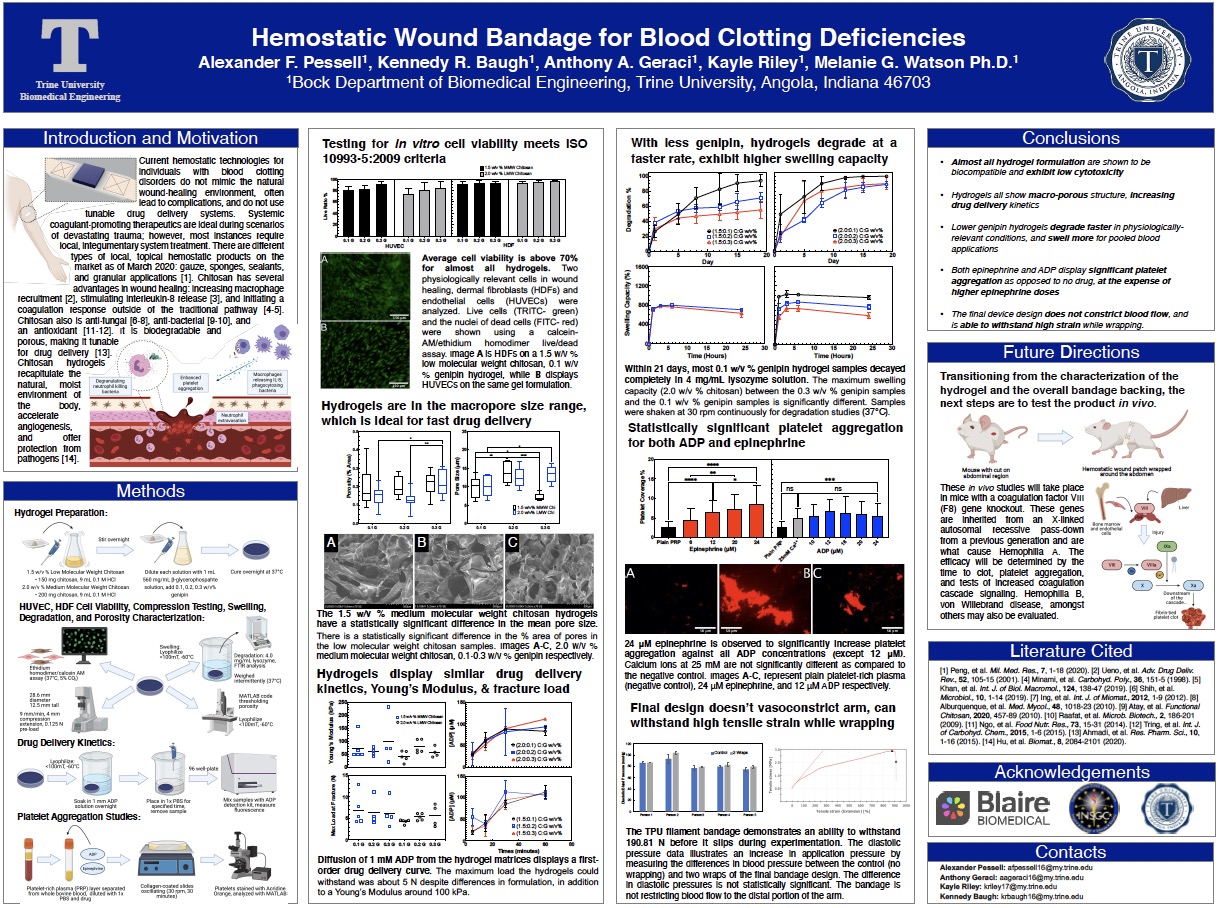
Current hemostatic technologies for individuals with blood clotting disorders do not mimic the natural wound-healing environment, often leading to complications. Technologies also do not use tunable drug delivery systems. Systemic coagulant-promoting therapeutics are ideal during scenarios of devastating trauma; however, most instances require local, integumentary system treatment.
Members: Alexander F. Pessell, Kennedy R. Baugh, Anthony A. Geraci and Kayle Riley
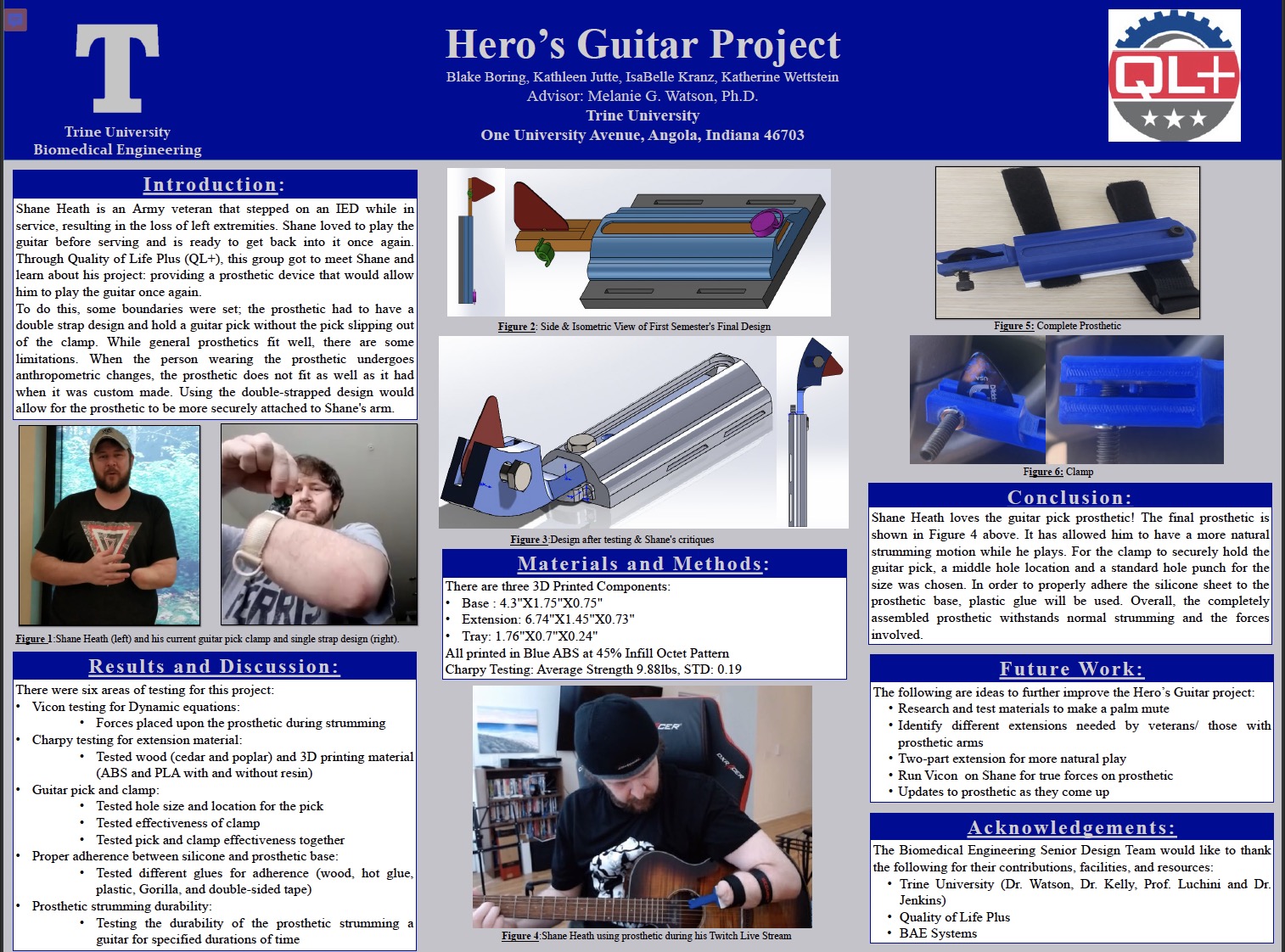
An Army veteran, who loved to play the guitar before serving, stepped on an IED while in service, resulting in the loss of his left extremities. Through Quality of Life Plus, this group got to provide a prosthetic device that would allow him to play the guitar once again.
Members: Blake Boring, Kathleen Jutte, IsaBelle Kranz and Katherine Wettstein
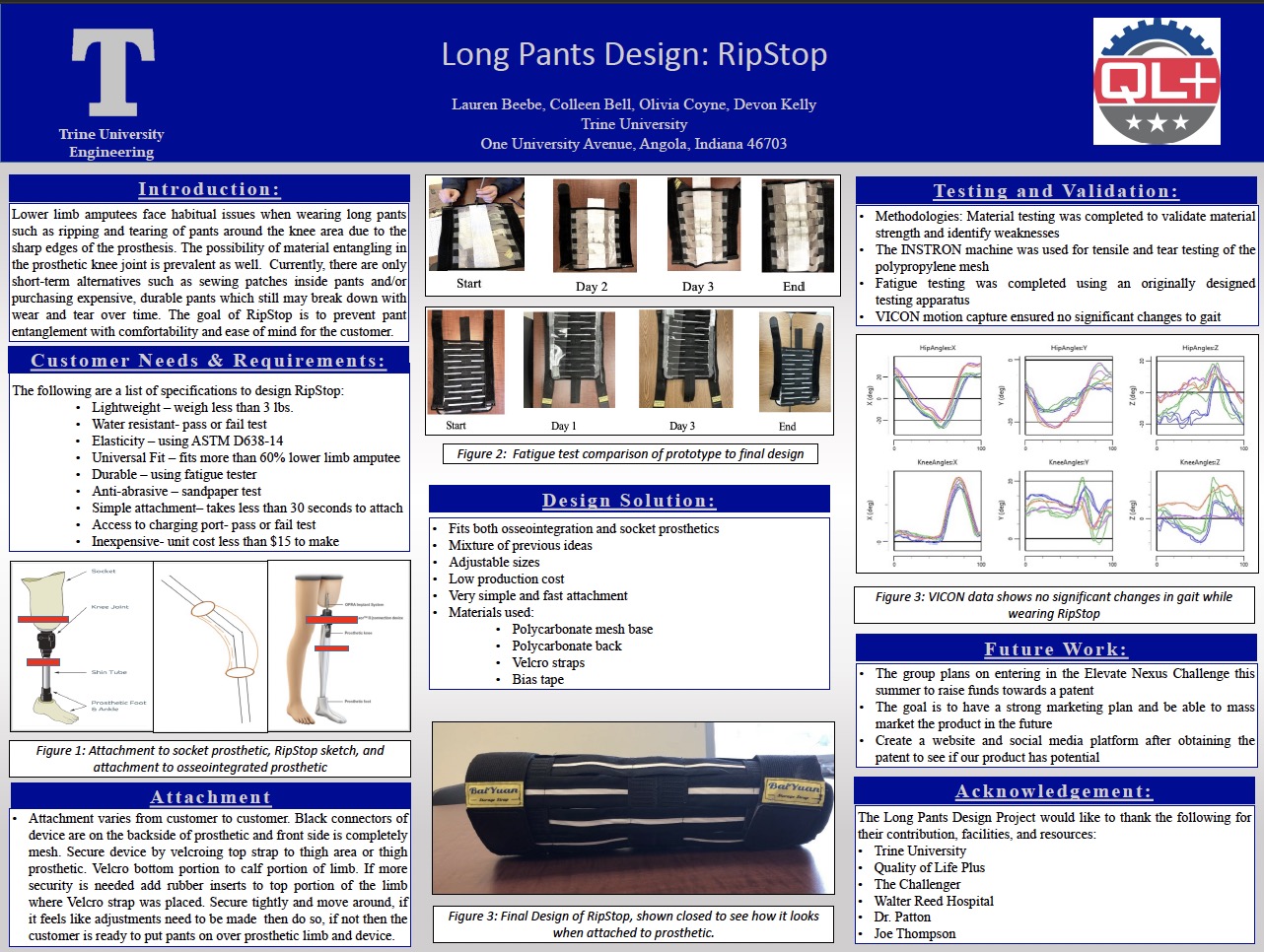
Lower limb amputees face habitual issues when wearing long pants, such as the ripping and tearing of pants around the knee area due to the sharp edges of the prosthesis. The possibility of material entangling in the prosthetic knee joint is prevalent as well. Currently, there are only short-term alternatives, such as sewing patches inside pants and/or purchasing expensive, durable pants which still may break down with wear and tear over time. The goal of RipStop is to prevent pant entanglement with comfortability and east of mind for the customer.
Members: Lauren Beebe, Colleen Bell, Olivia Coyne and Devon Kelly
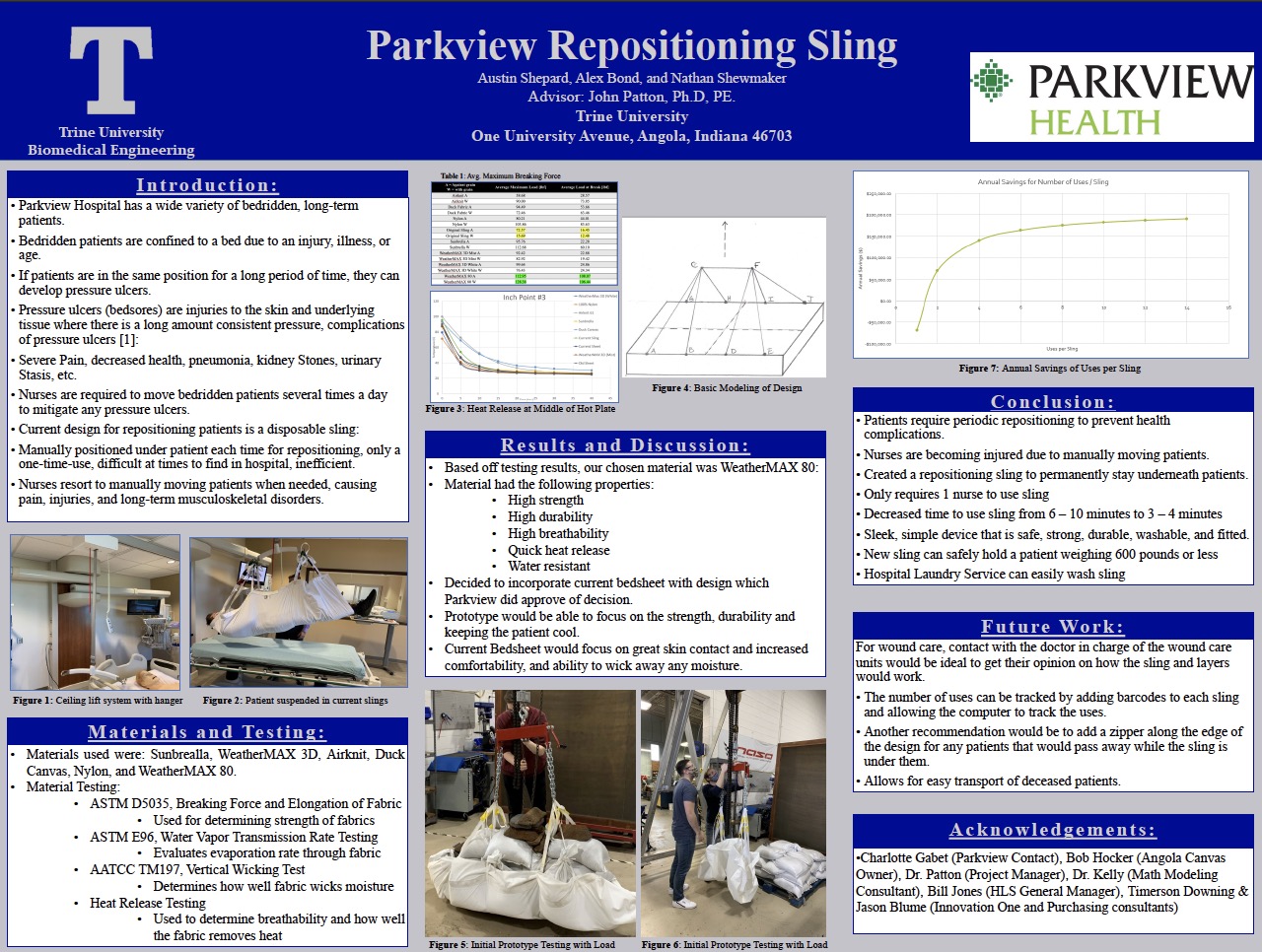
Parkview Hospital has a wide variety of bedridden, long-term patients. If patients are in the same position for a long period of time, they can develop pressure ulcers. Nurses are required to move bedridden patients several times a day to mitigate any pressure ulcers. The current design for repositioning patients is a disposable sling which is manually positioned under patients each time for repositioning. This design is difficult at times to find in the hospital and inefficient. Nurses often resort to manually moving patients when needed, causing pain, injuries and long-term musculoskeletal disorders.
Members: Austin Shepard, Alex Bond and Nathan Shewmaker
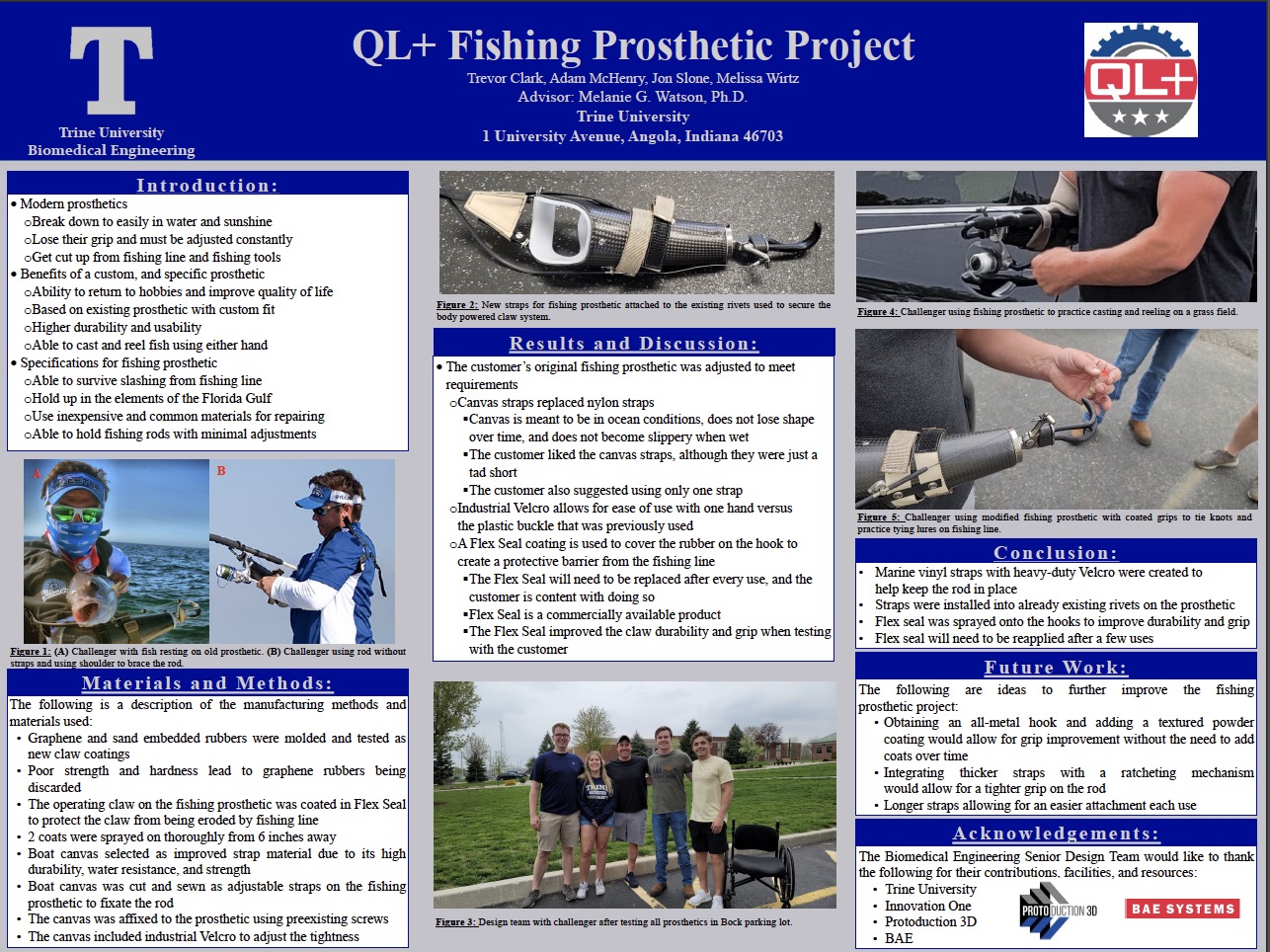
Modern prosthetics can break down too easily in water and sunshine, lose their grip and require constant adjustment, and get cut up from fishing line and fishing tools. A custom and specific prosthetic can help someone return to their hobbies, improve quality of lie, have higher durability and usability, and the ability to cast and reel fish using either hand. The challenges our group had to consider were the prosthetic's ability to survive slashing from a fishing line, hold up in the elements of the Florida Gulf, hold fishing rods with minimal adjustments, and use inexpensive and common materials for repairing.
Members: Trevor Clark, Adam McHenry, Jon Slone and Melissa Wirtz
McKetta Department of Chemical and Bioprocess Engineering

Members: Aaron Rode, Laurel Smithson, T.J. Jensen and Tyme Willoughby

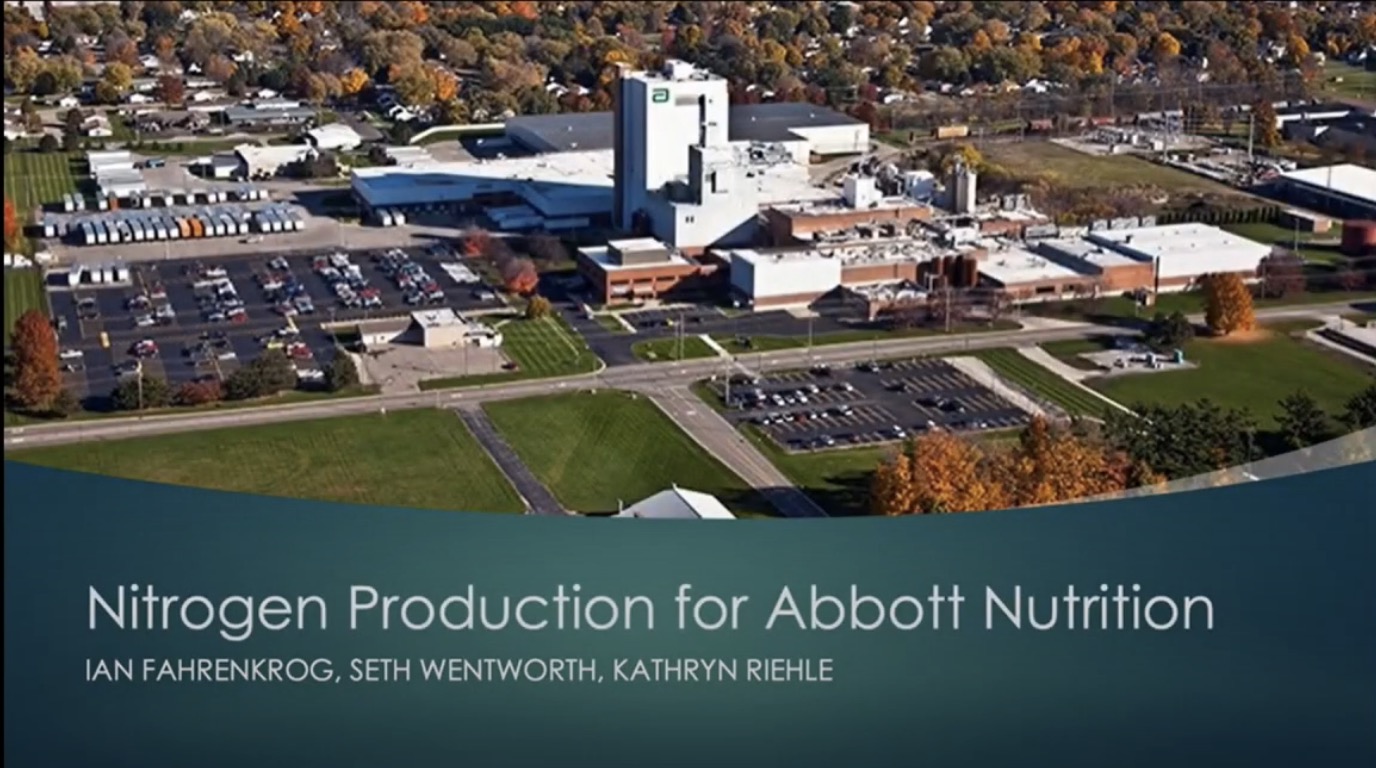
Members: Ian Fahrenkrog, Seth Wentworth and Kathryn Riehle
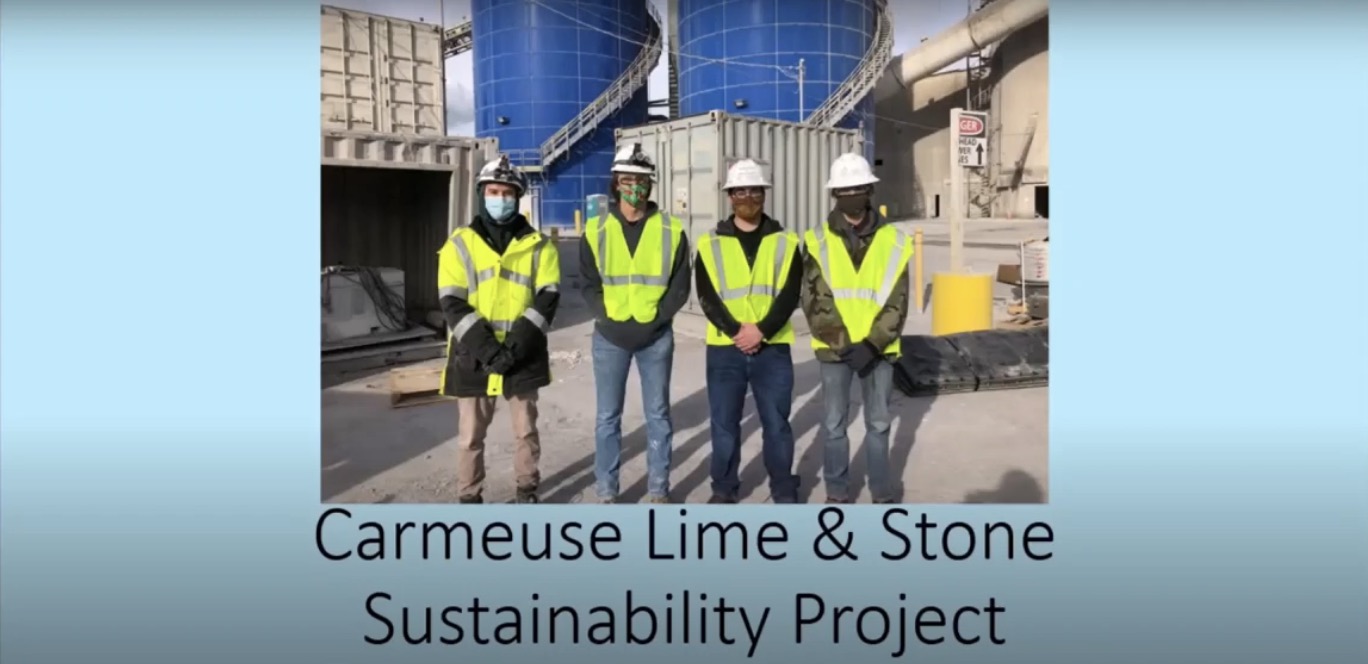
Members: Drew Furman, Russell Keene and Noah Weston
Members: Spencer Schmidt and Rachel Graebner
Reiners Department of Civil and Environmental Engineering
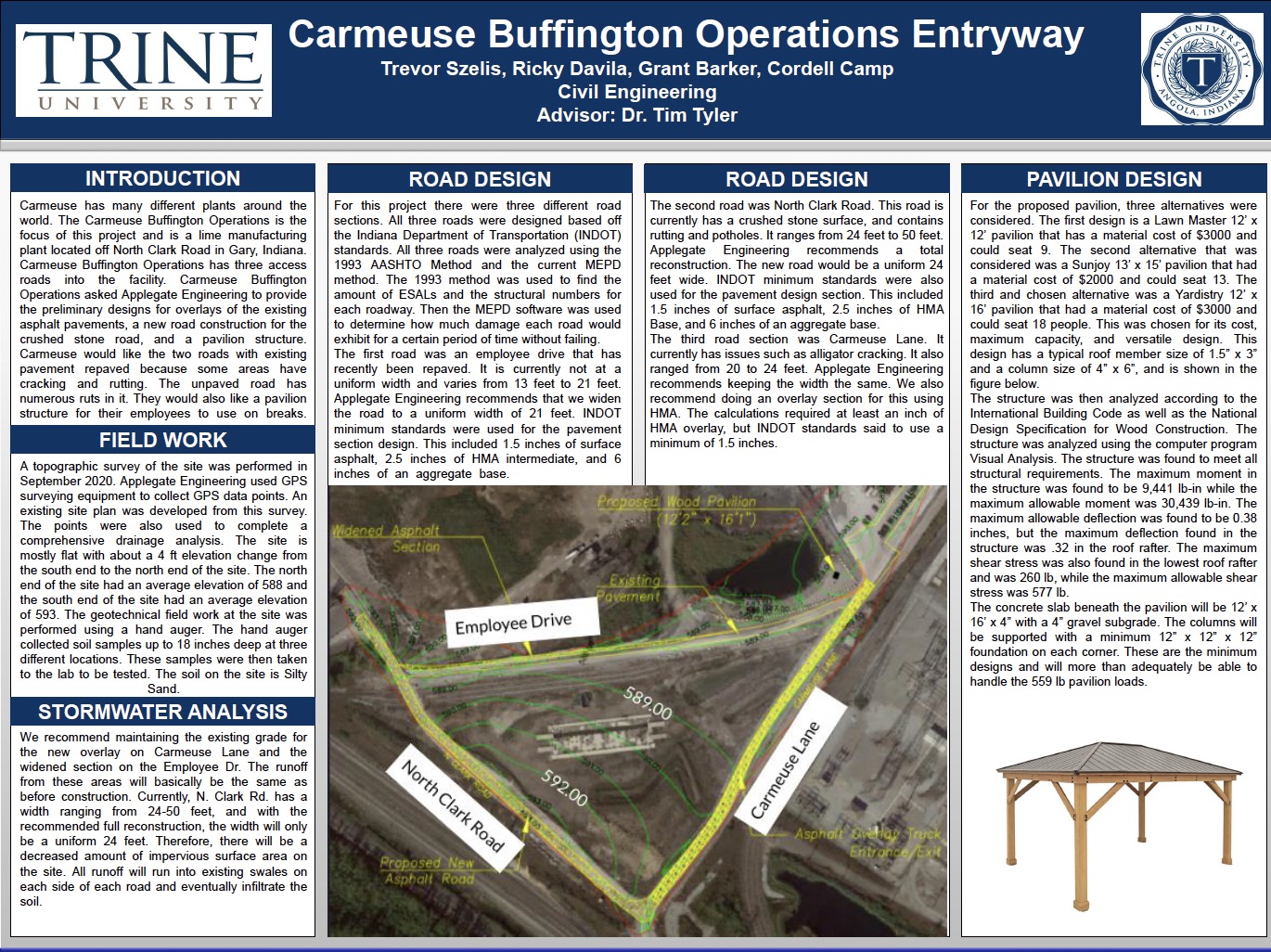
Carmeuse has many different plants around the world. The Carmeuse Buffington Operations is the focus of this project and is a lim manufacturing plant located off North Clark Road in Gary, Indiana. Carmeuse Buffington Operations has three access roads into the facility. Carmeuse Buffington Operations asked Applegate Engineering to provide the preliminary designs for overlays of the existing asphalt pavements, a new road construction for the crushed stone road, and a pavilion structure. Carmeuse would like the two roads with existing pavement repaved because some areas have cracking and rutting. The unpaved road has numerous ruts in it. They would also like a pavilion structure for their employees to use on breaks.
Members: Trevor Szelis, Ricky Davila, Grant Barker and Cordell Camp
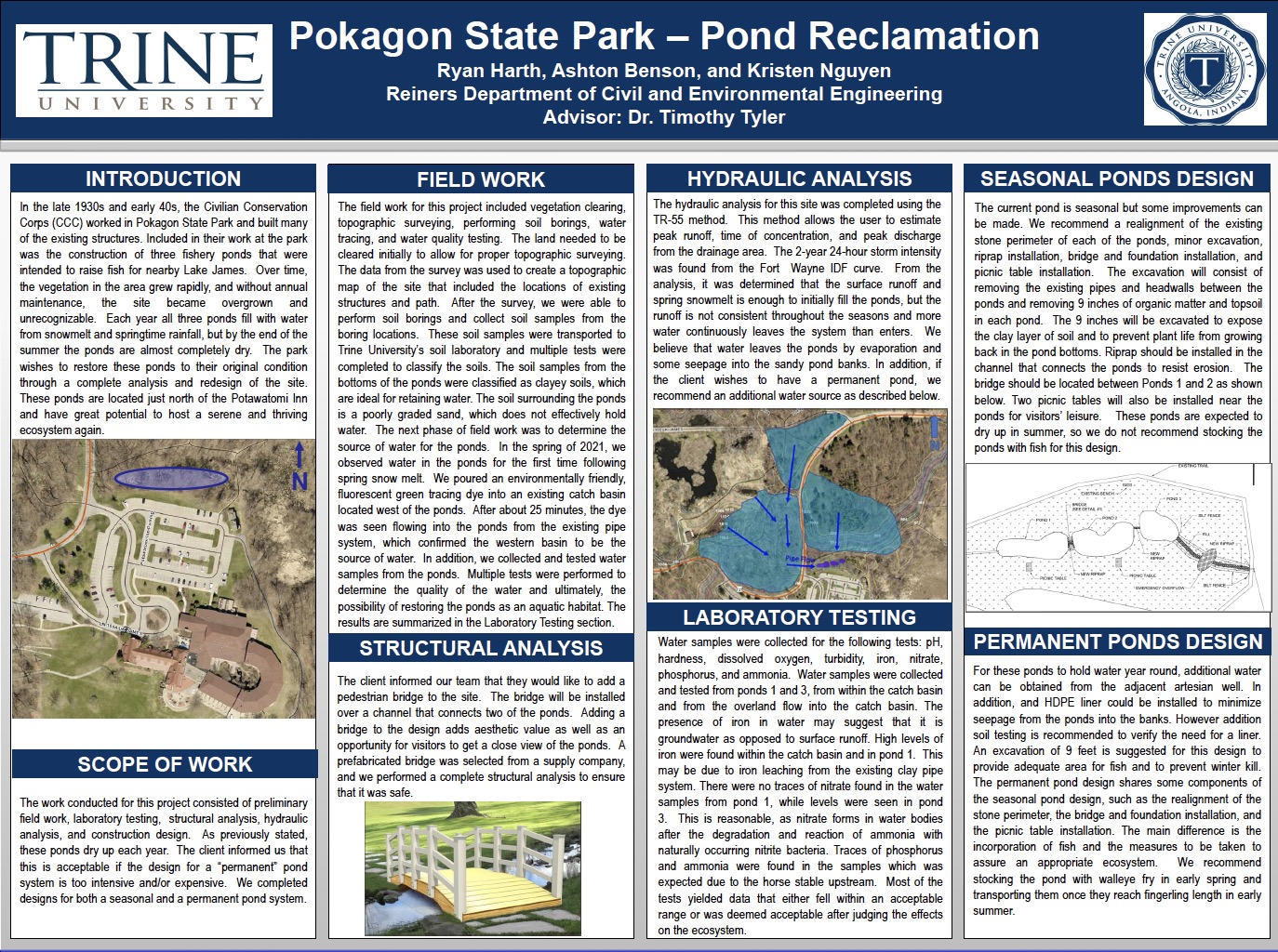
In the late 1930s and early '40s, the Civilian Conservation Corps (CCC) worked in Pokagon State Park and built many of the existing structures. Included in their work at the park was the construction of three fishery ponds that were intended to raise fish for nearby Lake James. Over time, the vegetation in the area grew rapidly, and without annual maintenance, the site became overgrown and unrecognizable. Each year, all three ponds fill with water from snowmelt and springtime rainfall, but by the end of the summer, the ponds are almost completely dry. The park wishes to restore these ponds to their original condition through a complete analysis and redesign of the site. These ponds are located just north of the Potawatomi Inn and have great potential to host a serene and thriving ecosystem again.
Members: Ryan Harth, Ashton Benson and Kristen Nguyen
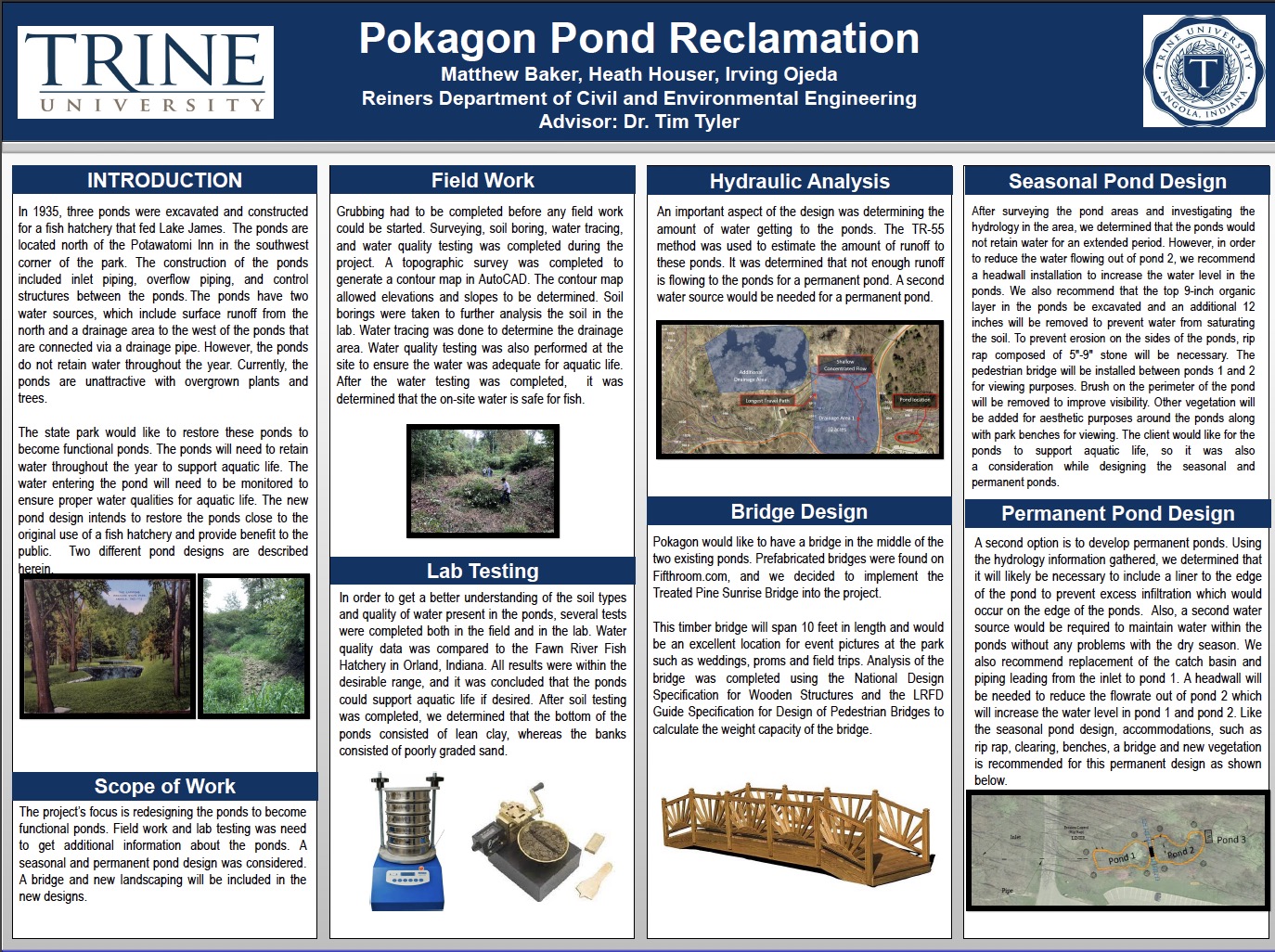
In 1935, three ponds were excavated and constructed for a fish hatchery that fed Lake James. The ponds are located north of the Potawatomi Inn in the southwest corner of the park. The construction of the ponds included inlet piping, overflow piping and control structures between the ponds. The ponds have two water sources, which include surface runoff from the north and a drainage area to the west of the ponds that are connected via a drainage pipe. However, the ponds do not retain water throughout the year. Currently, the ponds are unattractive with overgrown plants and trees. The state park would like to restore these ponds to become functional ponds. The ponds will need to retain water throughout the year to support aquatic life. The water entering the pond will need to be monitored to ensure proper water qualities for aquatic life. The new pond design intends to restore the ponds close to the original use of a fish hatchery and provide benefit to the public.
Members: Matthew Baker, Heath Houser and Irving Ojeda
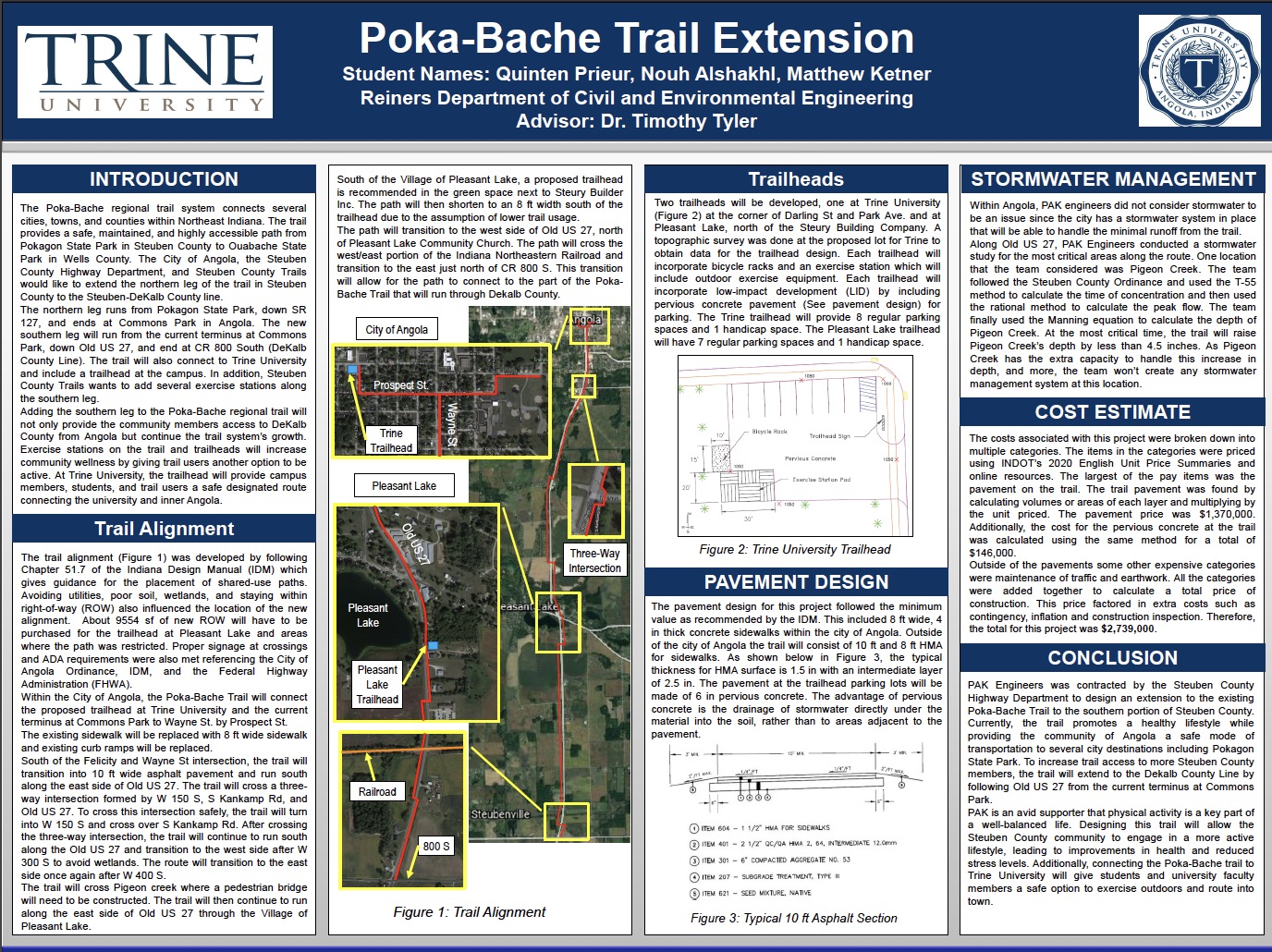
The Poka-Bache regional trail system connects several cities, towns and counties within northeast Indiana. The trail provides a safe, maintained and highly accessible path from Pokagon State Park in Steuben County to Ouabache State Park in Wells County. The City of Angola, the Steuben County Highway Department and Steuben County Trails would like to extend the northern leg of the trail in Steuben County to the Steuben-DeKalb county line. The trail will connect to Trine University and include a trailhead at the campus. In addition, Steuben County Trails wants to add several exercise stations along the southern leg.
Members: Quinten Prieur, Nouh Alshakhl and Matthew Ketner
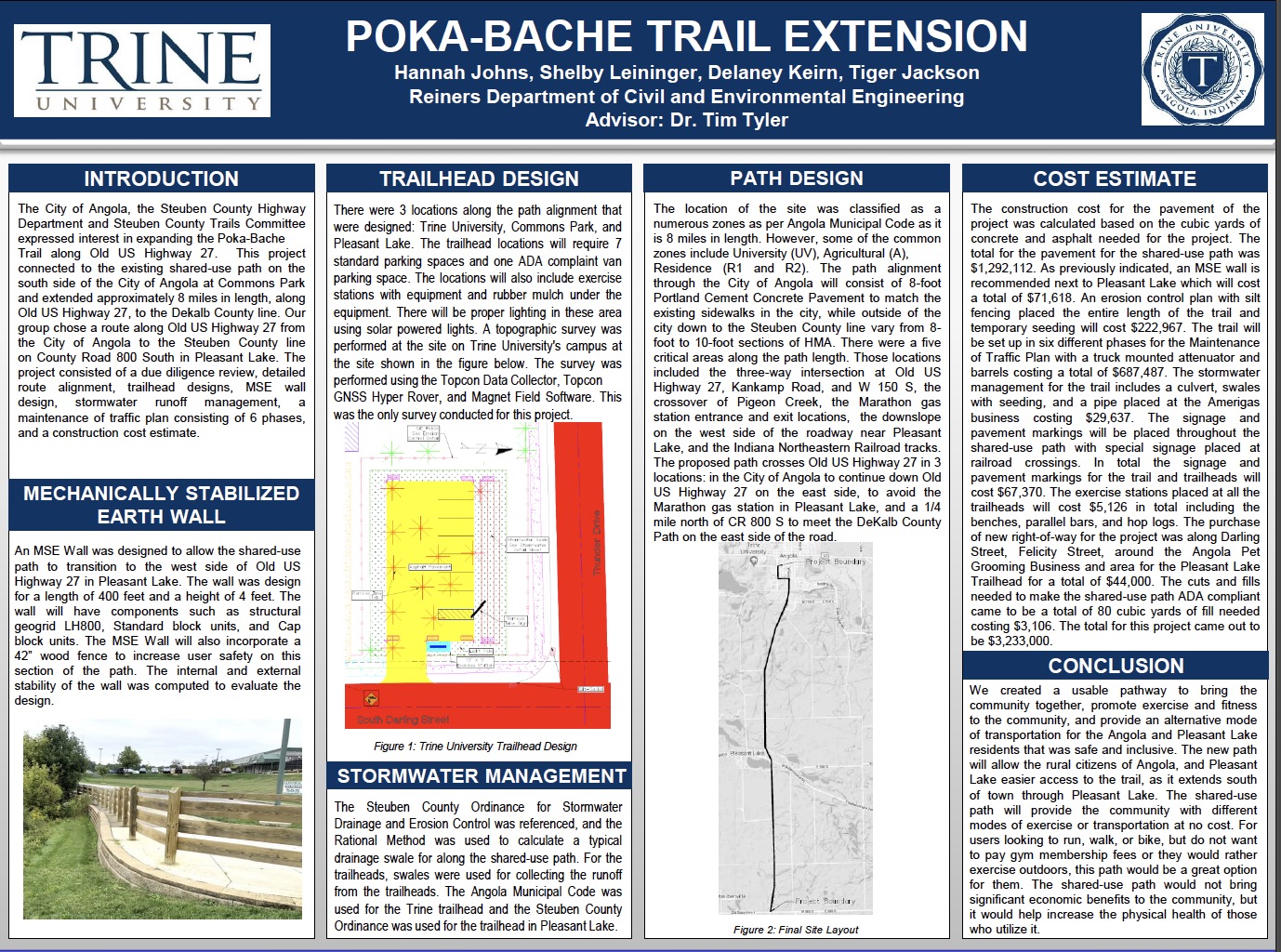
The City of Angola, the Steuben County Highway Department and Steuben County Trails Committee expressed interest in expanding the Poka-Bache Trail along Old US Highway 27. This project connected to the existing, shared-use path on the south side of the City of Angola at Commons Park and extended approximately eight miles in length, along Old US Highway 27, to the DeKalb County line. Our group chose a route along Old US Highway 27 from the City of Angola to the Steuben County line on County Road 800 South in Pleasant Lake. The project consisted of a due diligence review, detailed route alignment, trailhead designs, MSE wall design, stormwater runoff management, a maintenance of traffic plan consisting of six phases and a construction cost estimate.
Members: Hannah Johns, Shelby Leininger, Delaney Keirn and Tiger Jackson
Department of Computer Science and Information Technology
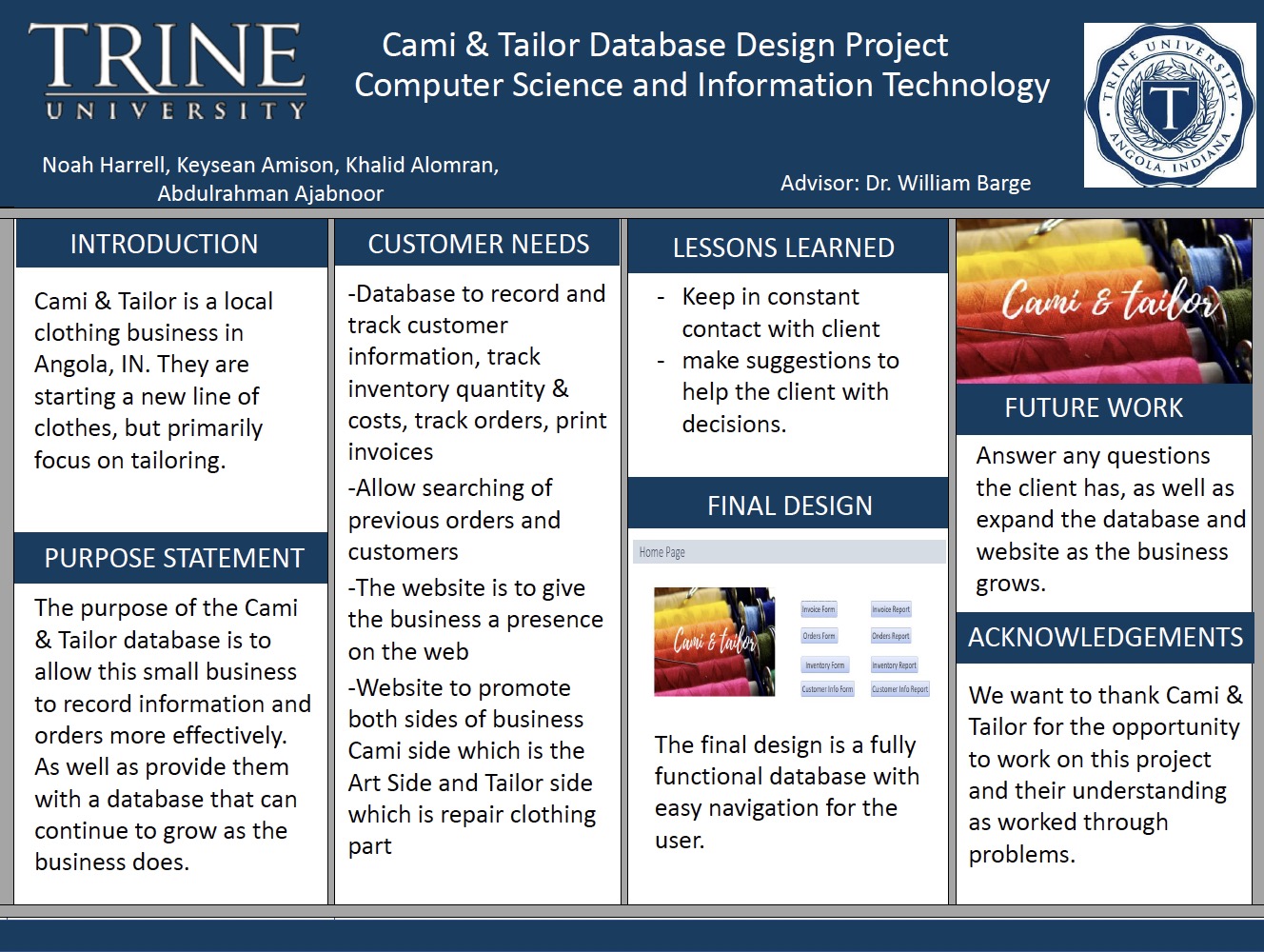
Cami & Tailor is a local clothing business in Angola, Indiana. They are starting a new line of clothes, but primarily focus on tailoring. The purpose of the Cami & Tailor database is to allow this small business to record information and orders more effectively, as well as provide them with a database that can continue to grow as the business does.
Members: Noah Harrell, Keysean Amison, Khalid Alomran and Abdulrahman Ajabnoor
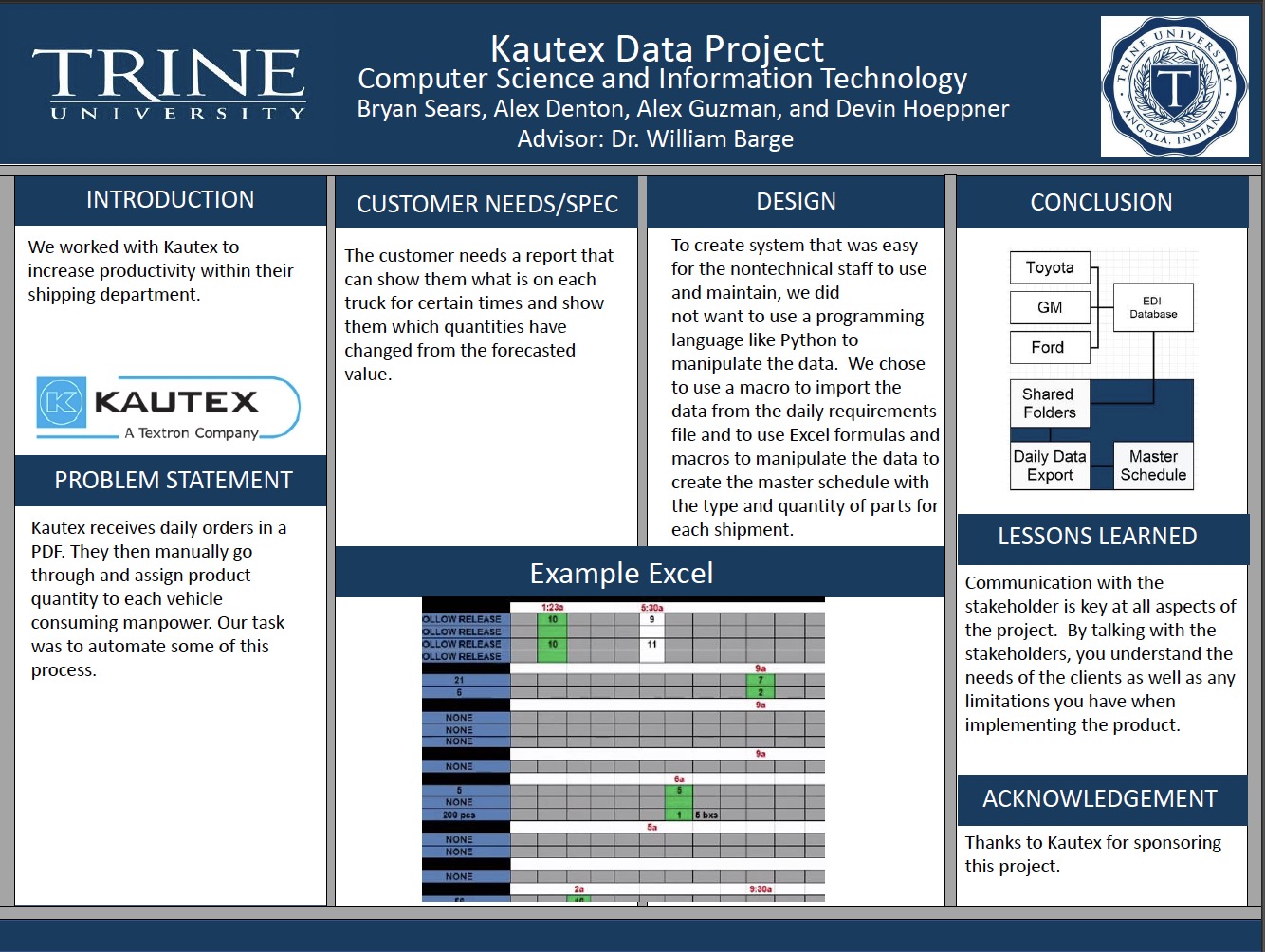
We worked with Kautex to increase productivity within their shipping department. Kautex receives daily orders in a PDF. They then manually go through and assign product quantity to each vehicle consuming manpower. Our task was to automate some of this process.
Members: Bryan Sears, Alex Denton, Alex Guzman and Devin Hoeppner
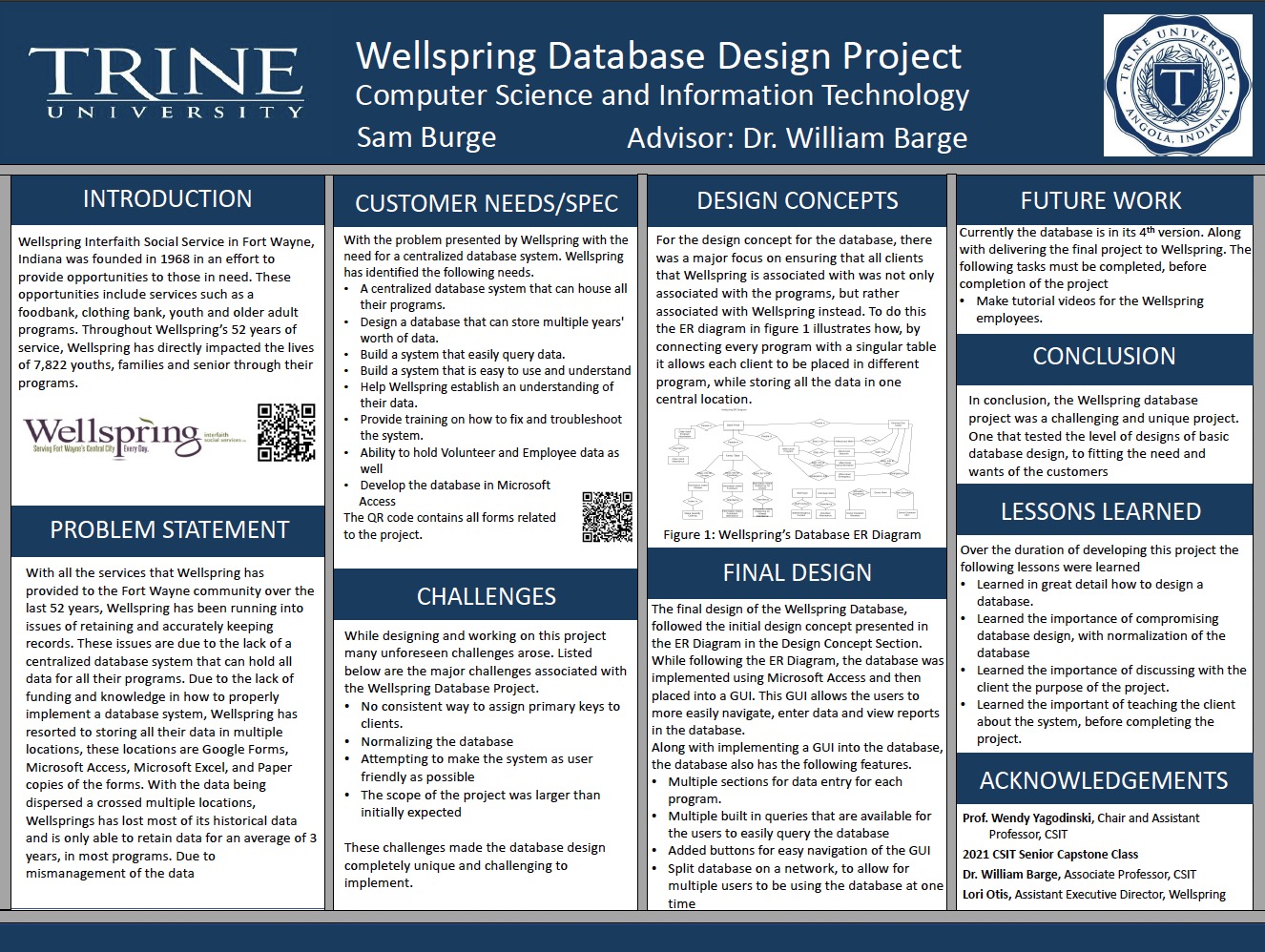
Wellspring Interfaith Social Service in Fort Wayne, Indiana, was founded in 1968 in an effort to provide opportunities to those in need. These opportunities include services such as a food bank, clothing bank and programs for youth and older adults. Throughout Wellspring's 52 years of service, Wellspring has directly impacted the lives of 7,822 youths, families and seniors through their program. With all the services that Wellspring has provided to the Fort Wayne community over the last 52 years, Wellspring has been running into issues of retaining and accurately keeping records. These issues are due to the lack of a centralized database system that can hold all data for all their programs. Due to the lack of funding and knowledge in how to properly implement a database system, Wellspring has resorted to storing all their data in multiple locations, such as Google Forms, Microsoft Access, Microsoft Excel and paper copies of the forms. With the data being dispersed across multiple locations, Wellspring has lost most of its historical data and is only able to retain data for an average of three years in most programs.
Member: Sam Burge
Department of Design Engineering Technology
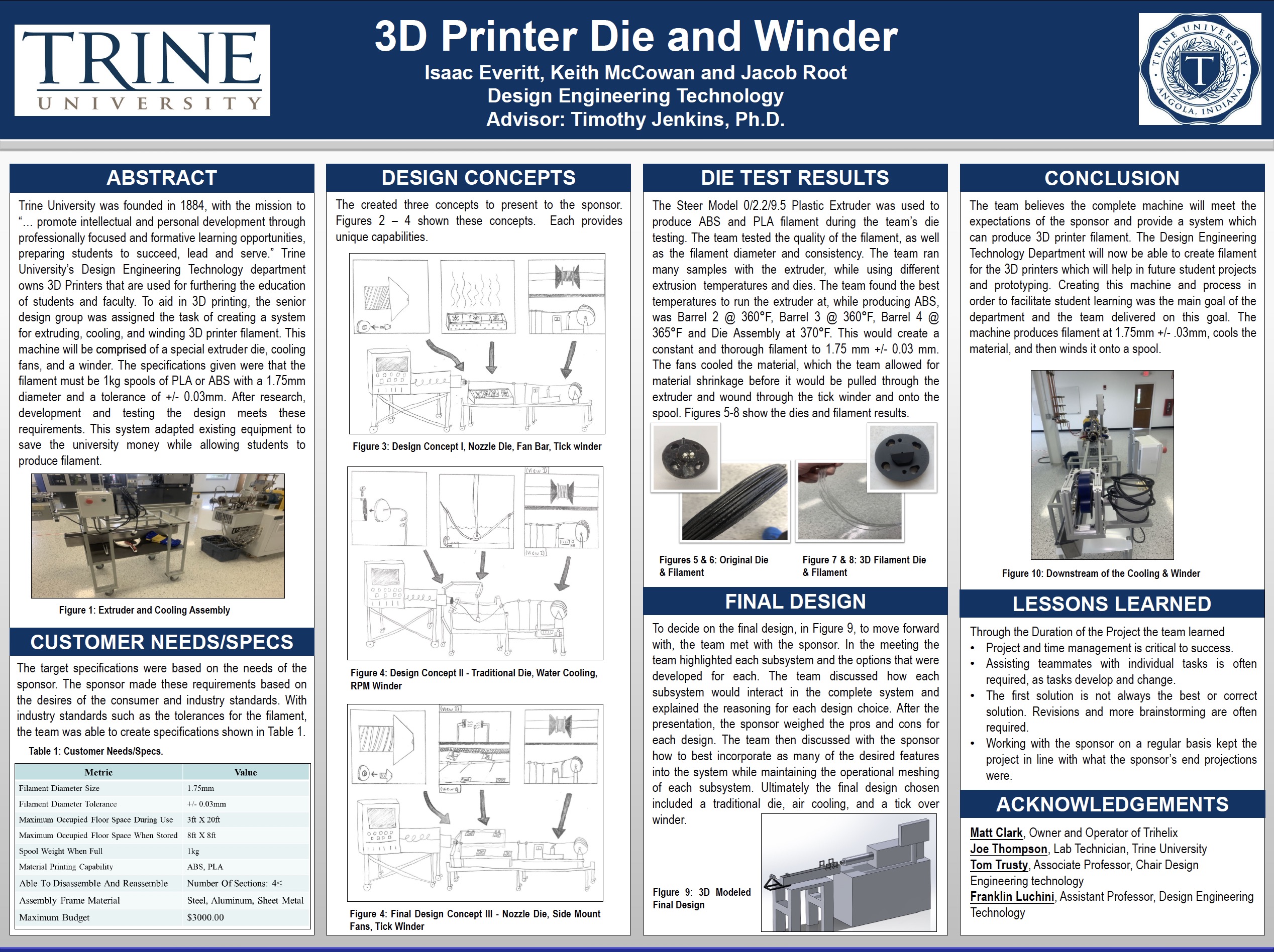
Trine University's Department of Design Engineering Technology owns 3D printers that are used for furthering the education of students and faculty. To aid in 3D printing, the senior design group was assigned the task of creating a system for extruding, cooling and winding 3D printer filament. This machine will be comprised of a special extruder die, cooling fans and a winder. The specifications given were that the filament must be 1kg spools of PLA or ABS with a 1.75mm diameter and a tolerance of +/- 0.03 mm. After research, development and testing, the design meets these requirements. This system adapted existing equipment to save the university money while allowing students to produce filament.
Members: Isaac Everitt, Keith McCowan and Jacob Root
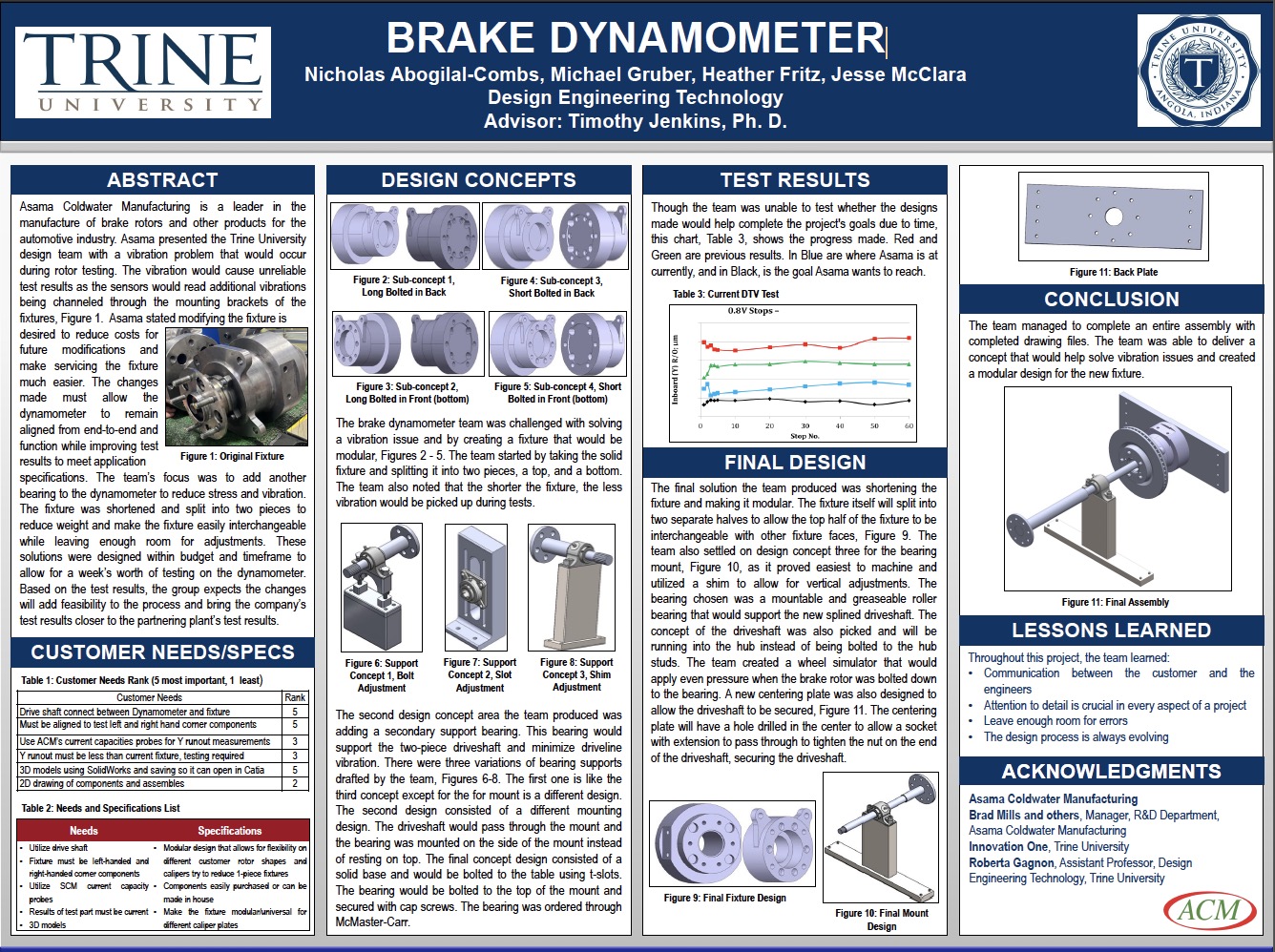
Asama Coldwater Manufacturing is a leader in the manufacture of brake rotors and other products for the automotive industry. Asama presented the Trine University design team with a vibration problem that would occur during rotor testing. The vibration would cause unreliable test results as the sensors would read additional vibrations being channeled through the mounting brackets of the fixtures. Asama stated modifying the fixture is desired to reduce costs for future modifications and make servicing the fixture much easier. The changes made must allow the dynamometer to remain aligned from end-to-end and function while improving test results to meet application specifications. The team's focus was to add another bearing to the dynamometer to reduce stress and vibration. The fixture was shortened and split into two pieces to reduce weight and make the fixture easily interchangeable while leaving enough room for adjustments. These solutions were designed within budget and timeframe to allow for a week's worth of testing on the dynamometer. Based on the test results, the group expects the changes will add feasibility to the process and bring the company's test results closer to the partnering plant's test results.
Members: Nicholas Abogilal-Combs, Michael Gruber, Heather Fritz and Jesse McClara
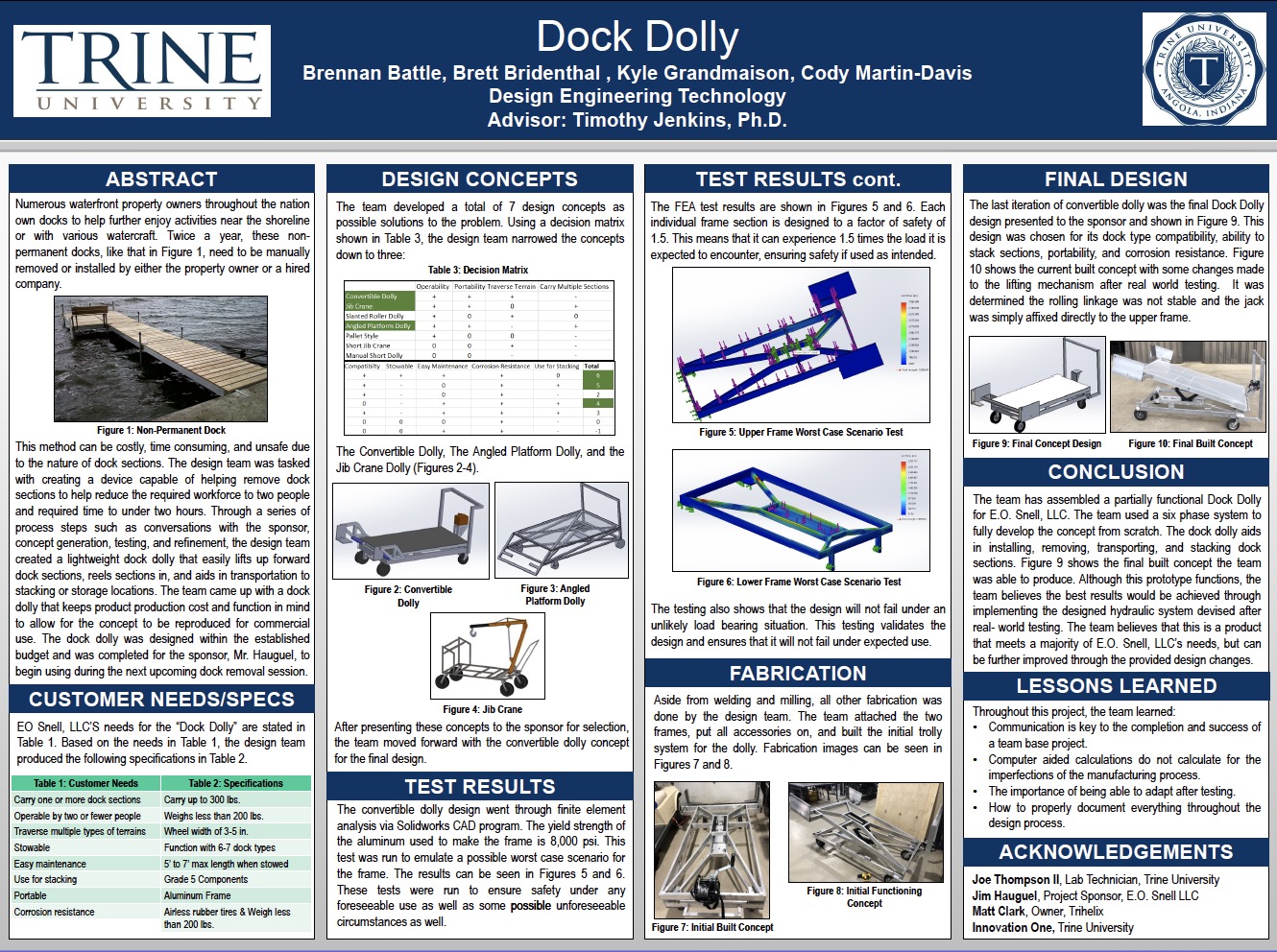
Numerous waterfront property owners throughout the national own docks to help further enjoy activities near the shoreline or with various watercraft. Twice a year, these non-permanent docks need to be manually removed or installed by either the property owner or a hired company. This method can be costly, time consuming and unsafe due to the nature of dock sections. The design team was tasked with creating a device capable of helping remove dock sections to help reduce the required workforce to two people and required time to under two hours. Through a series of process steps, such as conversations with the sponsor, concept generation, testing and refinement, the design team created a lightweight dock dolly that easily lifts up forward dock sections, reels sections in and aids in transportation to stacking or storage locations. The team came up with a dock dolly that keeps product production cost and function in mind to allow for the concept to be reproduced for commercial use.
Members: Brennan Battle, Brett Bridenthal, Kyle Grandmaison and Cody Martin-Davis
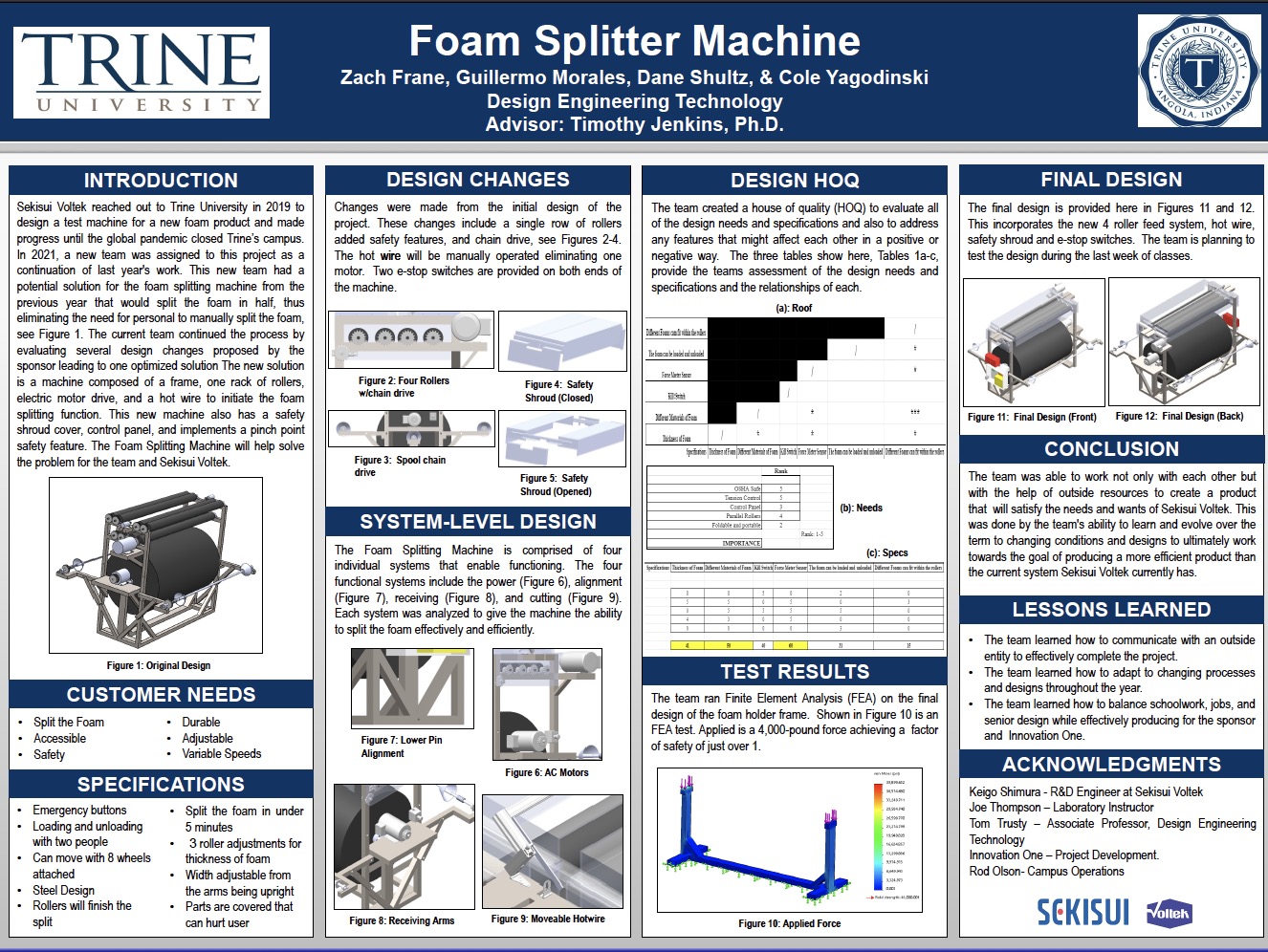
Sekisui Voltek reached out to Trine University in 2019 to design a test machine for a new foam product and made progress until the global pandemic closed Trine's campus. In 2021, a new team was assigned to this project as a continuation of last year's work. This new team had a potential solution for the foam splitting machine from the previous year that would split the foam in half, thus eliminating the need for personnel to manually split the foam. The current team continued the process by evaluating several design changes proposed by the sponsor leading to one optimized solution. The new solution is a machine composed of a frame, one rack of rollers, electric motor drive and a hot wire to initiate the foam splitting function. This new machine also has a safety shroud cover, control panel and implements a pinch point safety feature. The Foam Splitting Machine will help solve the problem for the team and Sekisui Voltek.
Members: Zach Frane, Guillermo Morales, Dane Shultz and Cole Yagodinski
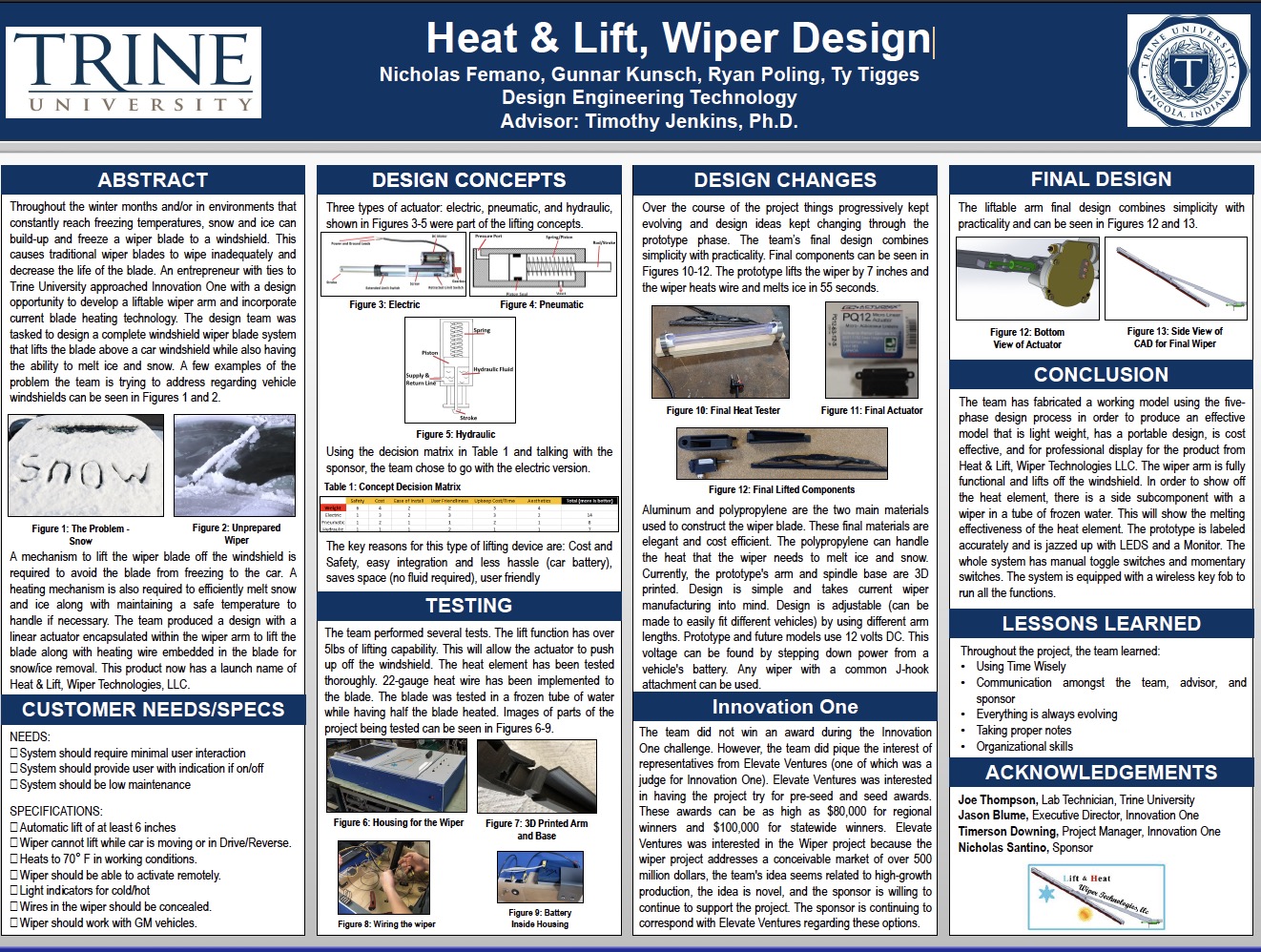
Throughout the winter months and/or in the environments that constantly reach freezing temperatures, snow and ice can build-up and freeze a wiper blade to a windshield. This causes traditional wiper blades to wipe inadequately and decrease the life of the blade. An entrepreneur with ties to Trine University approached Innovation One with a design opportunity to develop a liftable wiper arm and incorporate current blade heating technology. The design team was tasked to design a complete windshield wiper blade system that lifts the blade above a car windshield while also having the ability to melt ice and snow.
Members: Nicholas Femano, Gunnar Kunsch, Ryan Poling and Ty Tigges
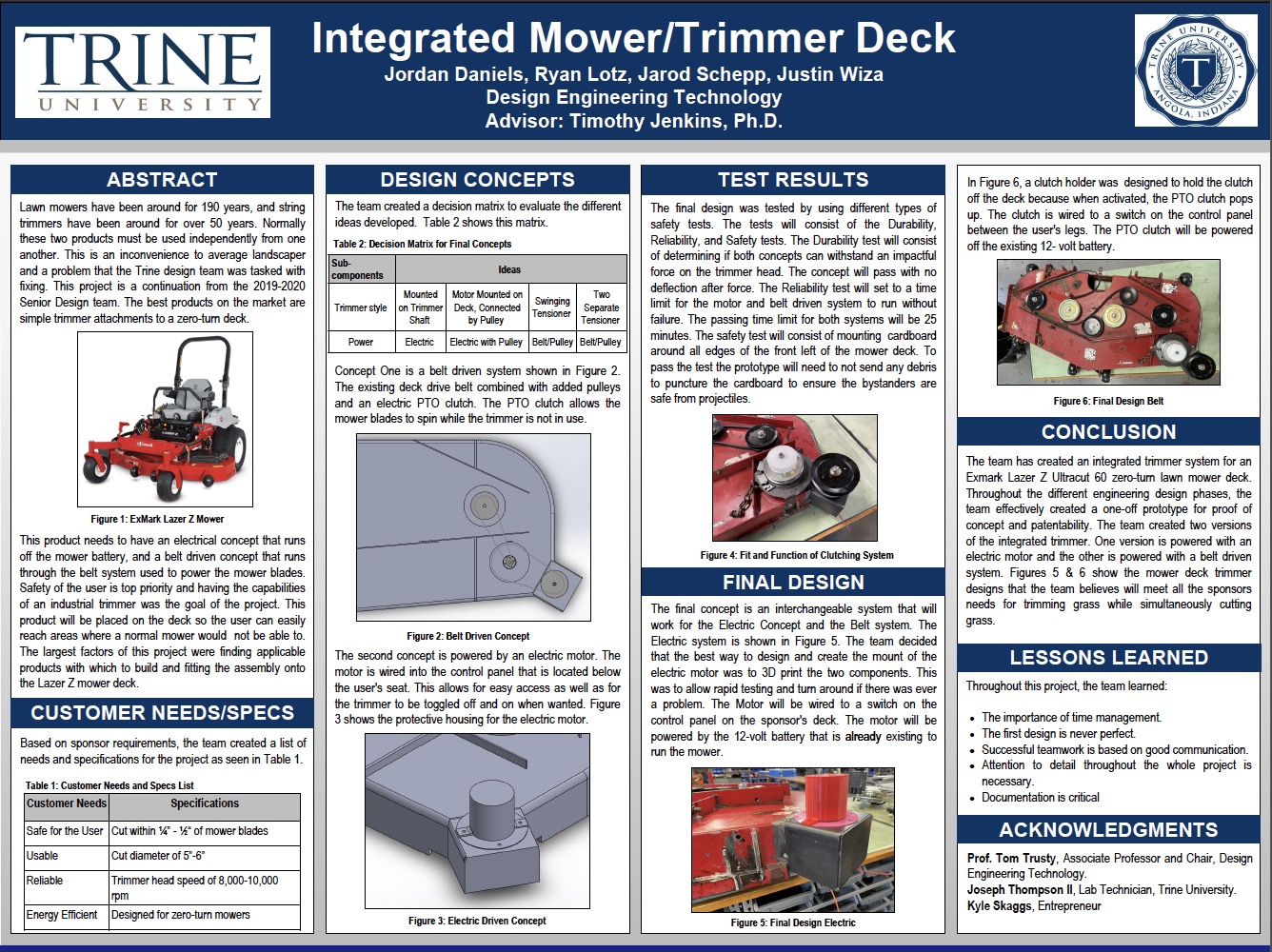
Lawn mowers have been around for 190 years, and string trimmers have been around for over 50 years. Normally, these two products must be used independently from one another. This is an inconvenience to the average landscaper and a problem that the Trine design team was tasked with fixing. This project is a continuation from the 2019-2020 senior design team. The best products on the market are simple trimmer attachments to a zero-turn deck. This product needs to have an electrical concept that runs off the mower battery, and a belt-driven concept that runs through the belt system used to power the mower blades. Safety of the user is top priority and having the capabilities of an industrial trimmer was the goal of the project. This product will be placed on the deck so the user can easily reach areas where a normal mower would not be able to. The largest factors of this project were finding applicable products with which to build and fit the assembly onto the Lazer Z mower deck.
Members: Jordan Daniels, Ryan Lotz, Jarod Schepp and Justin Wiza
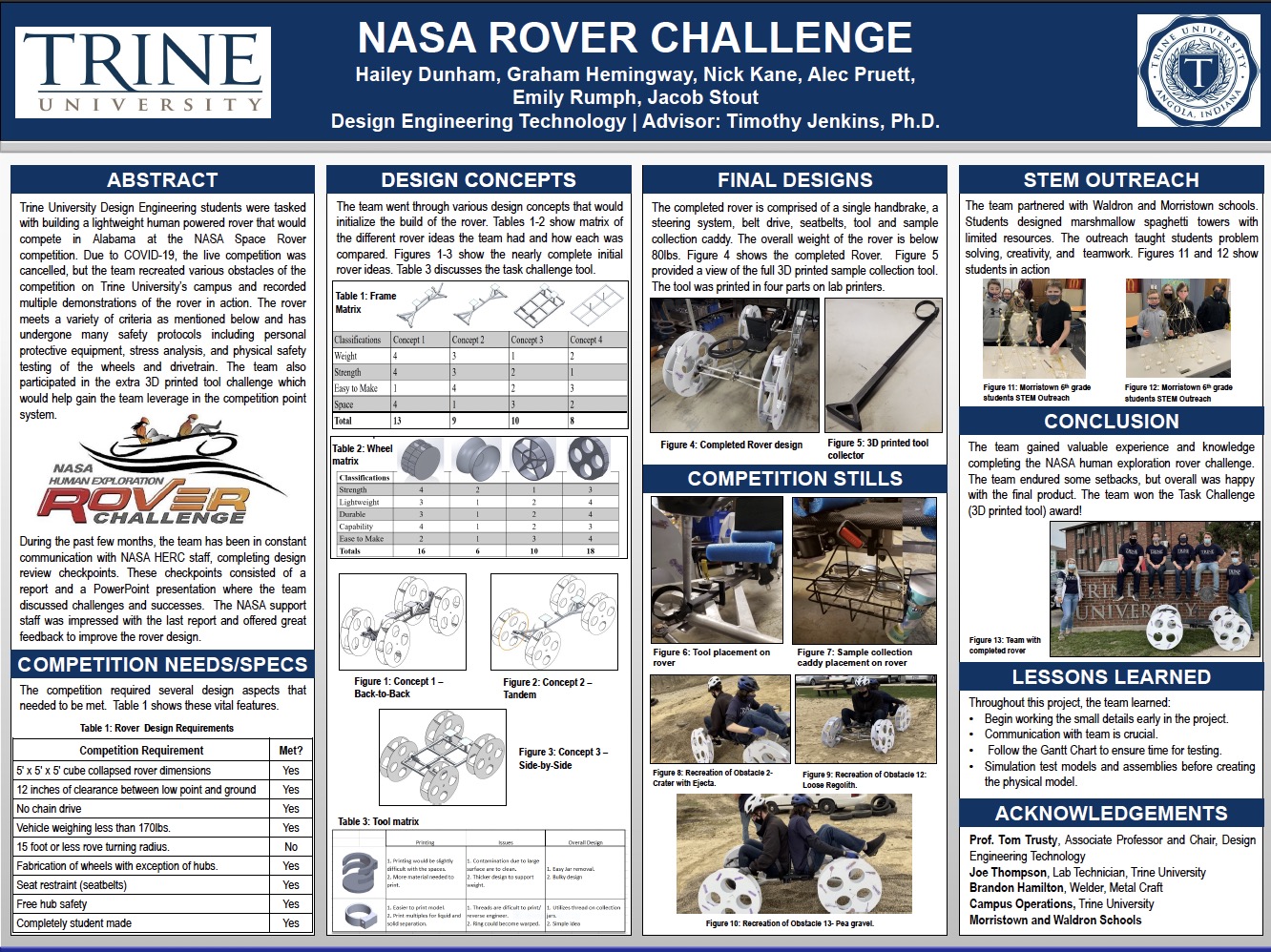
Trine University design engineering students were tasked with building a lightweight, human-powered rover that would compete in Alabama at the NASA Space Rover competition. Due to Covid-19, the live competition was canceled, but the team recreated various obstacles of the competition on Trine University's campus and recorded multiple demonstrations of the rover in action. The rover meets a variety of criteria as mentioned below and has undergone many safety protocols, including personal protective equipment, stress analysis and physical safety testing of the wheels and drivetrain. The team also participated in the extra 3D printed tool challenge which would help gain the team leverage in the competition point system.
Members: Hailey Dunham, Graham Hemingway, Nick Kane, Alec Pruett, Emily Rumph and Jacob Stout
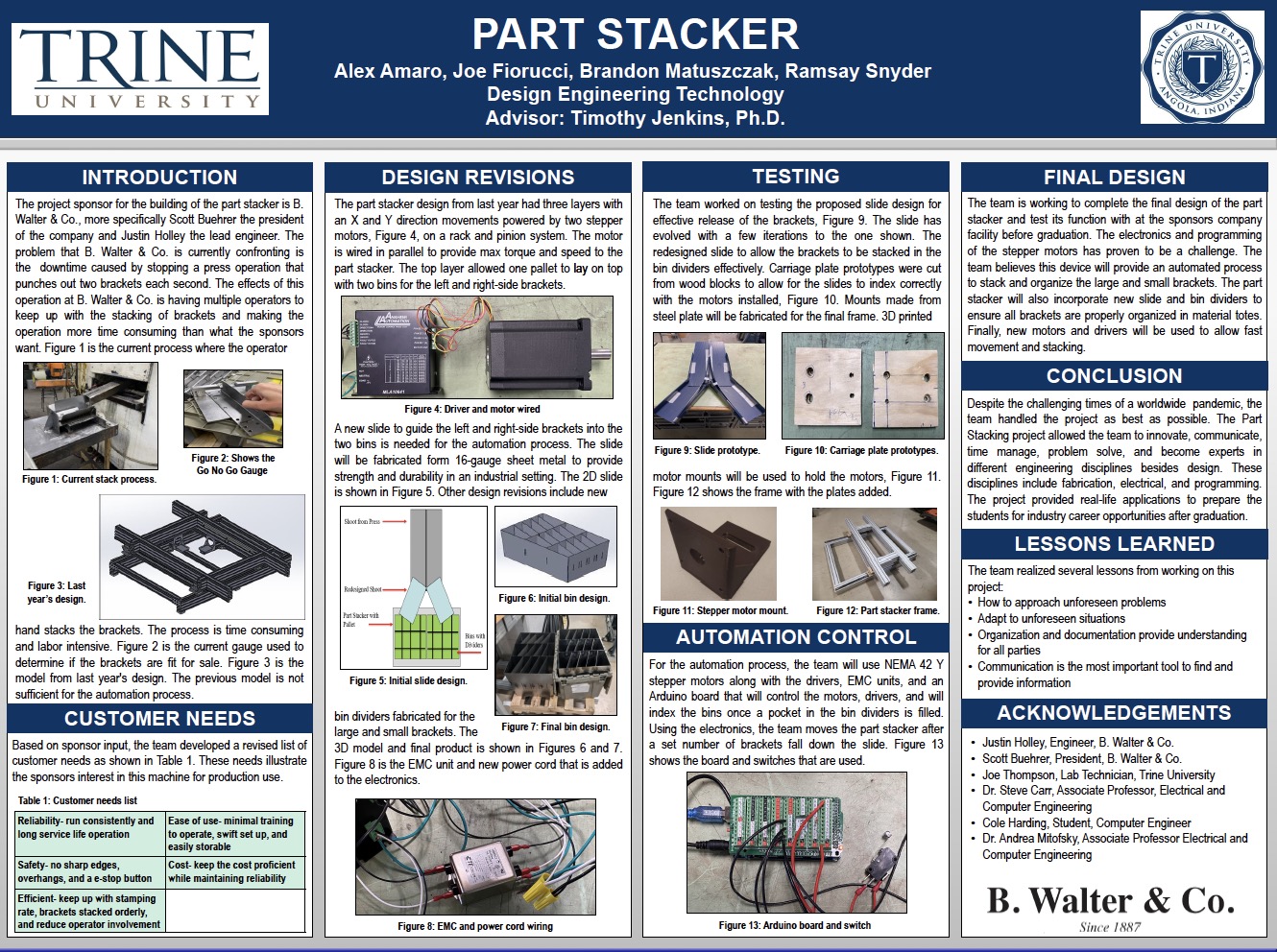
The problem that B. Walter & Co. is currently confronting is the downtime caused by stopping a press operation that punches out two brackets each second. The effects of this operation at B. Walter & Co. is having multiple operators to keep up with the stacking of brackets and making the operation more time consuming than what the sponsors want.
Members: Alex Amaro, Joe Fiorucci, Brandon Matuszczak and Ramsay Snyder
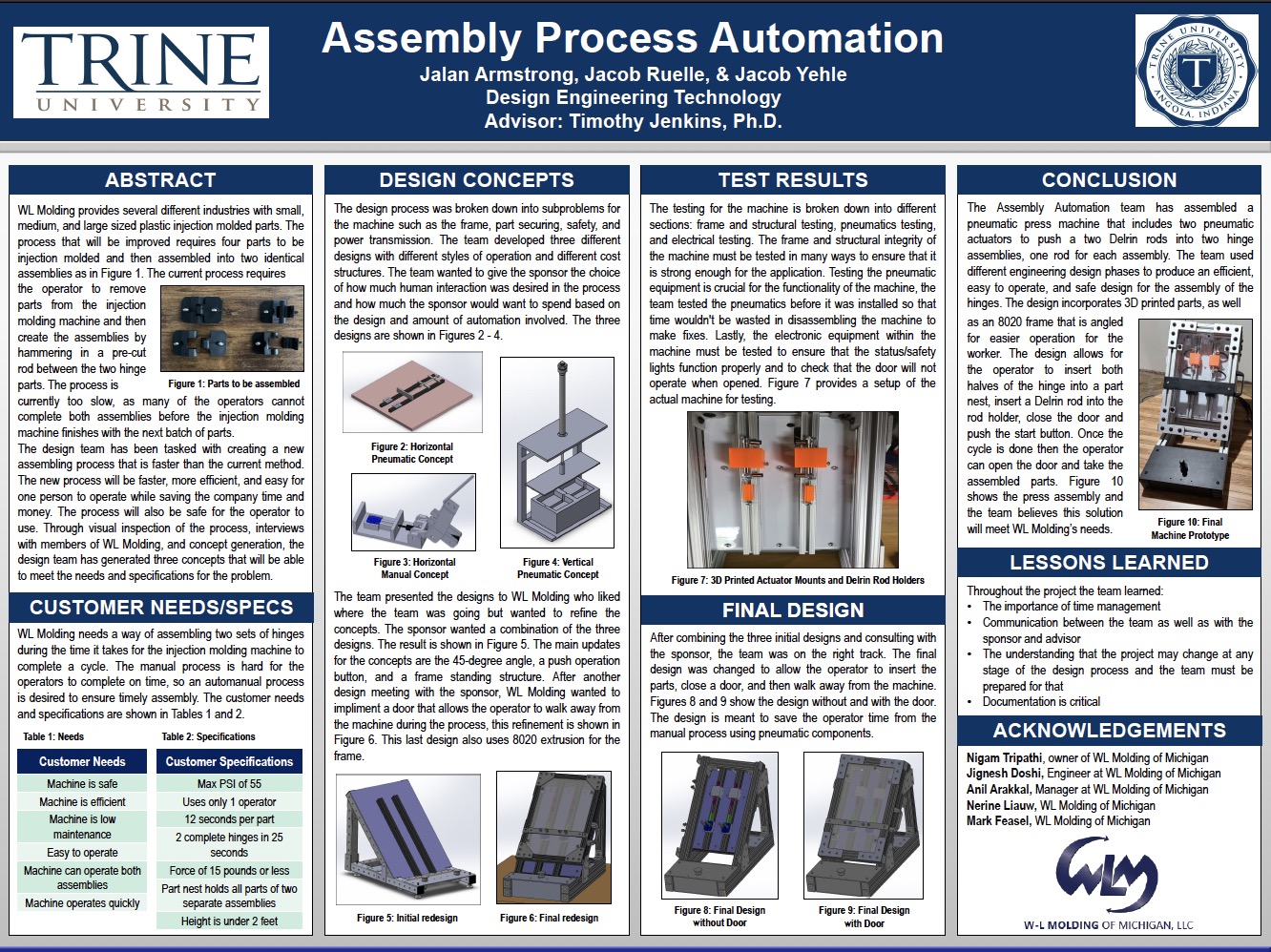
WL Molding provides several different industries with small, medium and large-sized plastic injection molded parts. The process that will be improved requires four parts to be injection molded and then assembled into two identical assemblies. The current process requires the operator to remove parts from the injection molding machine and then create the assemblies by hammering in a pre-cut rod between the two hinge parts. The process is currently too slow, as many of the operators cannot complete both assemblies before the injection molding machine finishes with the next batch of parts. The design team has been tasked with creating a new assembling process that is faster than the current method. The new process will be faster, more efficient and easier for one person to operate while saving the company time and money. The process will also be safe for the operator to use. Through visual inspection of the process, interviews with members of WL Molding and concept generation, the design team has generated three concepts that will be able to meet the needs and specifications for the problem.
Members: Jalan Armstrong, Jacob Ruelle and Jacob Yehle
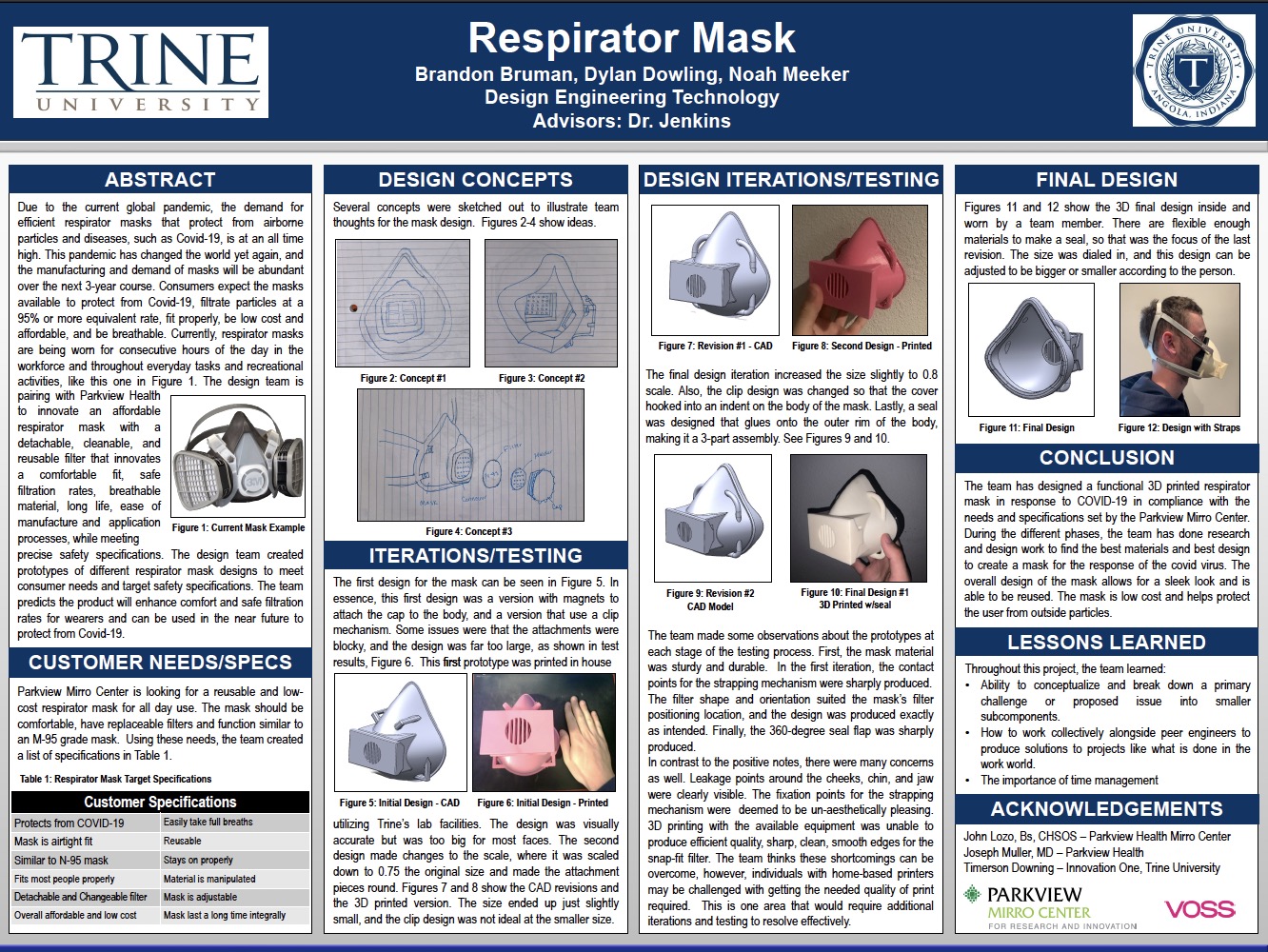
Due to the current global pandemic, the demand for efficient respirator masks that protect from airborne particles and diseases, such as Covid-19, is at an all time high. This pandemic has changed the world yet again, and the manufacturing and demand of masks will be abundant over the next three-year course. Consumers expect the masks available to protect from Covid-19, filtrate particles at a 95% or more equivalent rate, fit properly, be low cost and affordable, and be breathable. Currently, respirator masks are being worn for consecutive hours of the day in the workforce and throughout everyday tasks and recreational activities. The design team is pairing with Parkview Health to innovate an affordable respirator mask with a detachable, cleanable and reusable filter that innovates a comfortable fit, safe filtration rates, breathable material, long life, ease of manufacture and application processes, while meeting precise safety specifications. The design team created prototypes of different respirator mask designs to meet consumer needs and target safety specifications. The team predicts the product will enhance comfort and safe filtration rates for wearers and can be used in the near future to protect from Covid-19.
Members: Brandon Bruman, Dylan Dowling and Noah Meeker
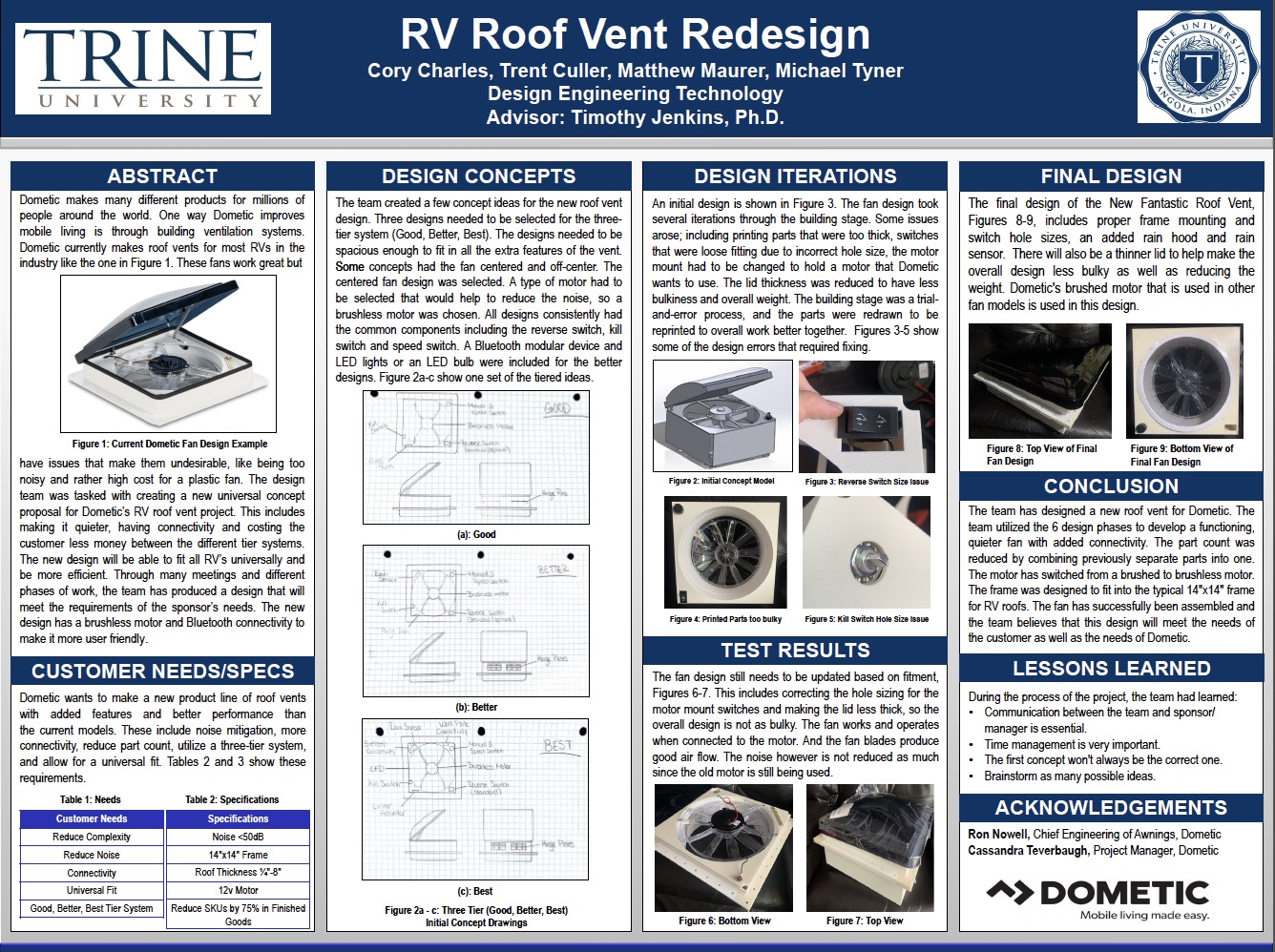
Dometic makes many different products for millions of people around the world. One way Dometic improves mobile living is through building ventilation systems. Dometic currently makes roof vents for most RVs in the industry. These fans work great but have issues that make them undesirable, like being too noisy and rather high cost for a plastic fan. The design team was tasked with creating a new universal concept proposal for Dometic's RV roof vent project. This includes making it quieter, having connectivity and costing the customer less money between the different tier systems. The new design will be able to fit all RVs universally and be more efficient.
Members: Cory Charles, Trent Culler, Matthew Maurer and Michael Tyner
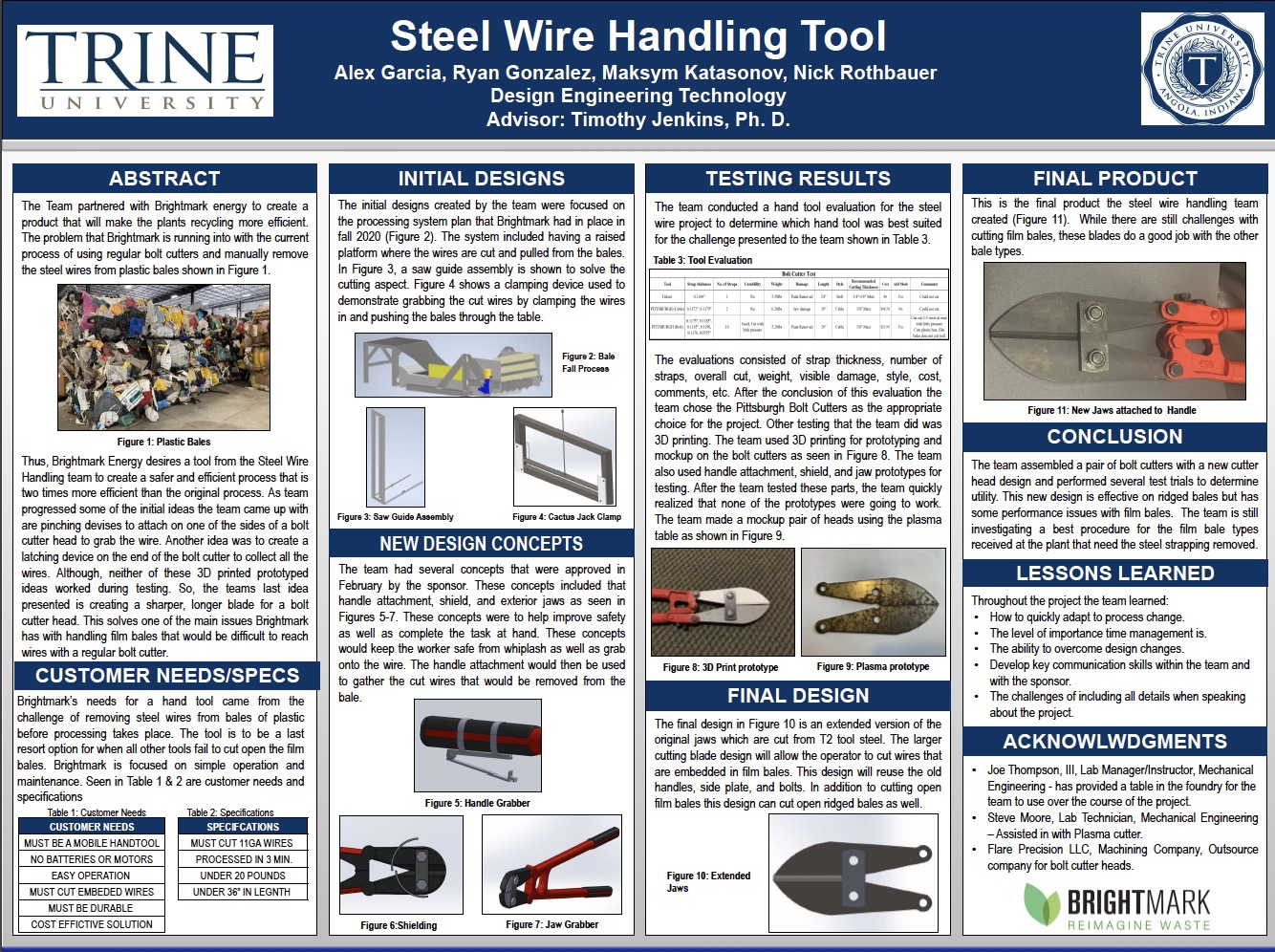
The team partnered with Brightmark Energy to create a product that will make the plant's recycling more efficient. The problem that Brightmark is running into is the current process of using regular bolt cutters and manually removing the steel wires from plastic bales. Thus, Brightmark Energy desires a tool from the steel wire handling team to create a safer process that is two times more efficient than the original process.
Members: Alex Garcia, Ryan Gonzalez, Maksym Katasonov and Nick Rothbauer
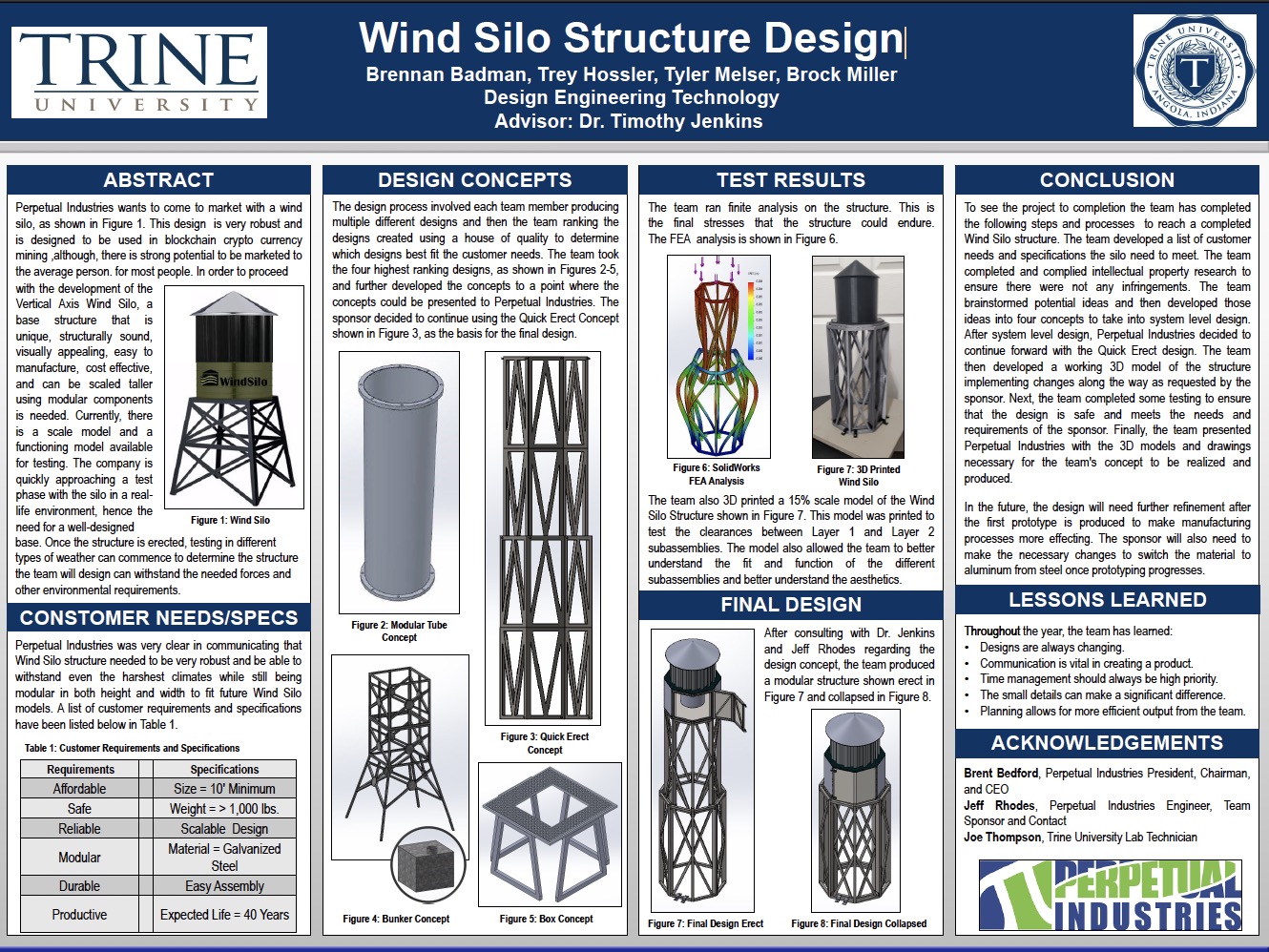
Perpetual Industries wants to come to market with a wind silo. This design is very robust and is designed to be used in blockchain crypto currency mining, although there is a strong potential to be marketed to the average person. In order to proceed with the development of the Vertical Axis Wind Silo, a base structure that is unique, structurally sound, visually appealing, easy to manufacture, cost effective and can be scaled taller using modular components is needed. Currently, there is a scale model and a functioning model available for testing. The company is quickly approaching a test phase with the silo in a real-life environment, hence the need for a well-designed base. Once the structure is erected, testing in different types of weather can commence to determine if the structure the team will design can withstand the needed forces and other environmental requirements.
Members: Brennan Badman, Trey Hossler, Tyler Melser and Brock Miller
Department of Electrical and Computer Engineering
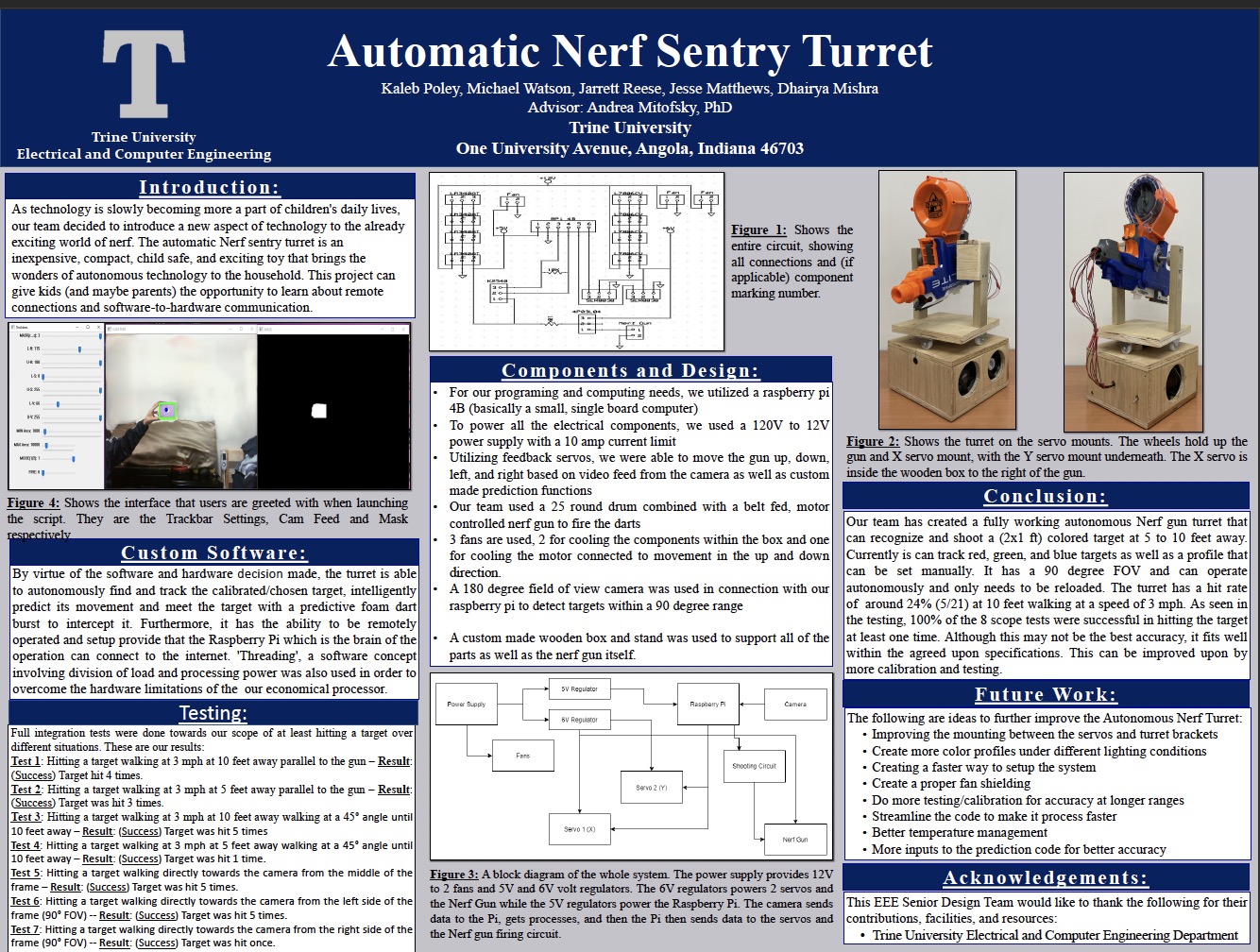
As technology is slowly becoming more a part of children's daily lives, our team decided to introduce a new aspect of technology to the already exciting world of Nerf, the automatic Nerf sentry turret is an inexpensive, compact, child-safe and exciting toy that brings the wonders of autonomous technology to the household. This project can give kids (and maybe parents) the opportunity to learn about remote connections and software-to-hardware communication.
Members: Kaleb Poley, Michael Watson, Jarrett Reese, Jesse Matthews and Dahirya Mishra
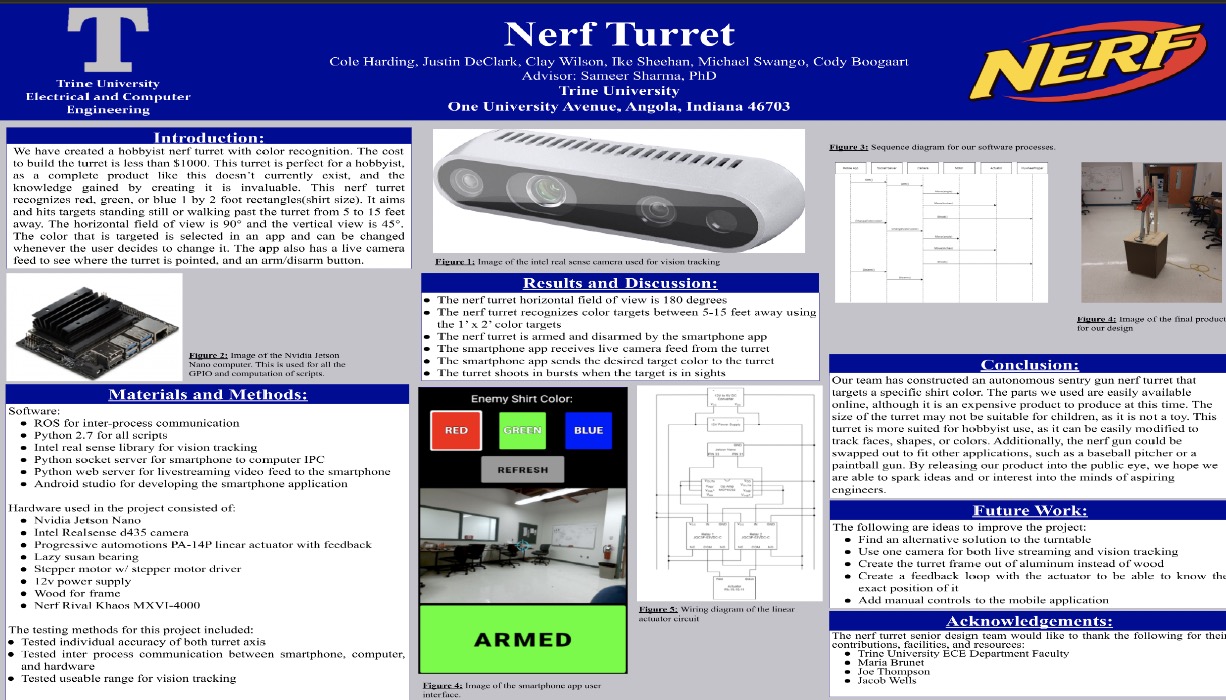
We have created a hobbyist Nerf turret with color recognition. The cost to build the turret is less than $1,000. This turret is perfect for a hobbyist, as a complete product like this doesn't currently exist, and the knowledge gained by creating it is invaluable. This Nerf turret recognizes red, green or blue 1x2 foot rectangles (shirt size). It aims and hits targets standing still or walking past the turret from five to 15 feet away. The horizontal field of view is 90° and the vertical view is 45°. The color that is targeted is selected in an app and can be changed whenever the user decides to change it. The app also has a live camera feed to see where the turret is pointed, an an arm/disarm button.
Members: Cold Harding, Justin DeClark, Clay Wilson, Ike Sheeham, Michael Swango and Cody Boogaart
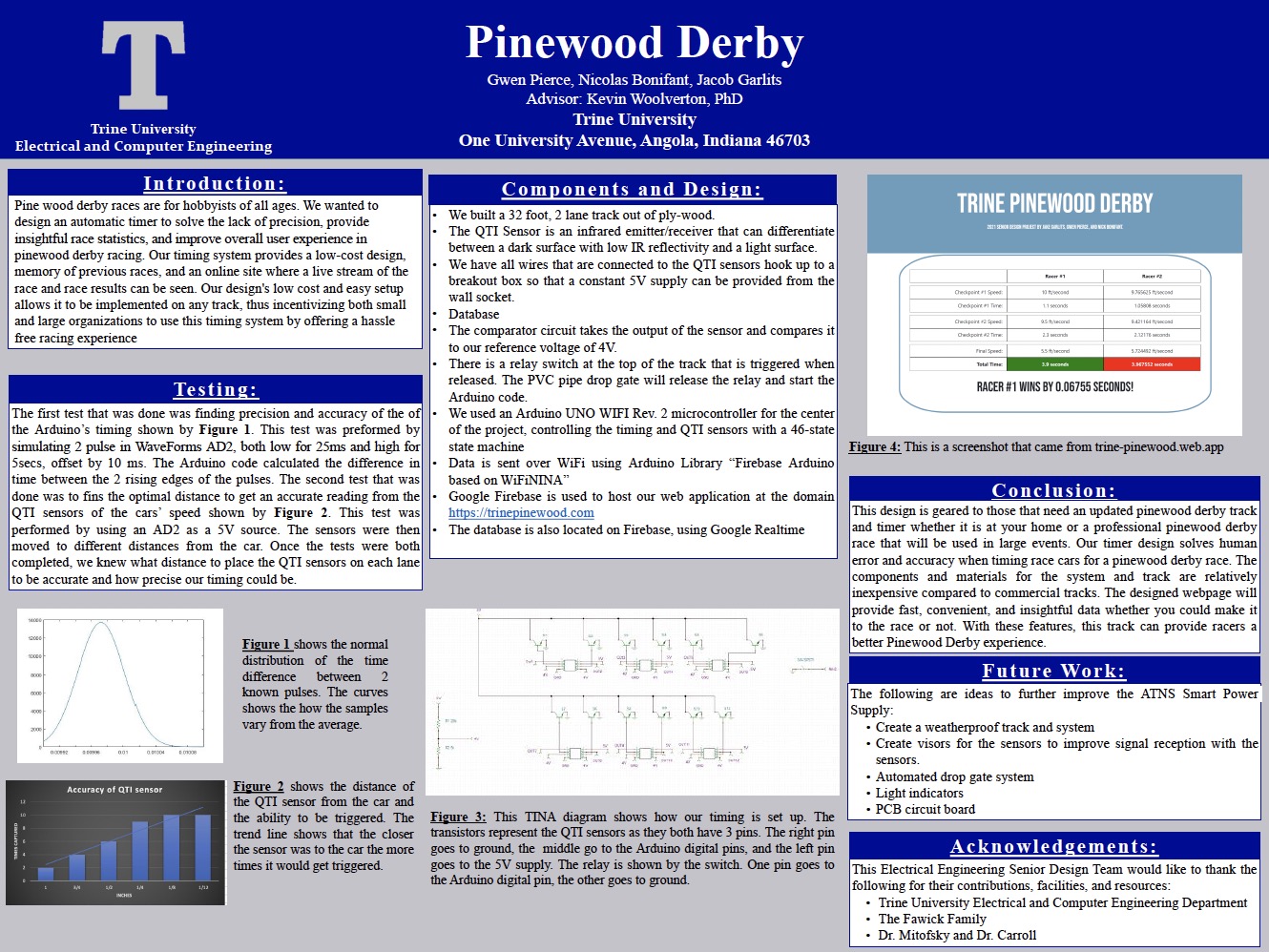
Pinewood derby races are for hobbyists of all ages. We wanted to design an automatic timer to solve the lack of precision, provide insightful race statistics and improve overall user experience in pinewood derby racing. Our timing system provides a low-cost design, memory of previous races and an online site where a livestream of the race and race results can be seen. Our design's low cost and easy setup allows it to be implemented on any track, thus incentivizing both small and large organizations to use this timing system by offering a hassle-free racing experience.
Members: Gwen Pierce, Nicolas Bonifant and Jacob Garlits
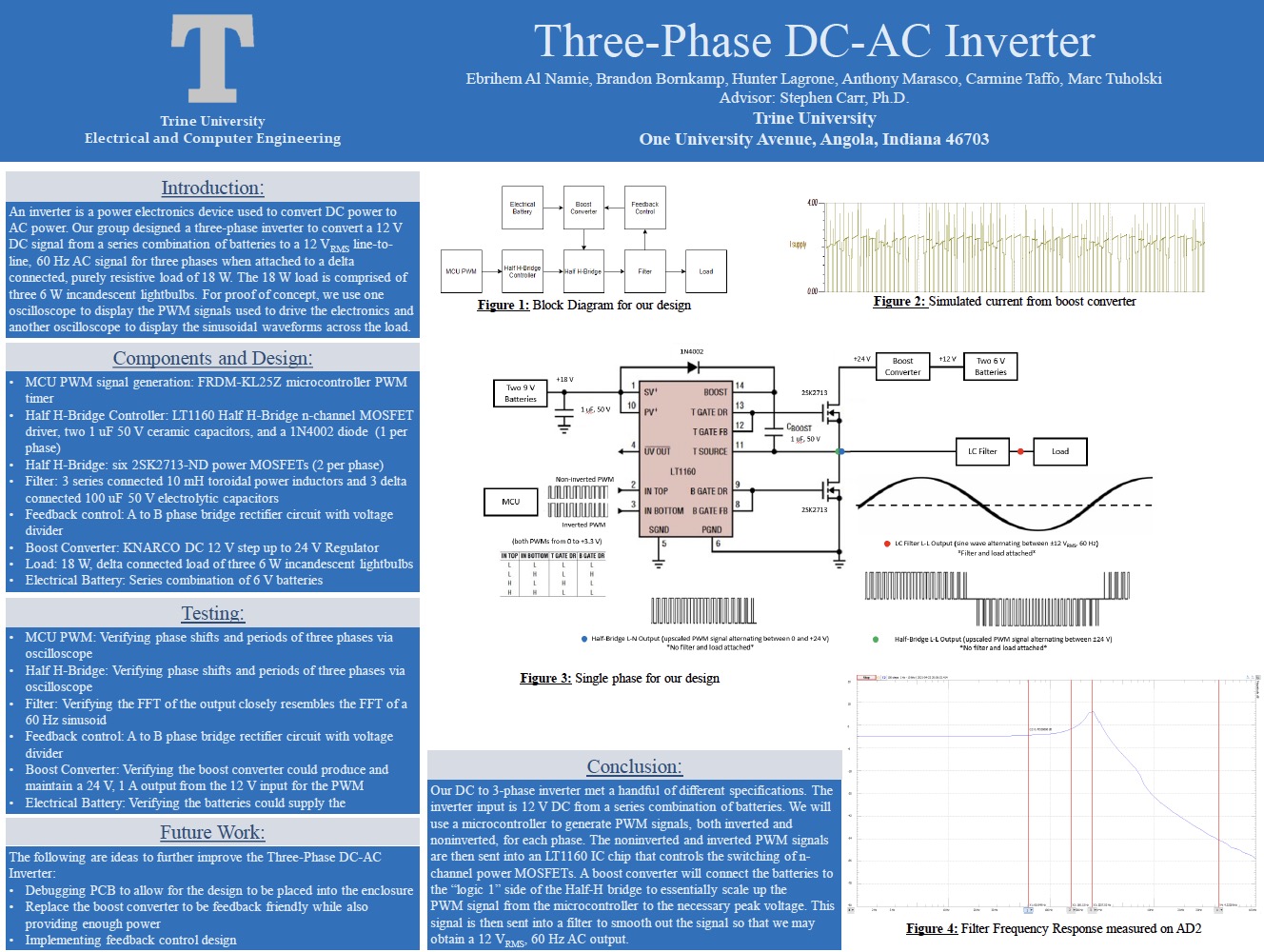
An inverter is a power electronics device used to convert DC power to AC power. Our group designed a three-phase inverter to convert a 12 V DC signal from a series combination of batteries to a 12 V RMS line-to-line, 60 Hz AC signal for three phases when attached to a delta connected, purely resistive load of 18 W. The 18 W load is comprised of three 6 W incandescent lightbulbs. For proof of concept, we use one oscilloscope to display the PWM signals used to drive the electronics and another oscilloscope to display the sinusoidal waveforms across the load.
Members: Ebrihem Al Namie, Brandon Bornkamp, Hunter Lagrone, Anthony Marasco, Carmine Taffo and Marc Tuholski
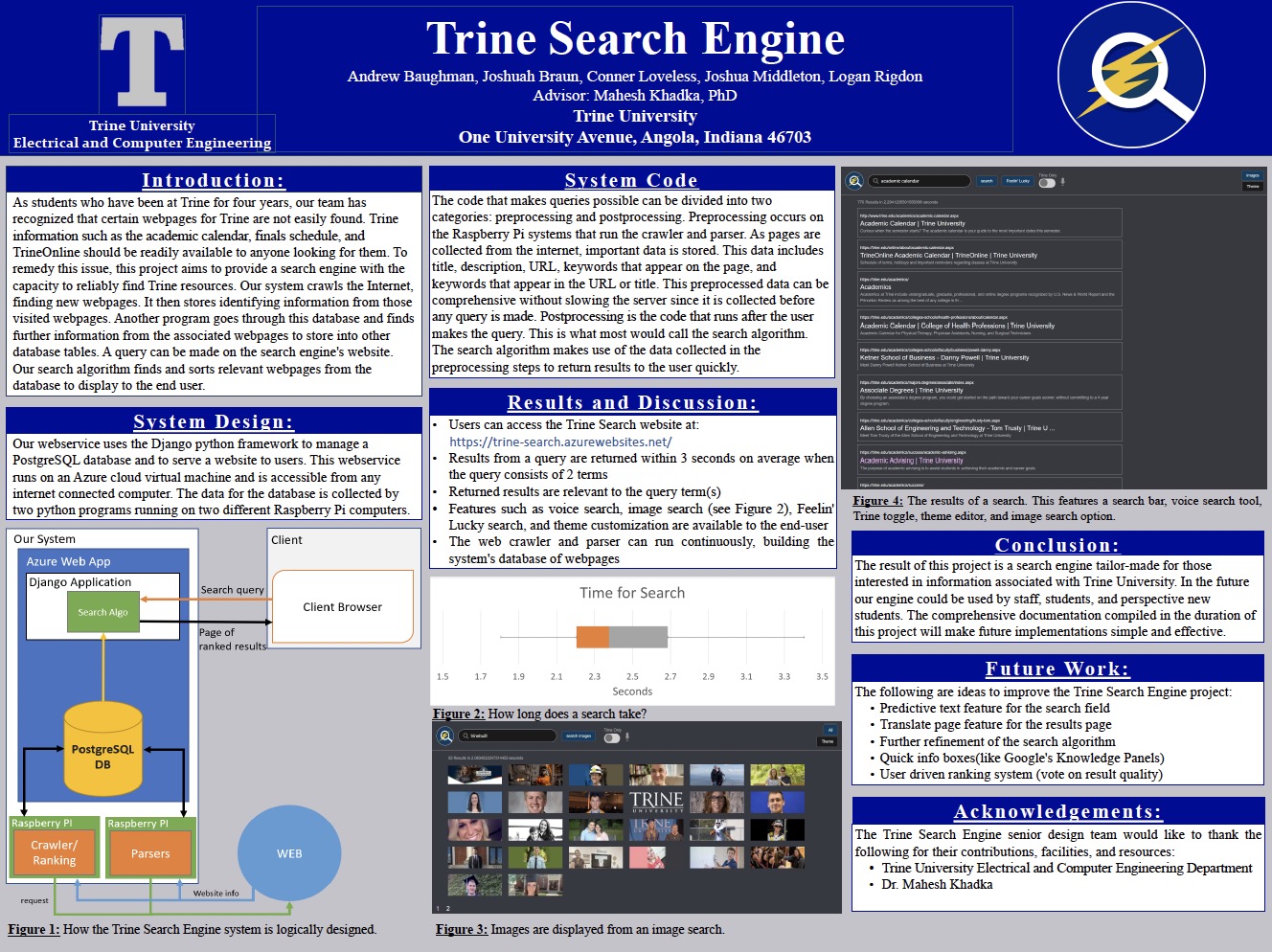
As students who have been at Trine for four years, our team has recognized that certain webpages for Trine are not easily found. Trine information, such as the academic calendar, finals schedule and TrineOnline, should be readily available to anyone looking for them. To remedy this issue, this project aims to provide a search engine with the capacity to reliably find Trine resources. Our system crawls the Internet, finding new webpages. It then stores identifying information from those visited webpages. Another program goes through this database and find further information from the associated webpages to store into other database tables. A query can be made on the search engine's website. Our search algorithm finds and sorts relevant webpages from the database to display to the end user.
Members: Andrew Baughman, Joshua Braun, Conner Loveless, Joshua Middleton and Logan Rigdon
Wade Department of Mechanical and Aerospace Engineering
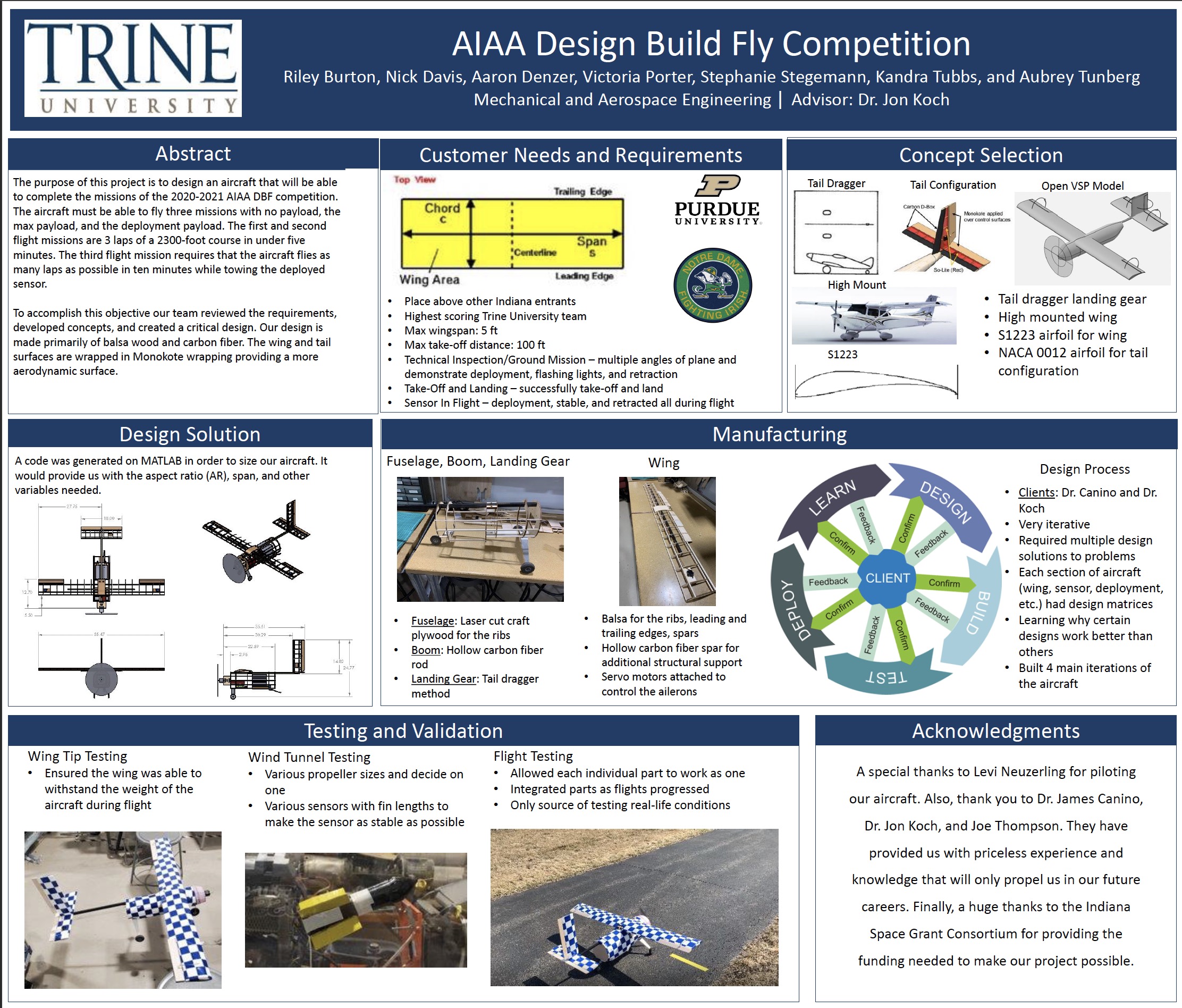
The purpose of this project is to design an aircraft that will be able to complete the missions of the 2020-2021 AIAA DBF competition. The aircraft must be able to fly three missions with no payload, the max payload and the deployment payload. The first and second flight missions are three laps of a 2300-foot course in under five minutes. The third flight mission requires that the aircraft flies as many laps as possible in 10 minutes while towing the deployed sensor. To accomplish this objective, our team reviewed the requirements, developed concepts and created a critical design. Our design is made primarily of balsa wood and carbon fiber. The wing and tail surfaces are wrapped in Monokote wrapping providing a more aerodynamic surface.
Members: Riley Burton, Nick Davis, Aaron Denzer, Victoria Porter, Stephanie Stegemann, Kandra Tubbs and Aubrey Tunberg
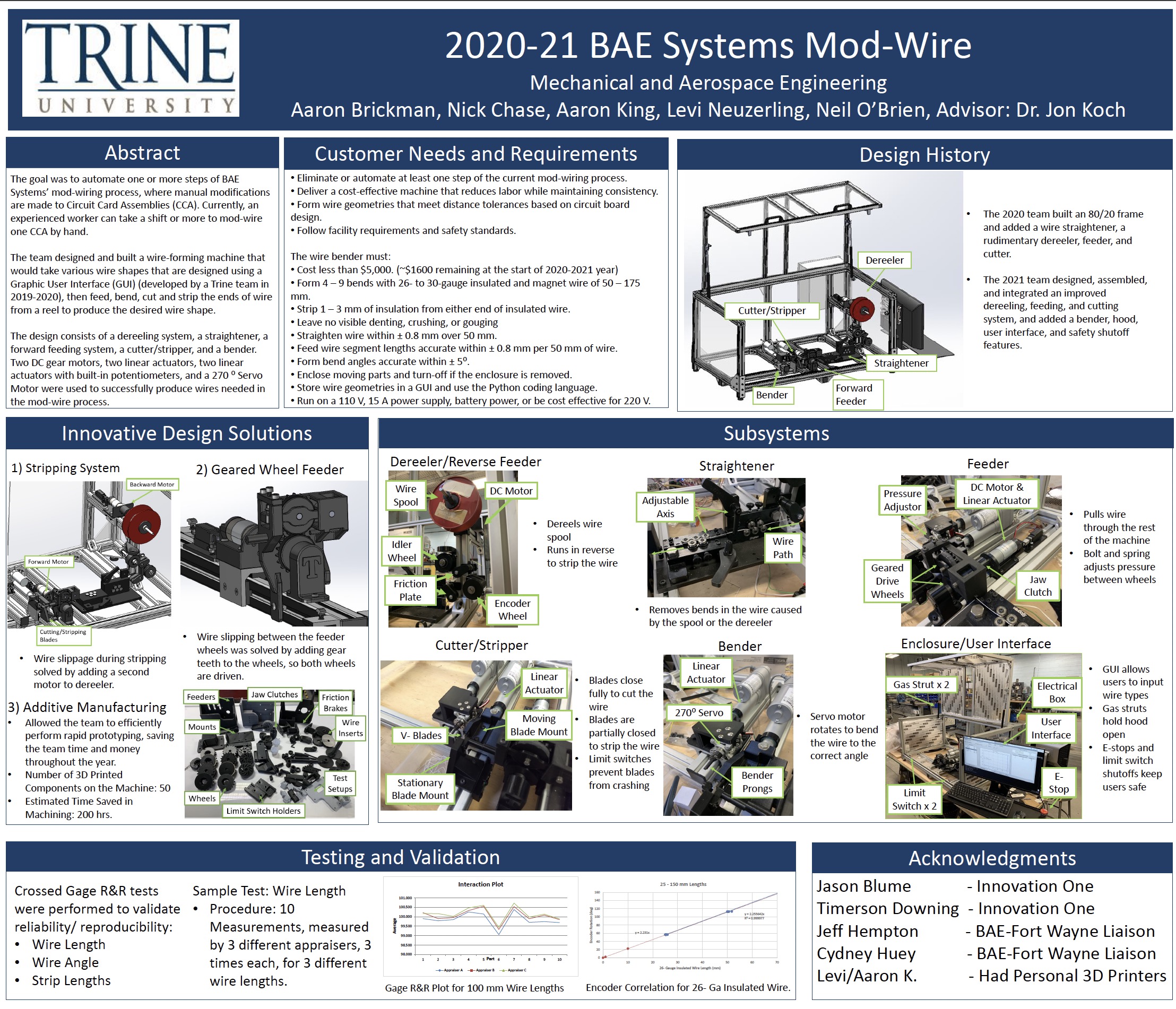
The goal was to automate one or more steps of BAE Systems' mod-wiring process, where manual modifications are made to Circuit Card Assemblies (CCA). Currently, an experienced worker can take a shift or more to mod-wire one CCA by hand. The team designed and built a wire-forming machine that would take various wire shapes that are designed using a Graphic User Interface (GUI) (developed by a Trine team in 2019-2020), then feed, bend, cut and strip the ends of wire from a reel to produce the desired wire shape.
Members: Aaron Brickman, Nick Chase, Aaron King, Levi Neuzerling and Neil O'Brien
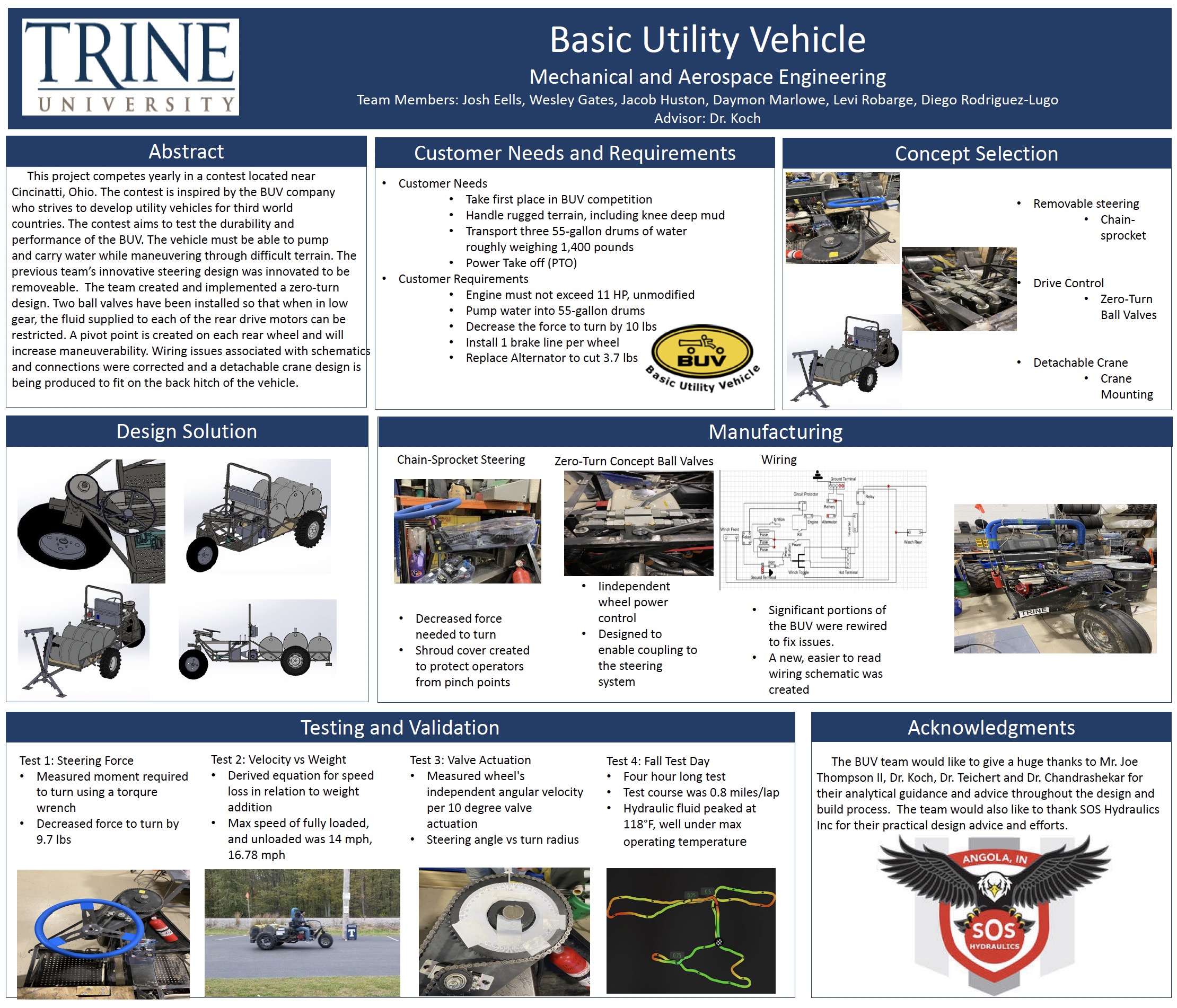
This project competes yearly in a contest located near Cincinnati, Ohio. The contest is inspired by the BUV company who strives to develop utility vehicles for third world countries. The contest aims to test the durability and performance of the BUV. The vehicle must be able to pump and carry water while maneuvering through difficult terrain. The previous team's innovative steering design was innovated to be removable. The team created and implemented a zero-turn design. Two ball valves have been installed so that when in low gear, the fluid supplied to each of the rear drive motors can be restricted. A pivot point is created on each rear wheel and will increase maneuverability. Wiring issues associated with schematics and connections were corrected and a detachable crane design is being produced to fit on the back hitch of the vehicle.
Members: Josh Eells, Wesley Gates, Jacob Huston, Daymon Marlowe, Levi Robarge and Diego Rodriguez-Lugo
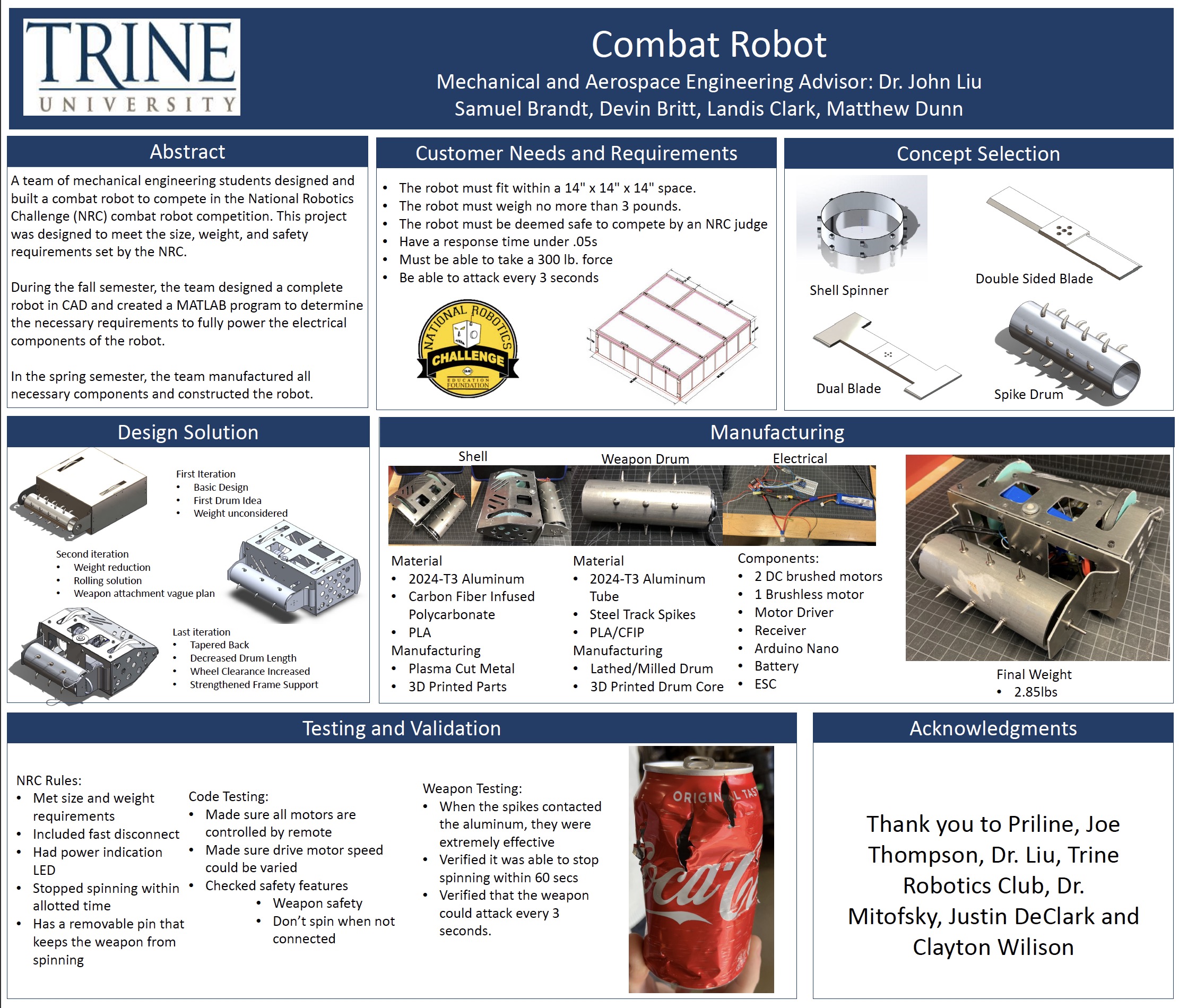
A team of mechanical engineering students designed and built a combat robot to compete in the National Robotics Challenge (NRC) combat robot competition. This project was designed to meet the size, weight and safety requirements set by the NRC. During the fall semester, the team designed a complete robot in CAD and created a MATLAB program to determine the necessary requirements to fully power the electrical components of the robot. In the spring semester, the team manufactured all necessary components and constructed the robot.
Members: Samuel Brandt, Devin Britt, Landis Clark and Matthew Dunn
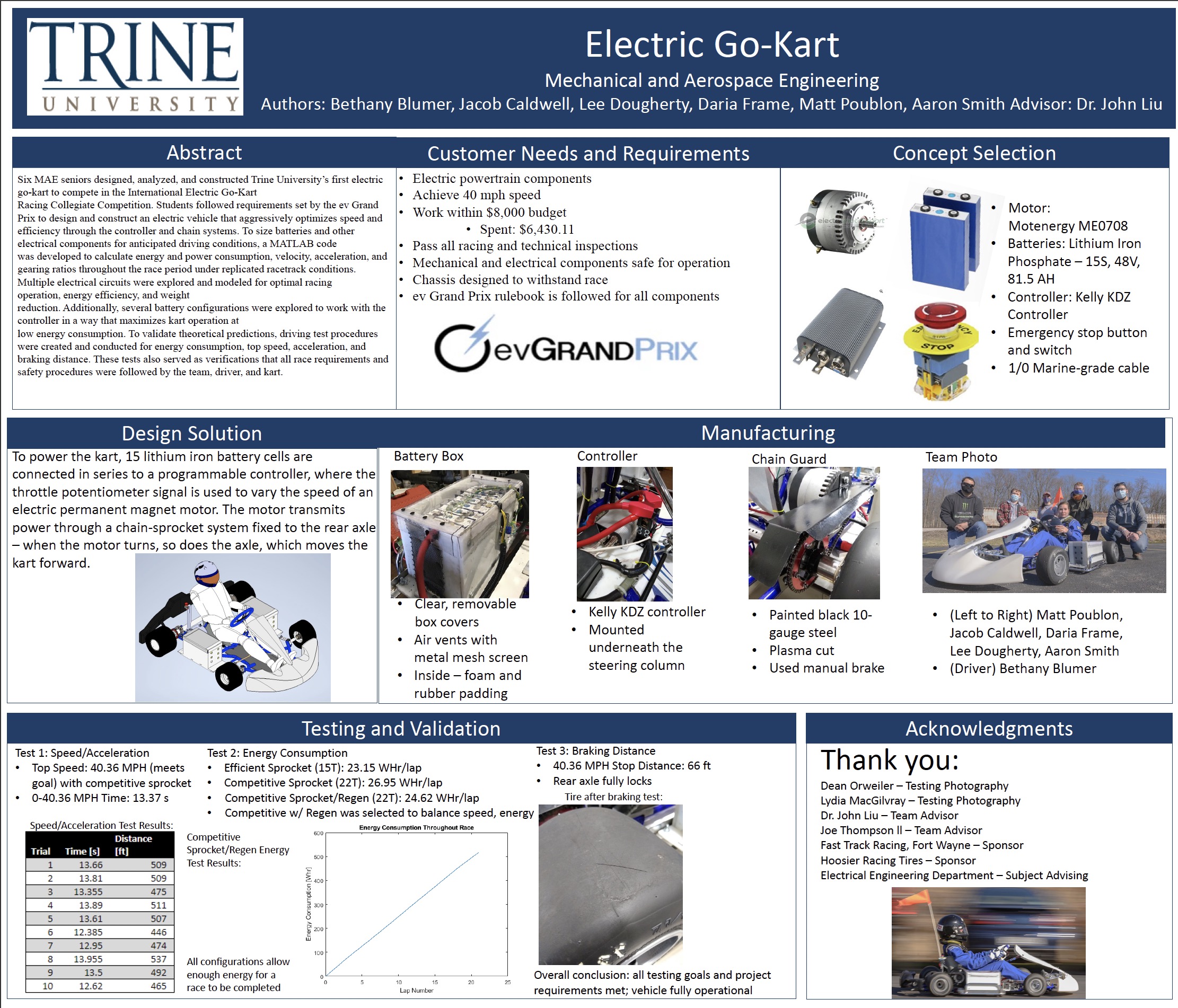
Six MAE seniors designed, analyzed and constructed Trine University's first electric go-kart to compete in the International Electric Go-Kart Racing Collegiate Competition. Students followed requirements set by the ev Grand Prix to design and construct an electric vehicle that aggressively optimizes speed and efficiency through the controller and chain systems. To size batteries and other electrical components for anticipated driving conditions, a MATLAB code was developed to calculate energy and power consumption, velocity, acceleration and gearing ratios throughout the race period under replicated racetrack conditions. Multiple electrical circuits were explored and modeled for optimal racing operation, energy efficiency and weight reduction. Additionally, several battery configurations were explored to work with the controller in a way that maximizes kart operation at low energy consumption. To validate theoretical predictions, driving test procedures were created and conducted for energy consumption, top speed, acceleration and braking distance. These tests also served as verifications that all race requirements and safety procedures were followed by the team, driver and kart.
Members: Bethany Blumer, Jacob Caldwell, Lee Dougherty, Daria Frame, Matt Poublon and Aaron Smith
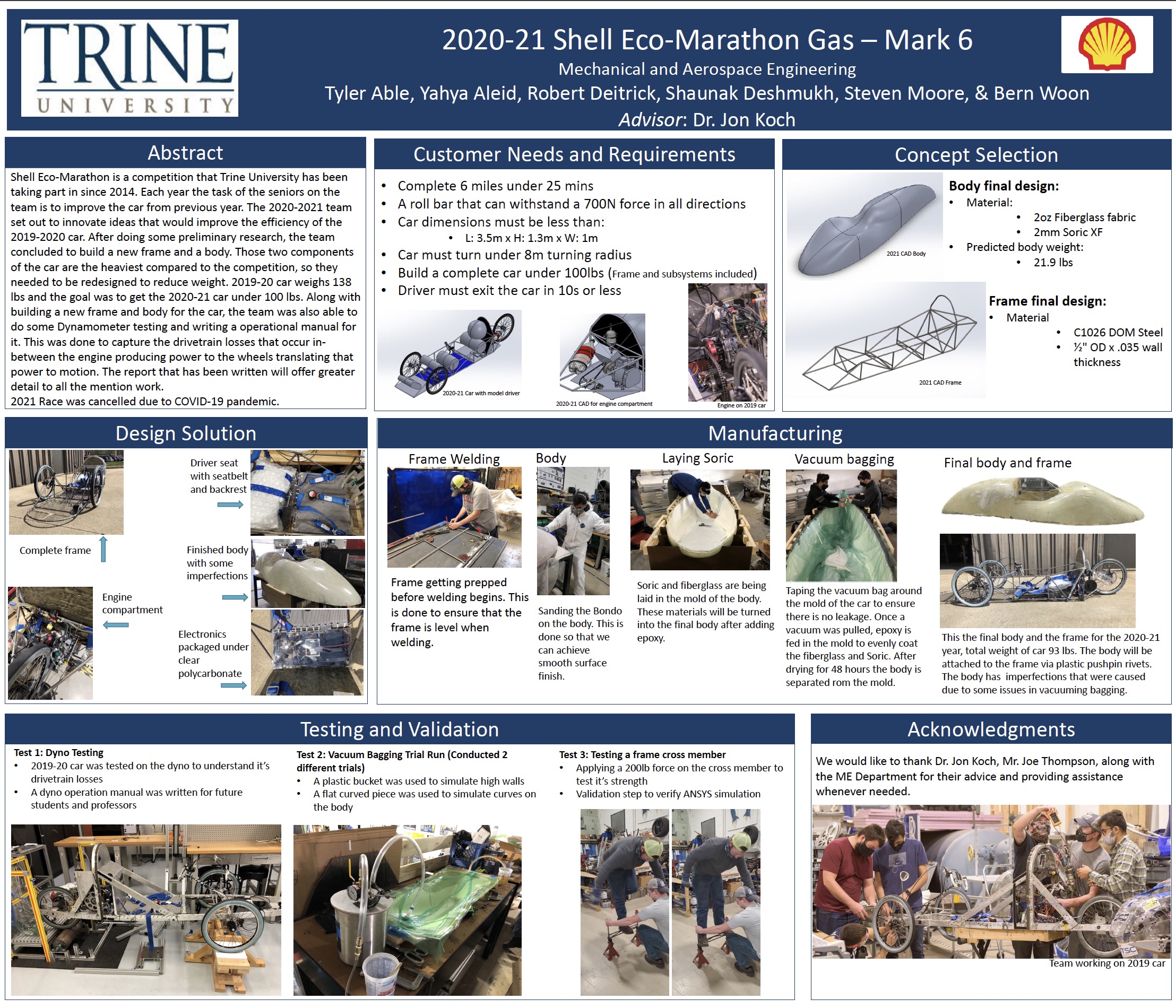
Shell Eco-marathon is a competition that Trine University has been taking part in since 2014. Each year the task of the seniors on the team is to improve the car from the previous year. The 2020-2021 team set out to innovative ideas that would improve the efficiency of the 2019-2020 car. After doing some preliminary research, the team concluded to build a new frame and a body. Those two components of the car are the heaviest compared to the competition, so they needed to be redesigned to reduce weight. Along with building a new frame and body for the car, the team was also able to do some Dynamometer testing and writing an operational manual for it. This was done to capture the drivetrain losses that occur in between the engine producing power to the wheels translating that power to motion.
Members: Tyler Able, Yahya Aleid, Robert Deitrick, Shaunak Deshmukh, Steven Moore and Bern Woon
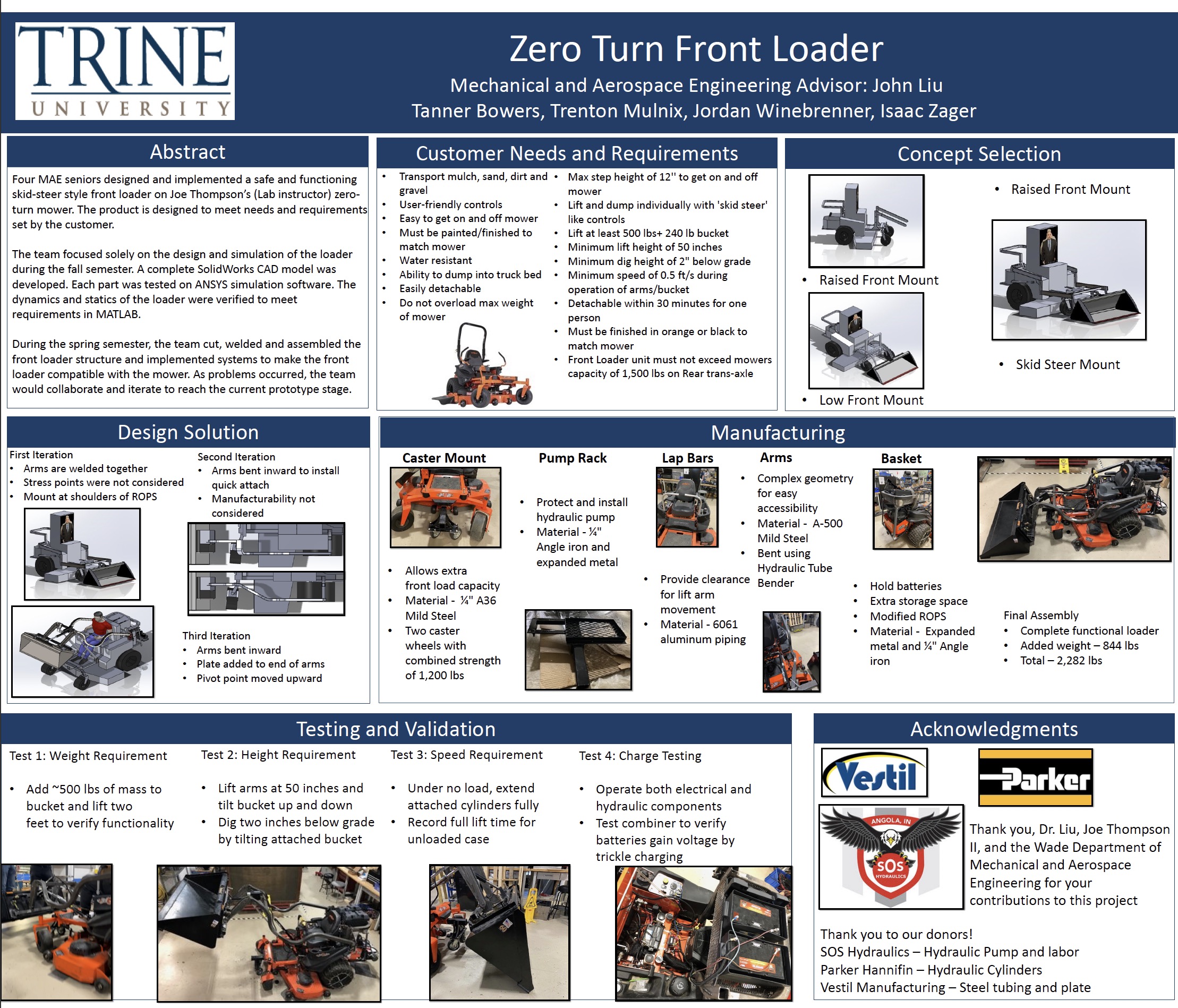
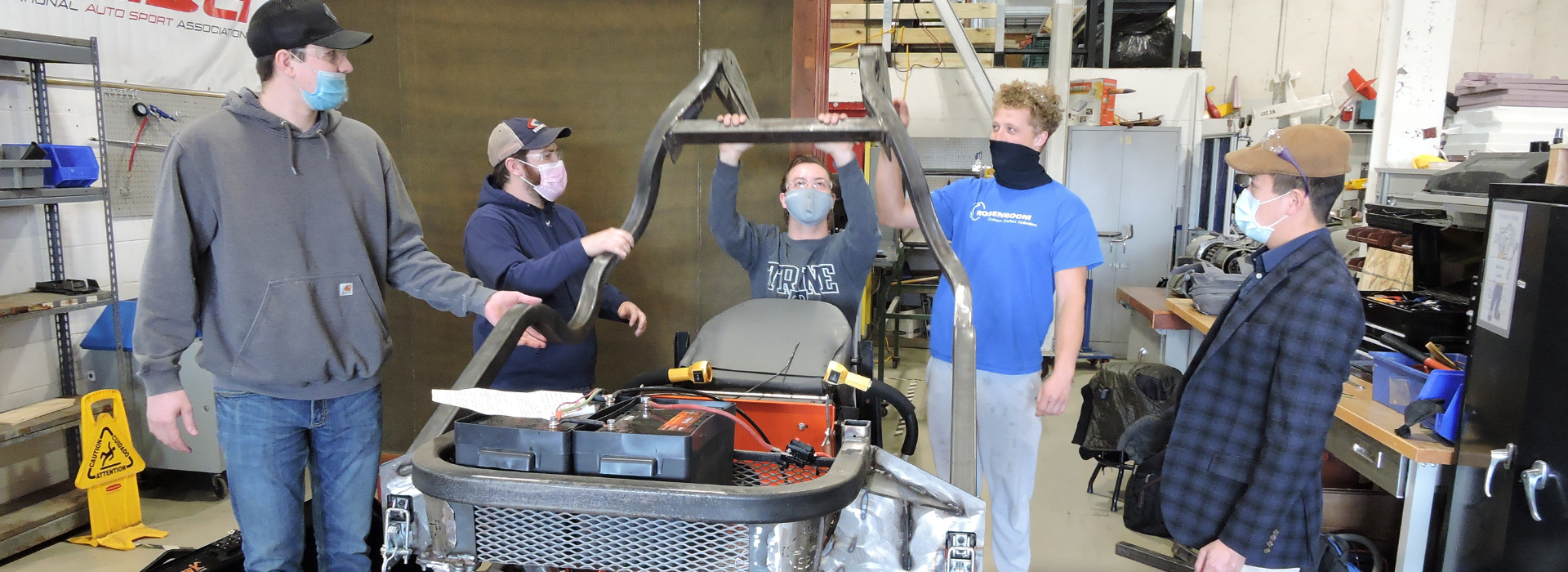
Four MAE seniors designed and implemented a safe and functioning skid-steer style front loader on Joe Thompson's (lab instructor) zero-turn mower. The product is designed to meet needs and requirements set by the customer. The team focused solely on the design and simulation of the loader during the fall semester. A complete SolidWorks CAD model was developed. Each part was tested on ANSYS simulation software. The dynamics and statics of the loader were verified to meet requirements in MATLAB. During the spring semester, the team cut, welded and assembled the front loader structure and implemented systems to make the front loader compatible with the mower. As problems occurred, the team would collaborate and iterate to reach the current prototype stage.
Members: Tanner Bowers, Trenton Mulnix, Jordan Winebrenner and Isaac Zager