2020 Engineering Design Expo
Innovative research for industry-based projects
Despite the recent challenges in our world, the Allen School of Engineering & Computing is continuing to grow in our ability to offer innovative research and industry-based projects for our students. We collaborate with many individuals, companies and organizations who contribute so much of their time, talent, materials and support to make the Engineering Design Expo possible. We are extremely appreciative of our industry sponsors that account for the majority of our total projects. Due to the Covid-19 pandemic, the 2020 Engineering Design Expo was unable to be held in person. Instead, most students completed projects remotely with their groups.
Jim and Joan Bock Department of Biomedical Engineering
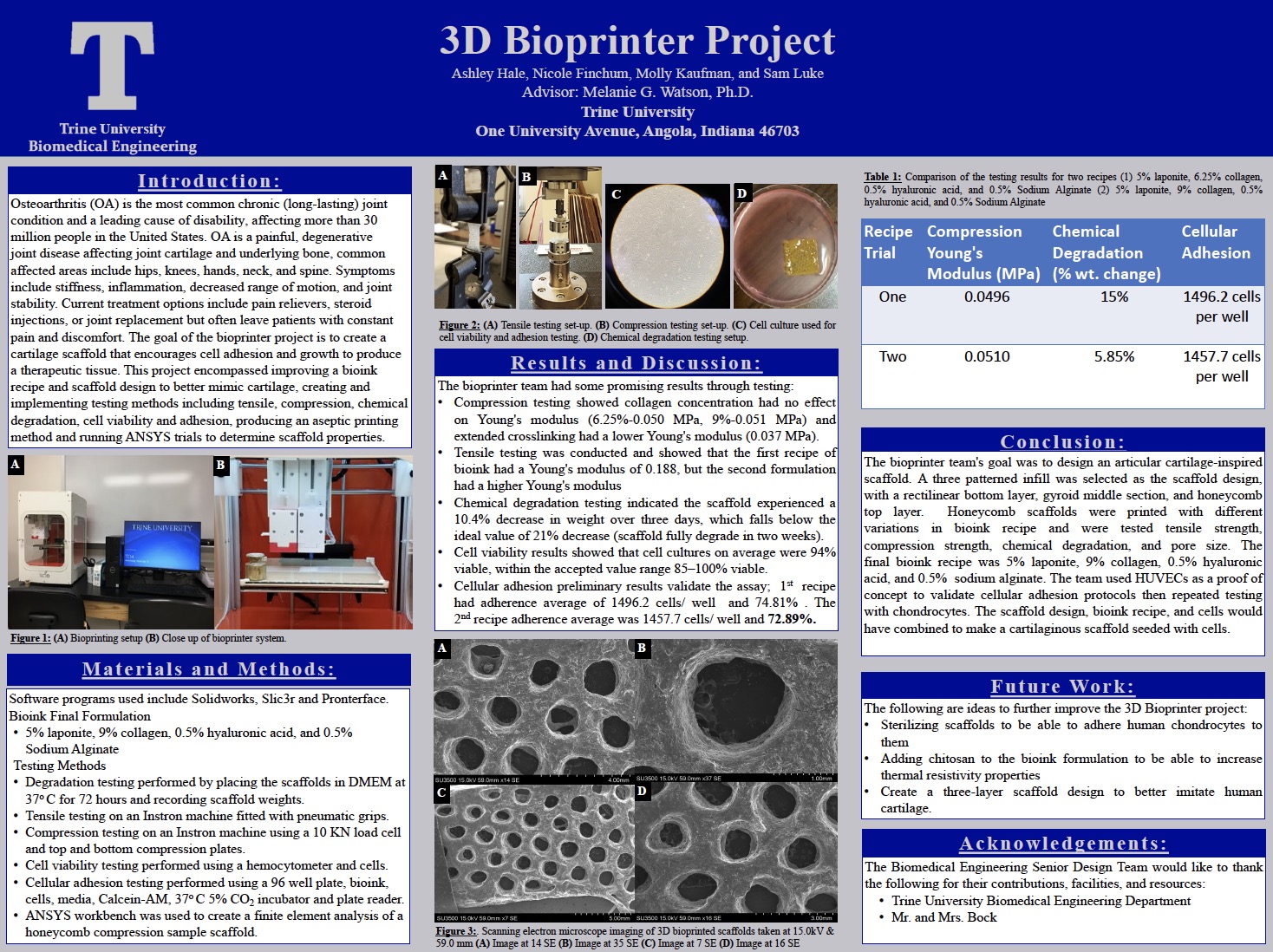
Osteoarthritis (OA) is the most common chronic (long-lasting) joint condition and a leading cause of disability, affecting more than 30 million people in the United States. OA is a painful, degenerative joint disease affecting joint cartilage and underlying bone, common affected areas include hips, knees, hands, neck and spine. Symptoms include stiffness, inflammation, decreased range of motion and joint stability. Current treatment options include pain relievers, steroid injections, or joint replacement but often leave patients with constant pain and discomfort. The goal of the bioprinter project is to create a cartilage scaffold that encourages cell adhesion and growth to produce a therapeutic tissue. This project encompassed improving a bioink recipe and scaffold design to better mimic cartilage, creating and implementing testing methods including tensile, compression, chemical degradation, cell viability and adhesion, producing an aseptic printing method and running ANSYS trials to determine scaffold properties.
Members: Ashley Hale, Nicole Finchum, Molly Kaufman and Same Luke
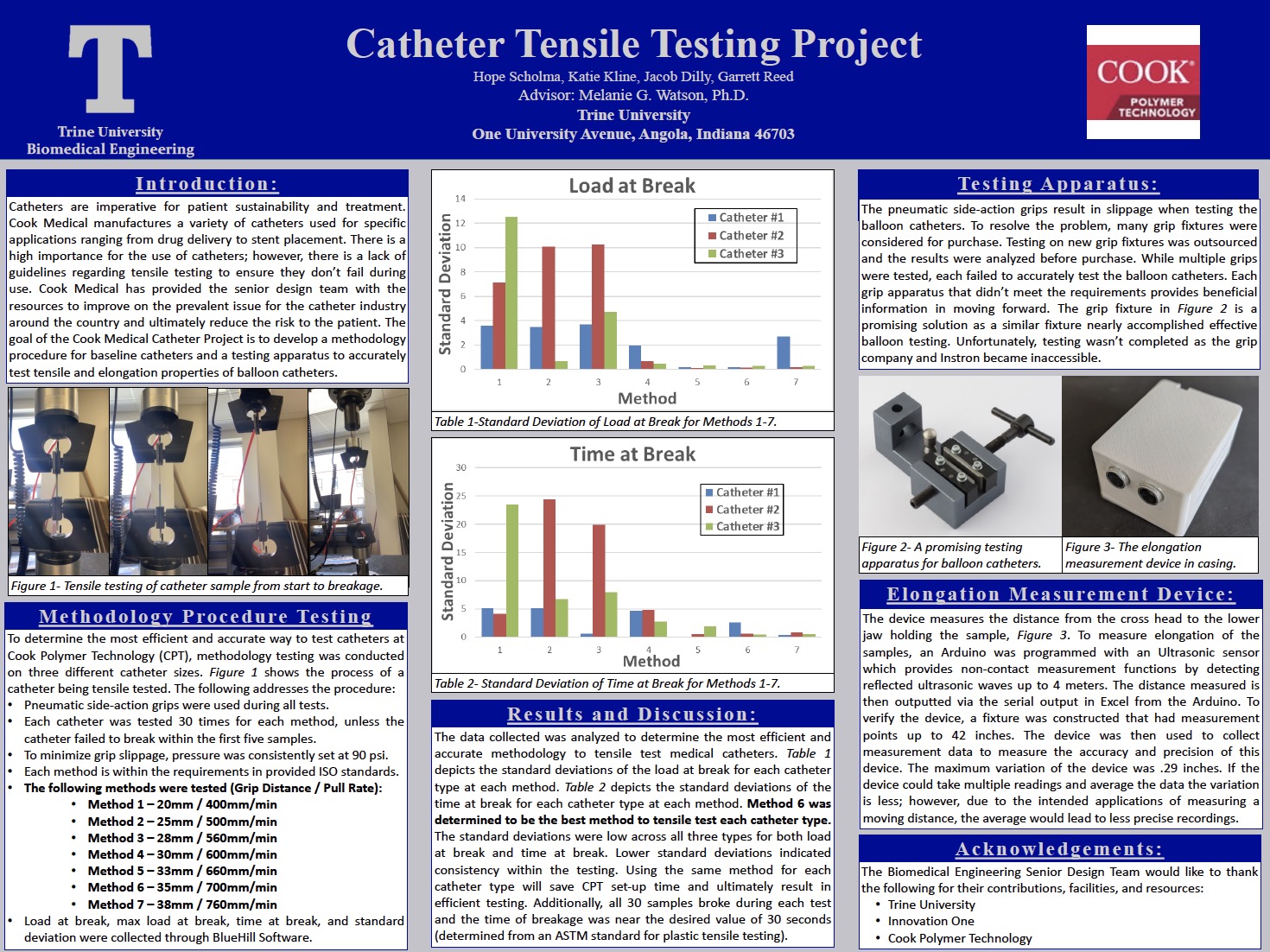
Catheters are imperative for patient sustainability and treatment. Cook Medical manufactures a variety of catheters used for specific applications ranging from drug delivery to stent placement. There is a high importance for the use of catheters; however, there is a lack of guidelines regarding tensile testing to ensure they don't fail during use. Cook Medical has provided the senior design team with the resources to improve on the prevalent issue for the catheter industry around the country and ultimately reduce the risk to the patient. The goal of the Cook Medical Catheter Project is to develop a methodology procedure for baseline catheters and a testing apparatus to accurately test tensile and elongation properties of balloon catheters.
Members: Hope Scholma, Katie Kline, Jacob Dilly and Garrett Reed
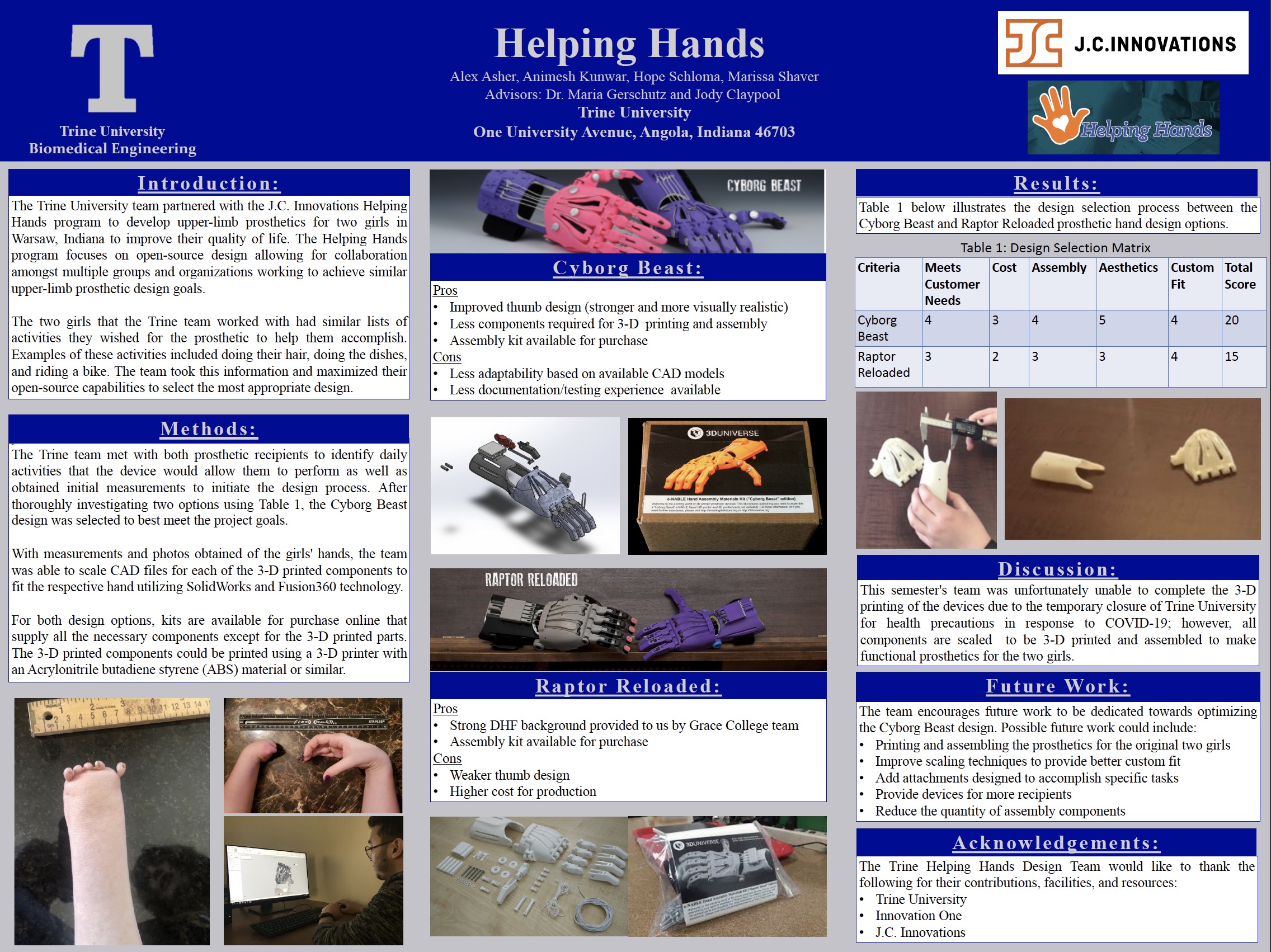
The Trine University team partnered with the J.C. Innovations Helping Hands program to develop upper-limb prosthetics for two girls in Warsaw, Indiana, to improve their quality of life. The Helping Hands program focuses on open-source design, allowing for collaboration amongst multiple groups and organizations working to achieve similar upper-limb prosthetic design goals. The two girls that the Trine team worked with had similar lists of activities they wished for the prosthetic to help them accomplish. Examples of these activities included doing their hair, doing the dishes and riding a bike.
Members: Alex Asher, Animesh Kunwar, Hope Schloma and Marissa Shaver
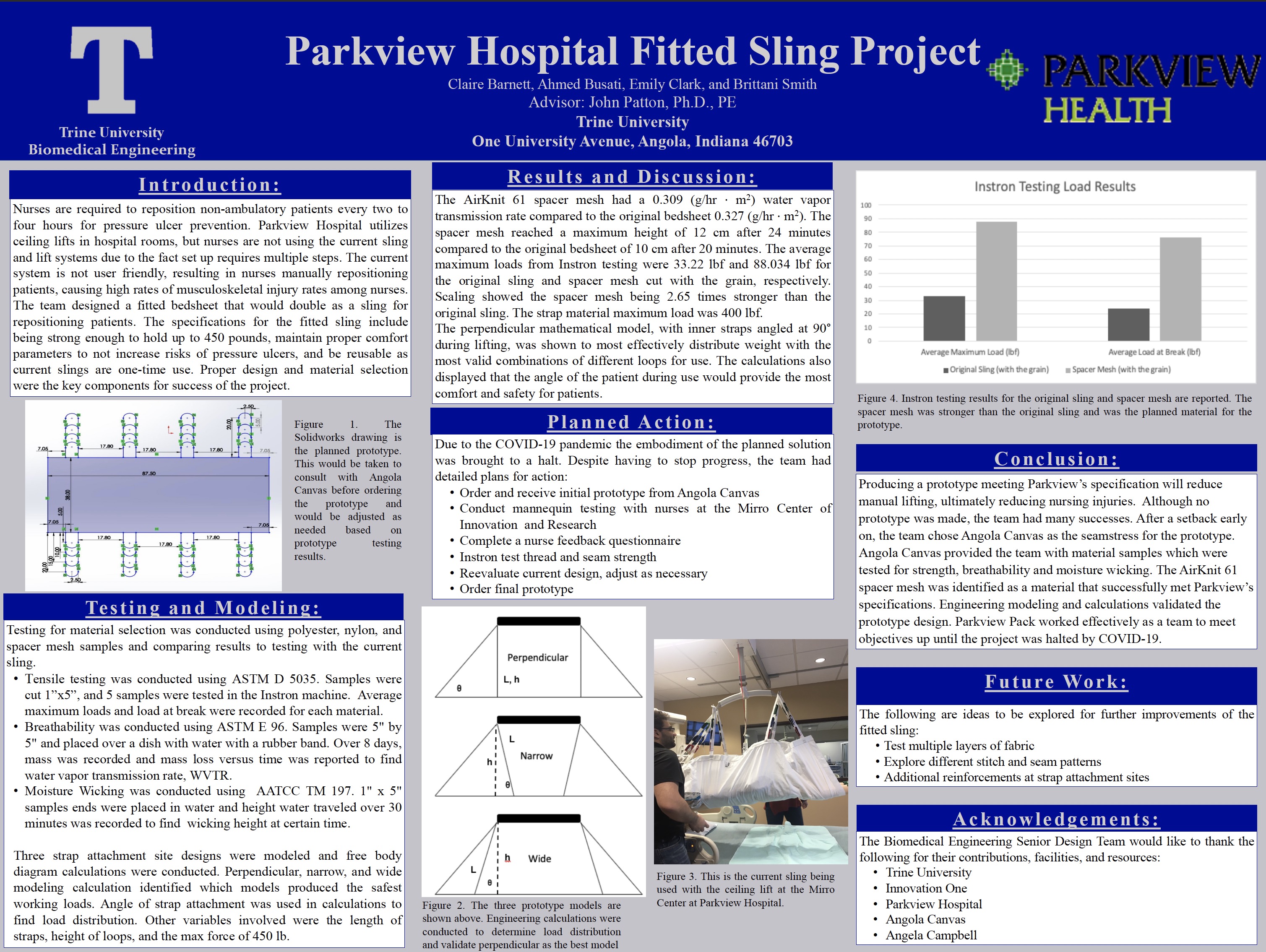
Nurses are required to reposition non-ambulatory patients every two to four hours for pressure ulcer prevention. Parkview Hospital utilizes ceiling lifts in hospital rooms, but nurses are not using the current sling and lift systems due to the fact set up requires multiple steps. The current system is not user friendly, resulting in nurses manually repositioning patients, causing high rates of musculoskeletal injury rates among nurses. The team designed a fitted bedsheet that would double as a sling for repositioning patients. The specifications for the fitted sling include being strong enough to hold up to 450 pounds, maintain proper comfort parameters to not increase risks of pressure ulcers and be reusable as current slings are one-time use. Proper design and material selection were the key components for success of the project.
Members: Claire Barnett, Ahmed Busati, Emily Clark and Brittani Smith
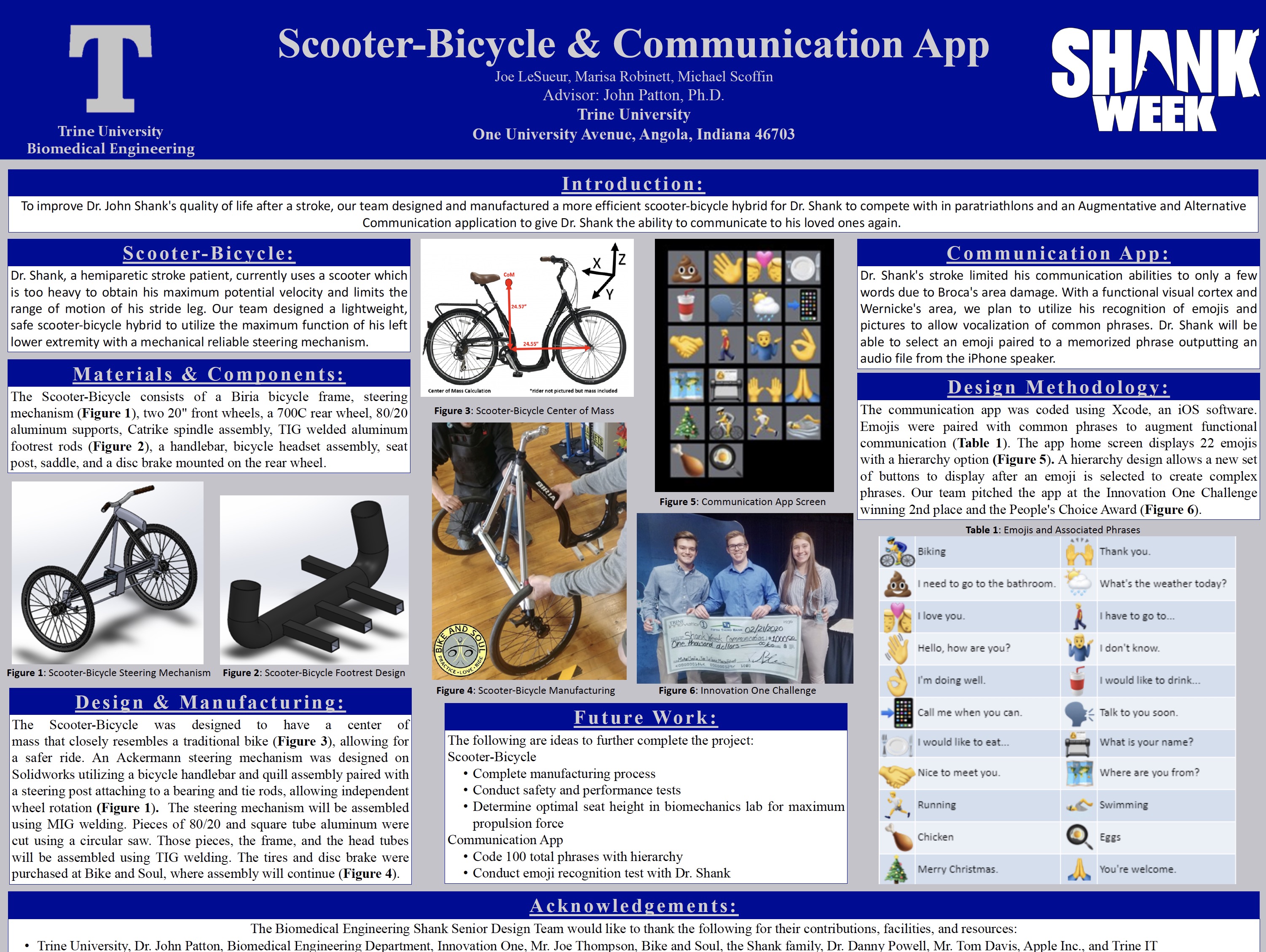
A hemiparetic stroke patient currently uses a scooter which is too heavy to obtain his maximum potential velocity and limits the range of motion of his stride leg. Our team designed a lightweight, safe scooter-bicycle hybrid to utilize the maximum function of his left lower extremity with a mechanical reliable steering mechanism.
Members: Joe LeSueur, Marisa Robinett and Michael Scoffin
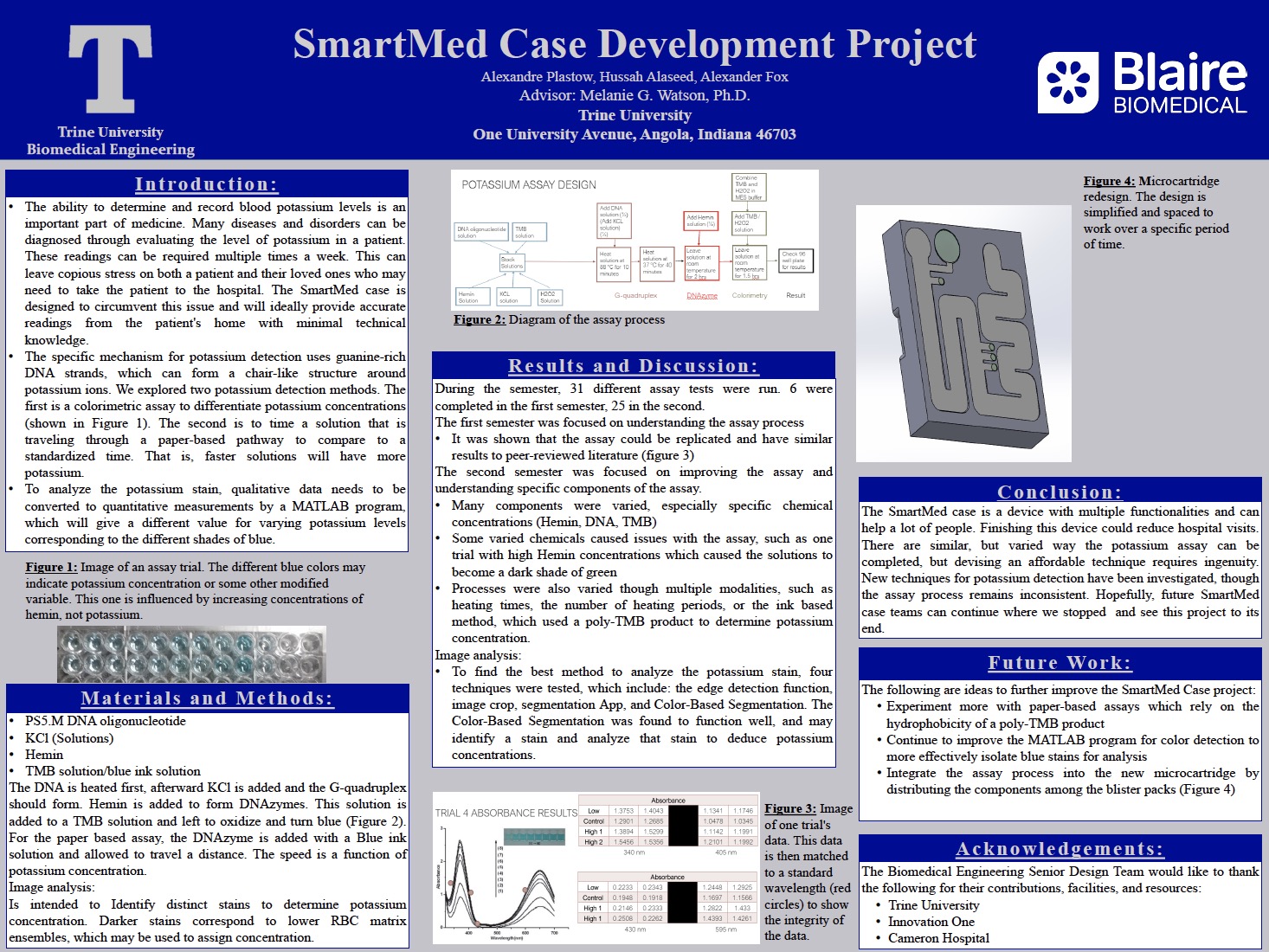
The ability to determine and record blood potassium levels is an important part of medicine. Many diseases and disorders can be diagnosed through evaluating the level of potassium in a patient. These readings can be required multiple times a week. This can leave copious stress on both a patient to the hospital. The SmartMed case is designed to circumvent this issue and will ideally provide accurate readings from the patient's home with minimal technical knowledge. The specific mechanism for potassium detection uses guanine-rich DNA strands, which can form a chair-like structure around potassium ions. We explored two potassium detection methods. The first is a colorimetric assay to differentiate potassium concentrations. The second is to time a solution that is traveling through a paper-based pathway to compare to a standardized time. This is, faster solutions will have more potassium. To analyze the potassium stain, qualitative data needs to be converted to quantitative measurements by a MATLAB program, which will give a different value for varying potassium levels corresponding to the different shades of blue.
Members: Alexandre Plastow, Hussah Alaseed and Alexander Fox
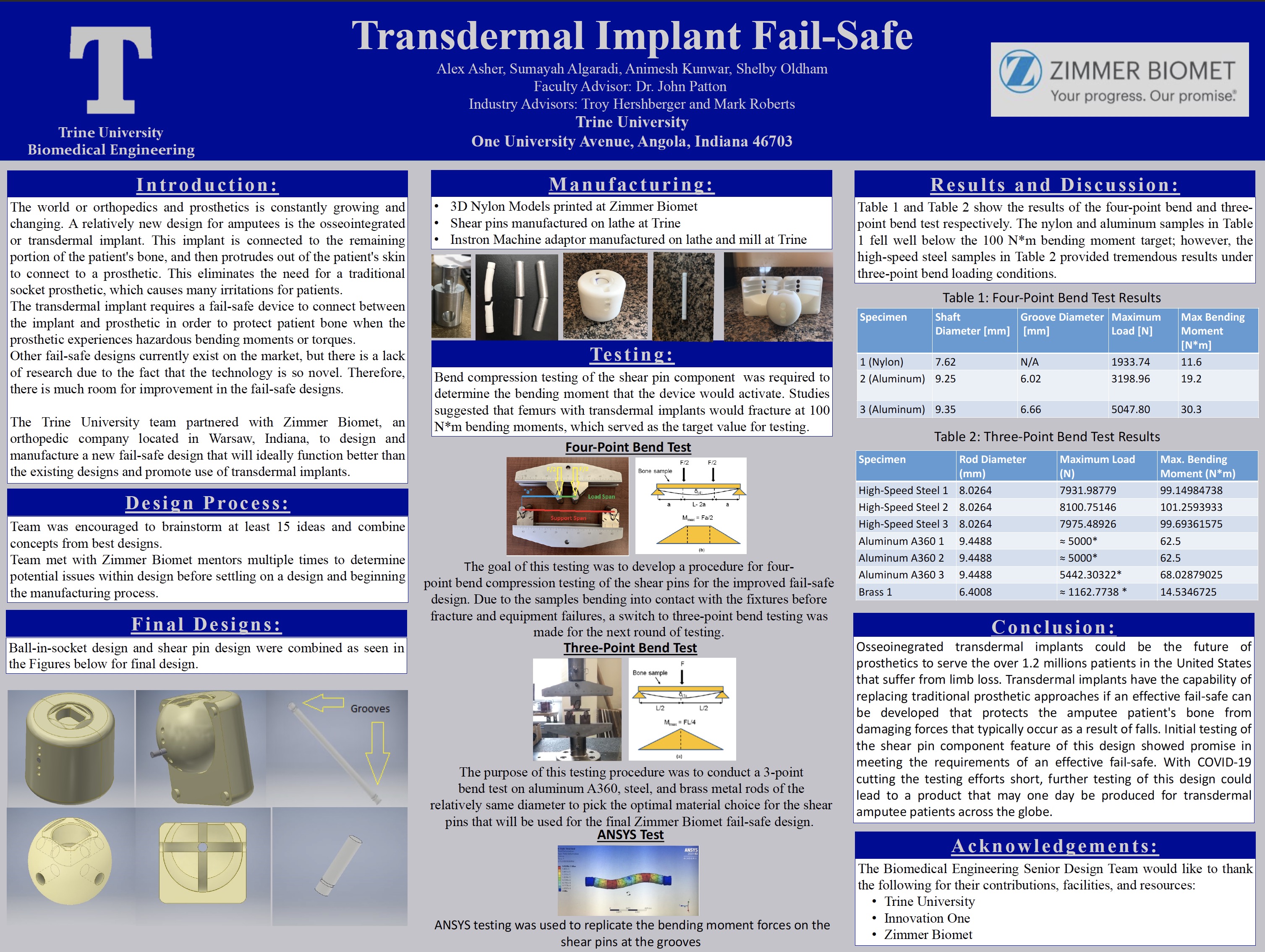
The world of orthopedics and prosthetics is constantly growing and changing. A relatively new design for amputees is the osseointegrated or transdermal implant. This implant is connected to the remaining portion of the patient's bone, and then protrudes out of the patient's skin to connect to a prosthetic. This eliminates the need for a traditional socket prosthetic, which causes many irritations for patients. The transdermal implant requires a fail-safe device to connect between the implant and prosthetic in order to protect patient bone when the prosthetic experiences hazardous bending moments or torques. Other fail-safe designs currently exist on the market, but there is a lack of research due to the fact that the technology is so novel. Therefore, there is much room for improvement in the fail-safe designs.
Members: Alex Asher, Sumayah Algaradi, Animesh Kunwar and Shelby Oldham
McKetta Department of Chemical and Bioprocess Engineering
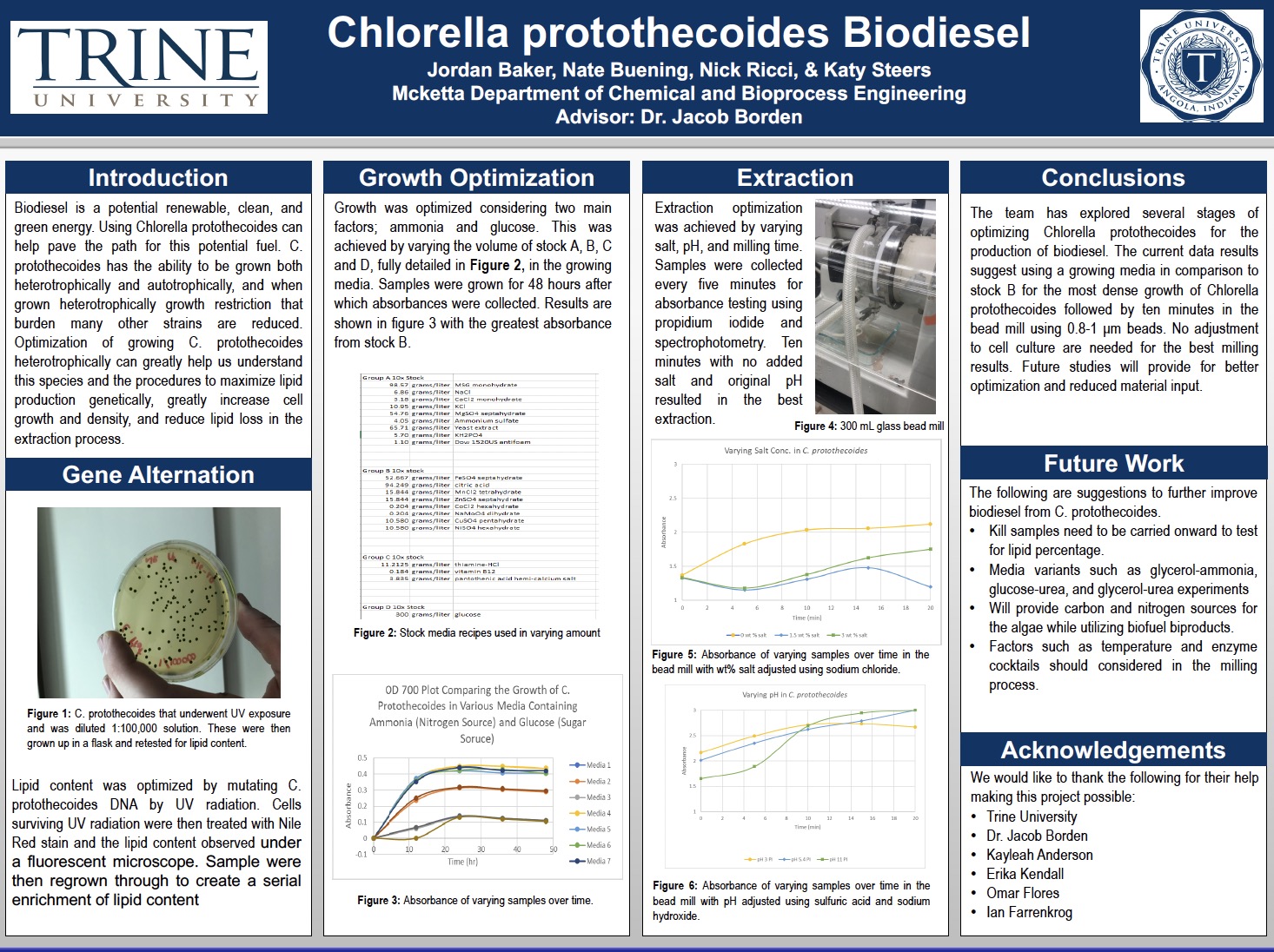
Biodiesel is a potential renewable, clean and green energy. Using Chlorella protothecoides can help pave the path for this potential fuel. C. protothecoides has the ability to be grown both heterotrophically and autotrophically, and when grown heterotrophically, growth restriction that burden many other strains are reduced. Optimization of growing C. protothecoides heterotrophically can greatly help us understand this species and the procedures to maximize lipid production genetically, greatly increase cell growth and density, and reduce lipid loss in the extraction process.
Members: Jordan Baker, Nate Buening, Nick Ricci and Katy Steers
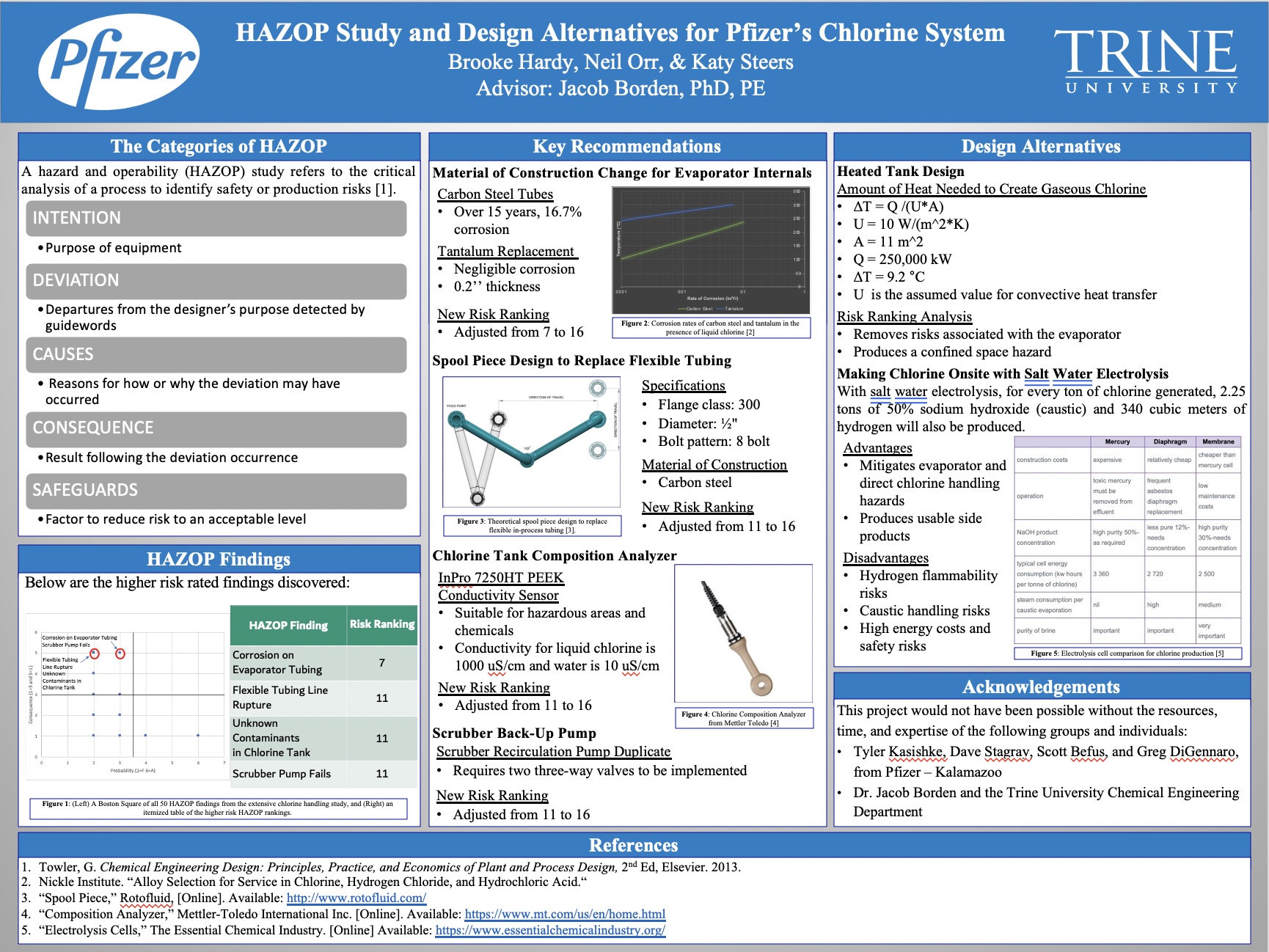
A hazard and operability (HAZOP) study refers to the critical analysis of a process to identify safety or production risks.
Members: Brooke Hardy, Neil Orr and Katy Steers
Reiners Department of Civil and Environmental Engineering
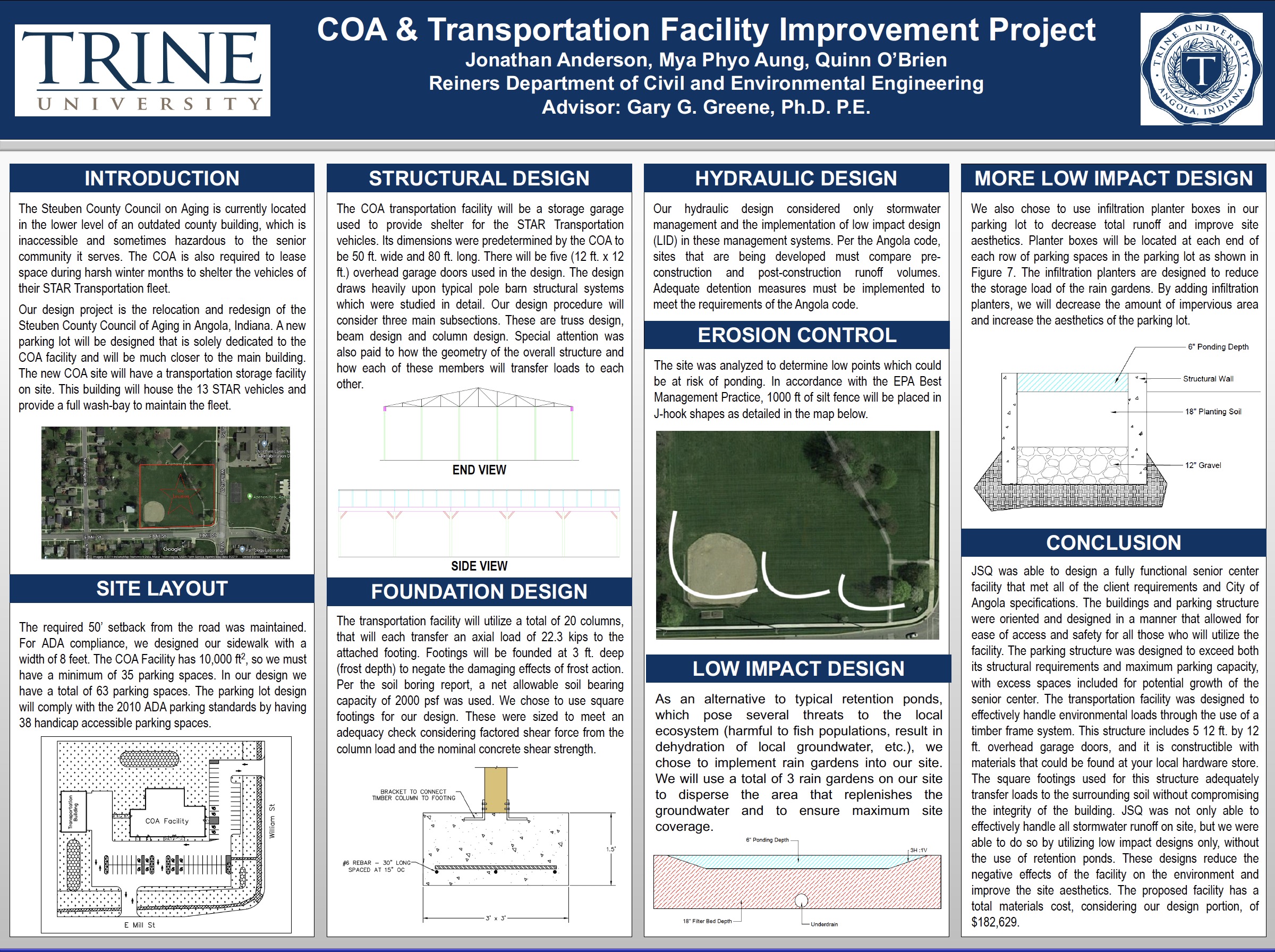
The Steuben County Council on Aging is currently located in the lower level of an outdated county building, which is inaccessible and sometimes hazardous to the senior community it serves. The COA is also required to lease space during harsh winter months to shelter the vehicles of their STAR Transportation fleet. Our design project is the relocation and redesign of the Steuben County Council on Aging in Angola, Indiana. A new parking lot will be designed that is solely dedicated to the COA facility and will be much closer to the main building. The new COA site will have a transportation storage facility on site. This building will house the 13 STAR vehicles and provide a full wash-bay to maintain the fleet.
Members: Jonathan Anderson, Mya Phyo Aung and Quinn O'Brien
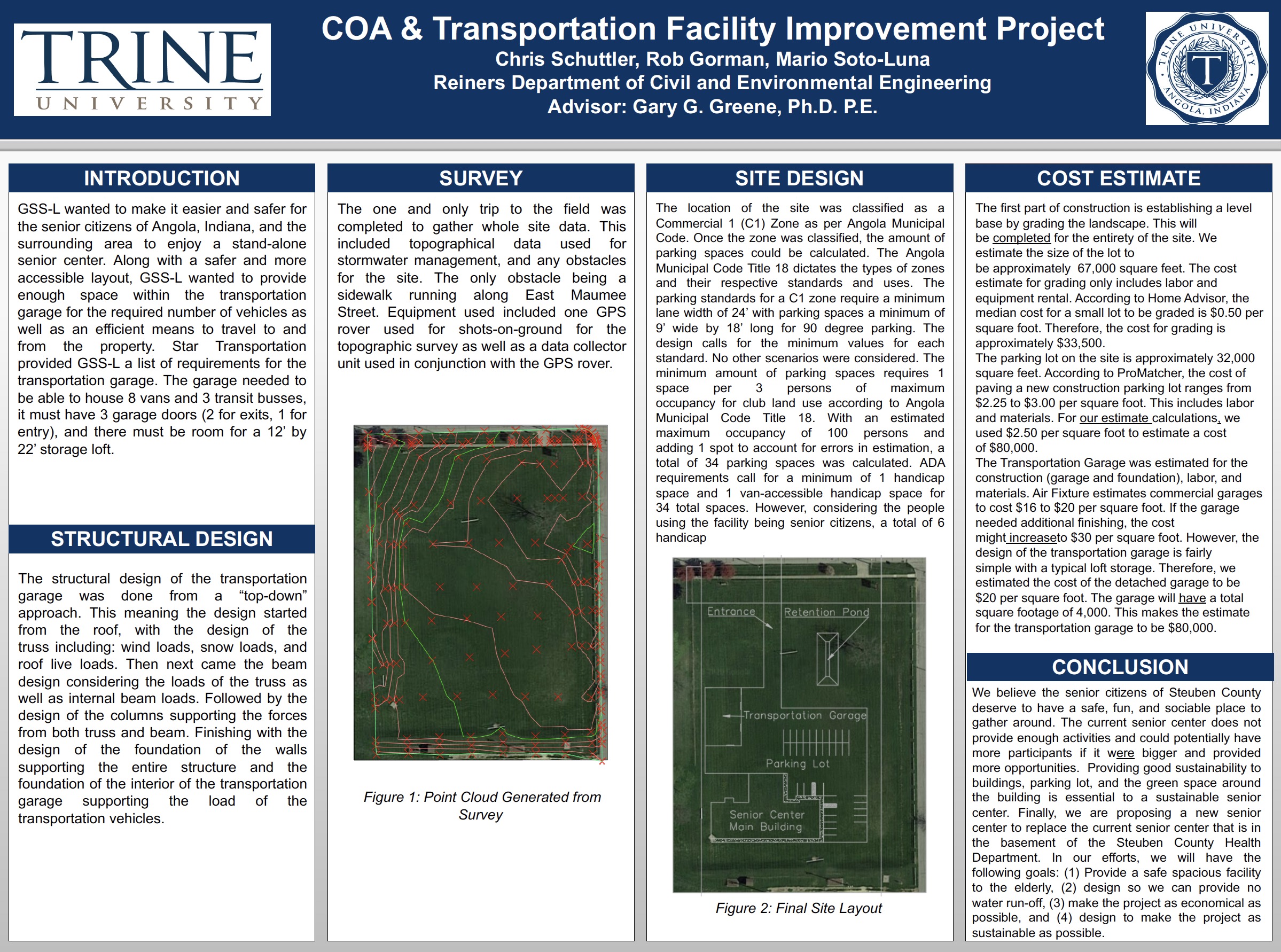
GSS-L wanted to make it easier and safer for the senior citizens of Angola, Indiana, and the surrounding area to enjoy a stand-alone senior center. Along with a safer and more accessible layout, GSS-L wanted to provide enough space within the transportation garage for the required number of vehicles as well as an efficient means to travel to and from the property. STAR Transportation provided GSS-L a list of requirements for the transportation garage. The garage needed to be able to house eight vans and three transit buses, it must have three garage doors (two for exits, one for entry) and there must be room for a 12' by 22' storage loft.
Members: Chris Schuttler, Rob Gorman and Mario Soto-Luna
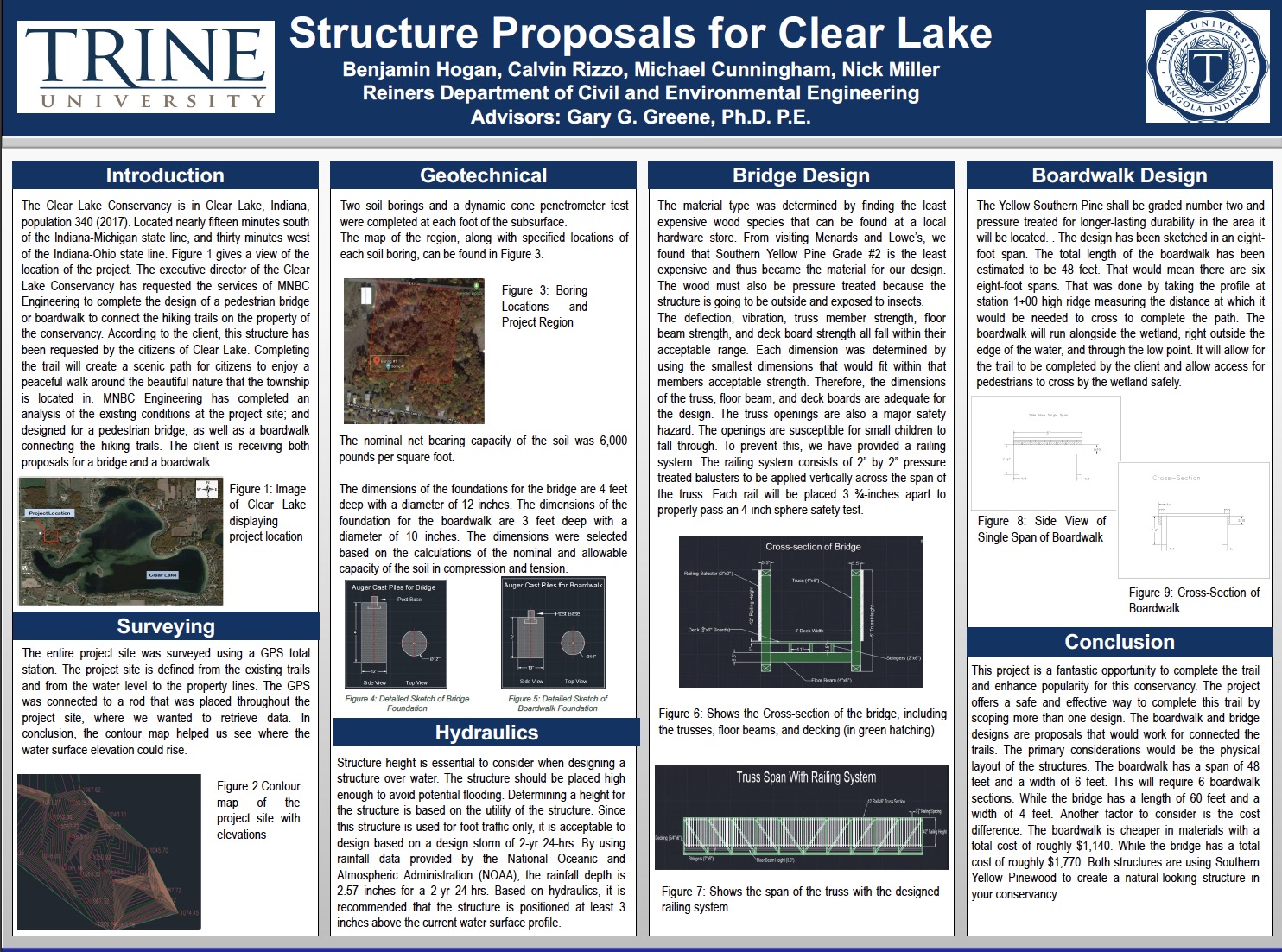
The Clear Lake Conservancy is in Clear Lake, Indiana, population 340 (2017). Located nearly 15 minutes south of the Indiana-Michigan state line, and 30 minutes west of the Indiana-Ohio state line. The executive director of the Clear Lake Conservancy has requested the services of MNBC Engineering to complete the design of a pedestrian bridge or boardwalk to connect the hiking trails on the property of the conservancy. According to the client, this structure has been requested by the citizens of Clear Lake. Completing the trail will create a scenic path for citizens to enjoy a peaceful walk around the beautiful nature that the township is located in. MNBC Engineering has completed an analysis of the existing conditions at the project site; and designed for a pedestrian bridge, as well as a boardwalk connecting the hiking trails.
Members: Benjamin Hogan, Calvin Rizzo, Michael Cunningham and Nick Miller
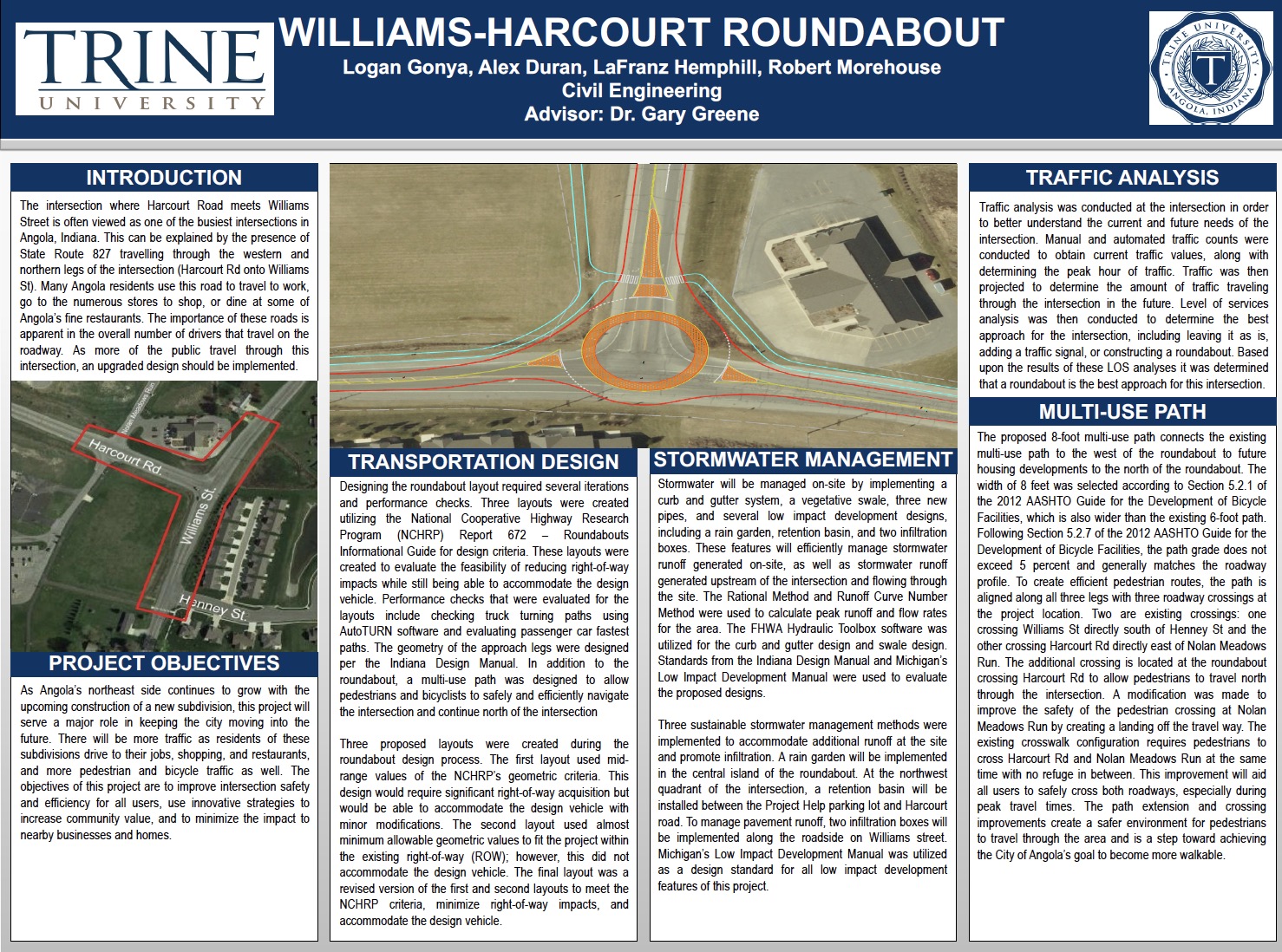
The intersection where Harcourt Road meets Williams Street is often viewed as one of the busiest intersections in Angola, Indiana. This can be explained by the presence of State Route 827 traveling through the western and northern legs of the intersection (Harcourt Road onto Williams Street). Many Angola residents use this road to travel to work, go to the numerous stores to shop or dine at some of Angola's fine restaurants. The importance of these roads is apparent in the overall number of drivers that travel on the roadway. As more of the public travels through this intersection, an upgraded design should be implemented.
Members: Logan Gonya, Alex Duran, LaFranz Hemphill and Robert Morehouse
Department of Computer Science and Information Technology
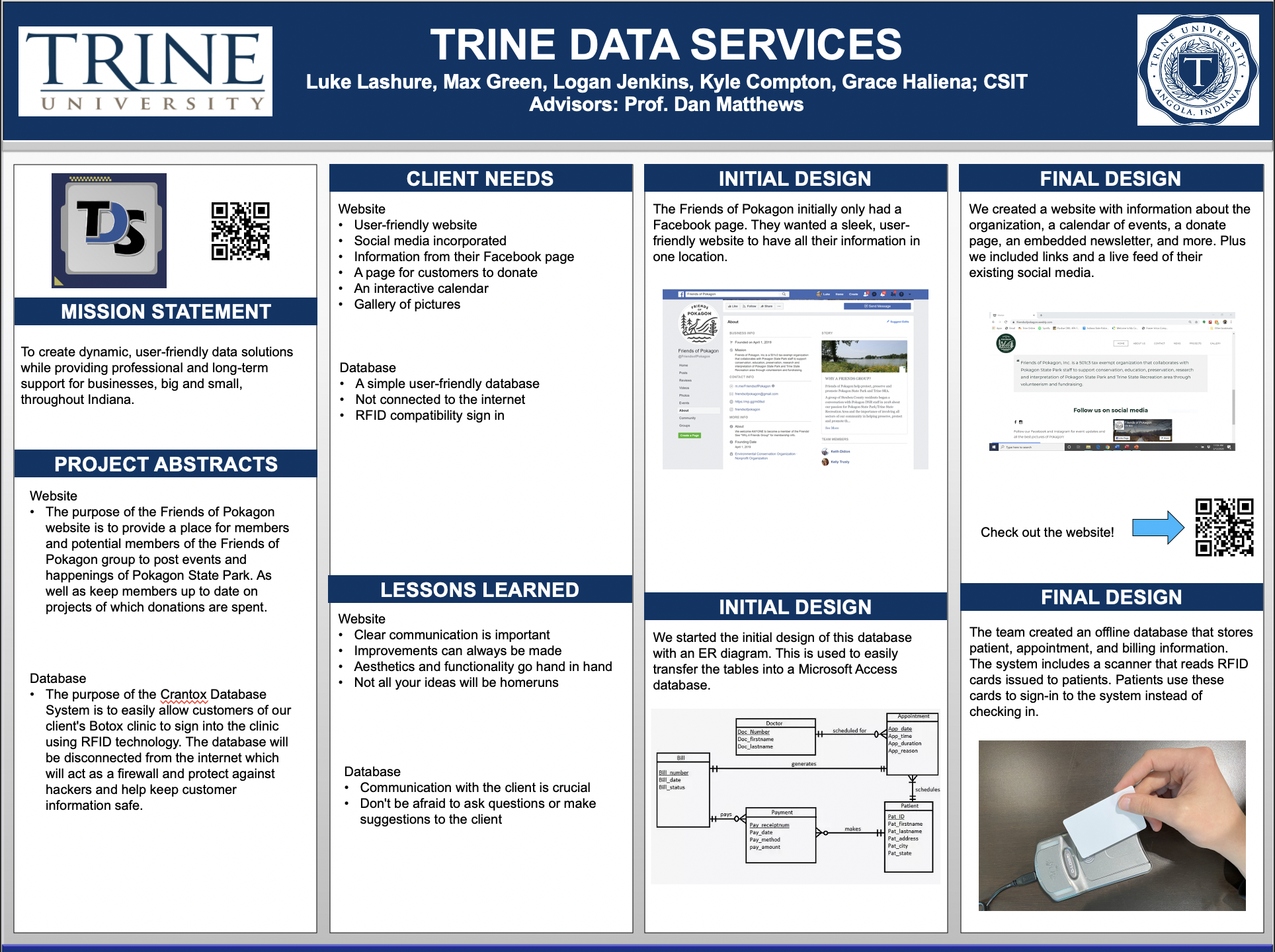
The purpose of the Friends of Pokagon website is to provide a place for members and potential members of the Friends of Pokagon group to post events and happenings of Pokagon State Park, as well as keep members up-to-date on projects of which donations are spent. The goal of this project is to create dynamic, user-friendly data solutions while providing professional and long-term support for businesses, big and small, throughout Indiana.
Members: Luke Lashure, Max Green, Logan Jenkins, Kyle Compton and Grace Haliena
Department of Design Engineering Technology
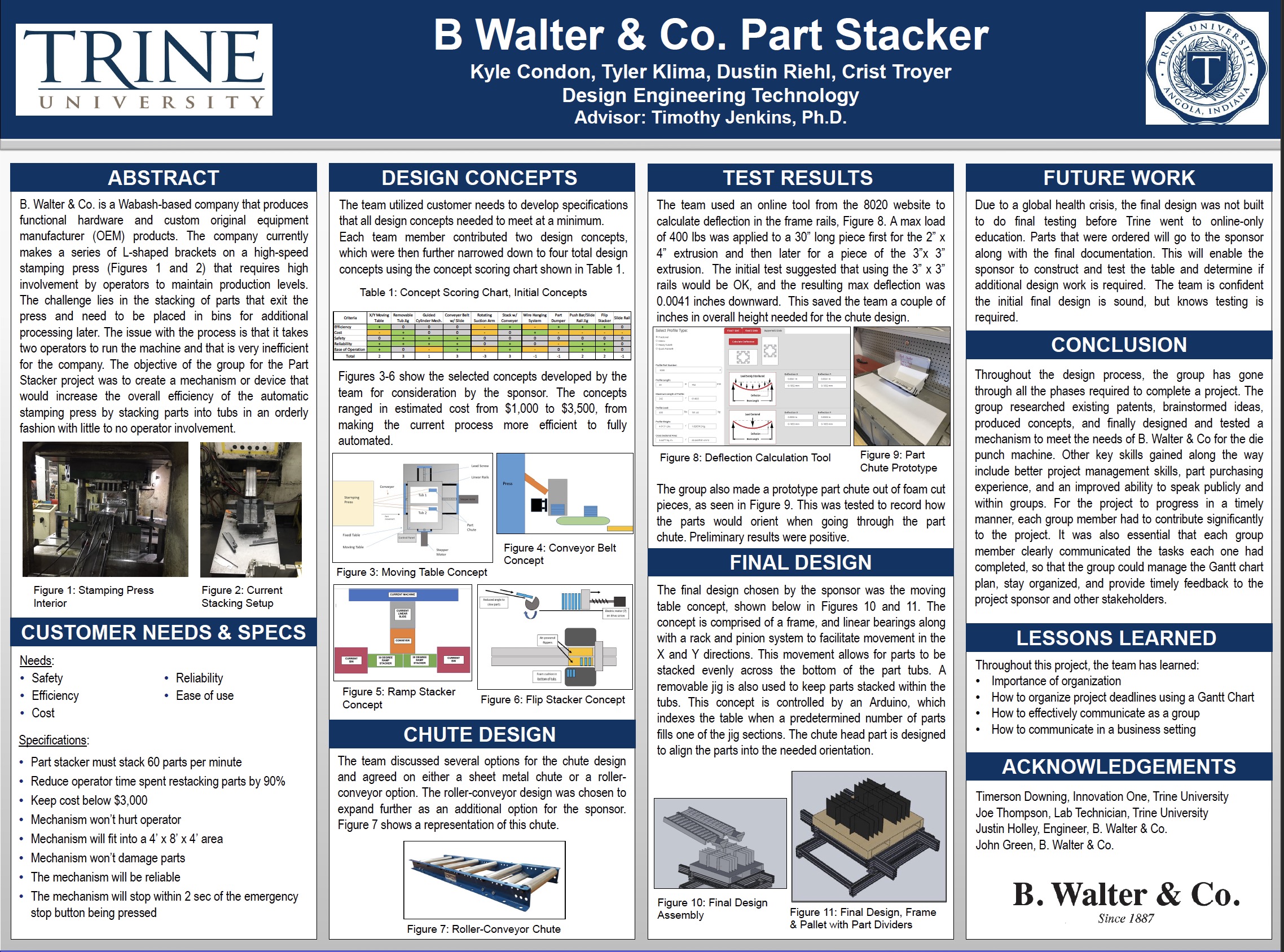
B. Walter & Co. is a Wabash-based company that produces functional hardware and custom original equipment manufacturer (OEM) products. The company currently makes a series of L-shaped brackets on a high-speed stamping press that requires high involvement by operators to maintain production levels. The challenge lies in the stacking of parts that exit the press and need to be placed in bins for additional processing later. The issue with the process is that it takes two operators to run the machine and that is very inefficient for the company. The objective of the group for the Part Stacker project was to create a mechanism or device that would increase the overall efficiency of the automatic stamping press by stacking parts into tubs in an orderly fashion with little to no operator involvement.
Members: Kyle Condon, Tyler Klima, Dustin Riehl and Crist Troyer
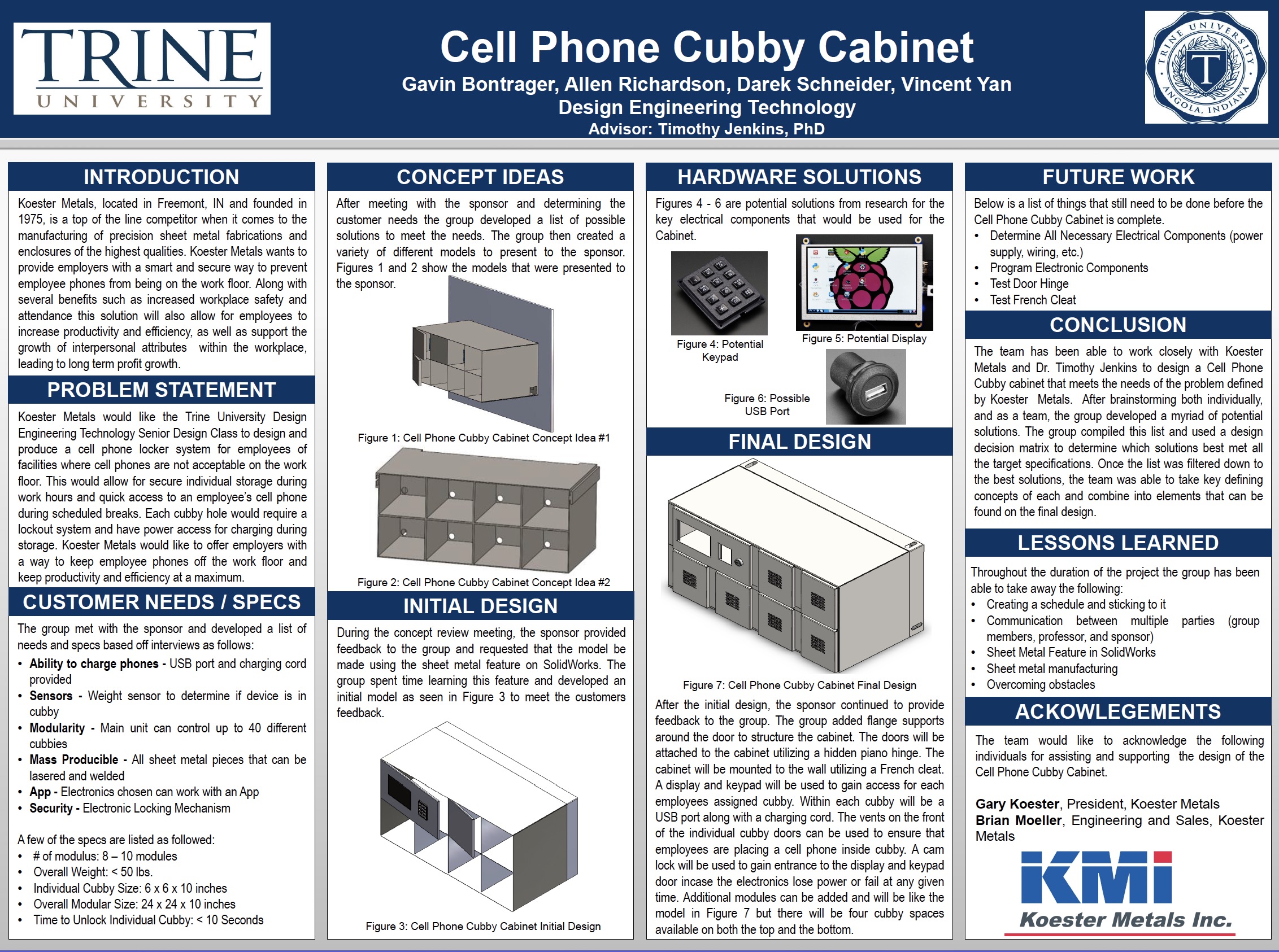
Koester Metals, located in Fremont, Indiana, and founded in 1975, is a top of the line competitor when it comes to the manufacturing of precision sheet metal fabrications and enclosures of the highest qualities. Koester Metals wants to provide employers with a smart and secure way to prevent employee phones from being on the work floor. Along with several benefits such as increased workplace safety and attendance, this solution will also allow for employees to increase productivity and efficiency, as well as support the growth of interpersonal attributes within the workplace, leading to long-term profit growth.
Members: Gavin Bontrager, Allen Richardson, Darek Schneider and Vincent Yan
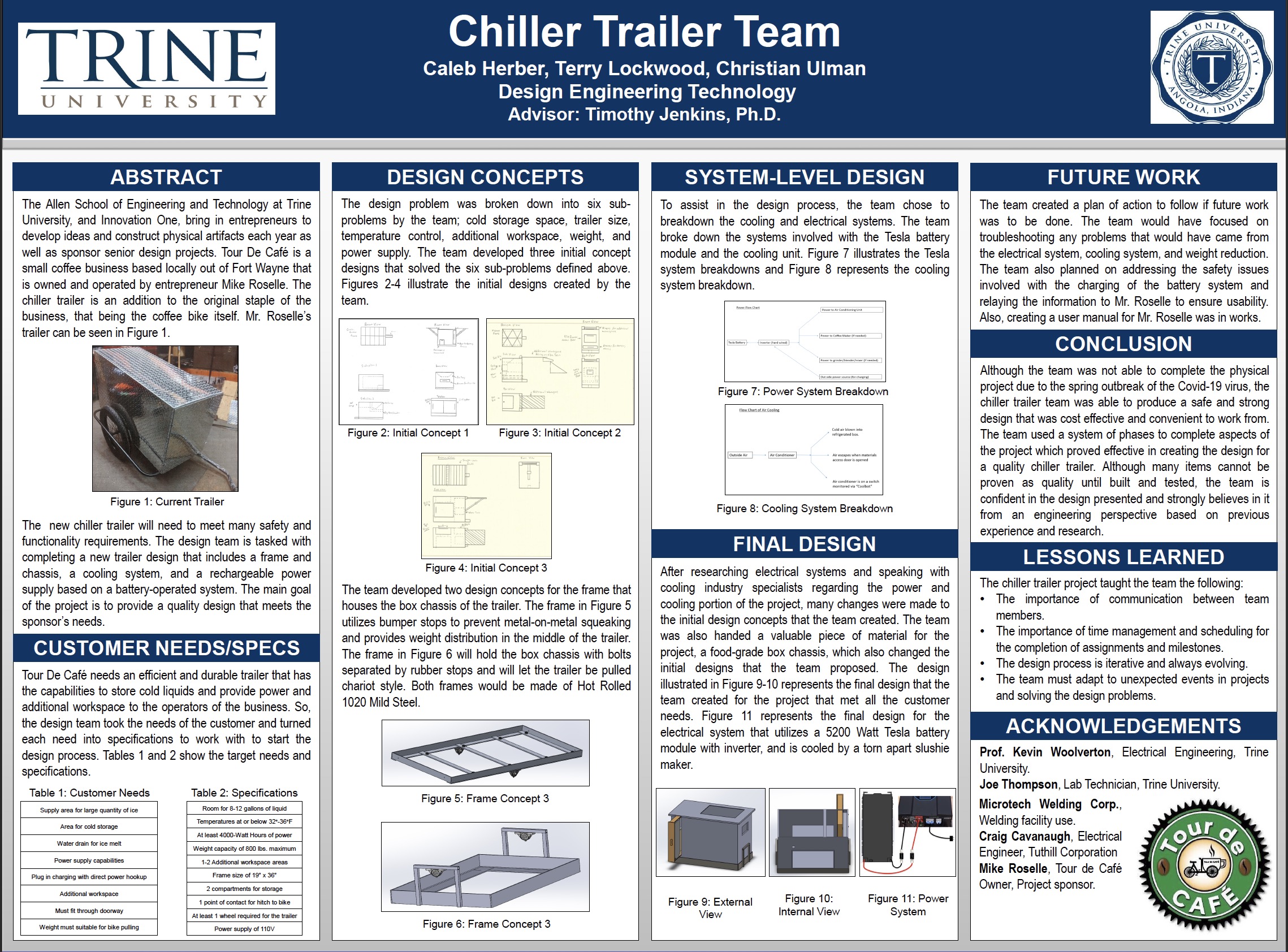
Tour De Café is a small coffee business based locally out of Fort Wayne that is owned and operated by entrepreneur Mike Roselle. The chiller trailer is an addition to the original staple of the business, that being the coffee bike itself. The new chiller trailer will need to meet many safety and functionality requirements. The design team is tasked with completing a new trailer design that includes a frame and chassis, a cooling system and a rechargeable power supply based on a battery-operated system. The main goal of the project is to provide a quality design that meets the sponsor's needs.
Members: Caleb Herber, Terry Lockwood and Christian Ulman
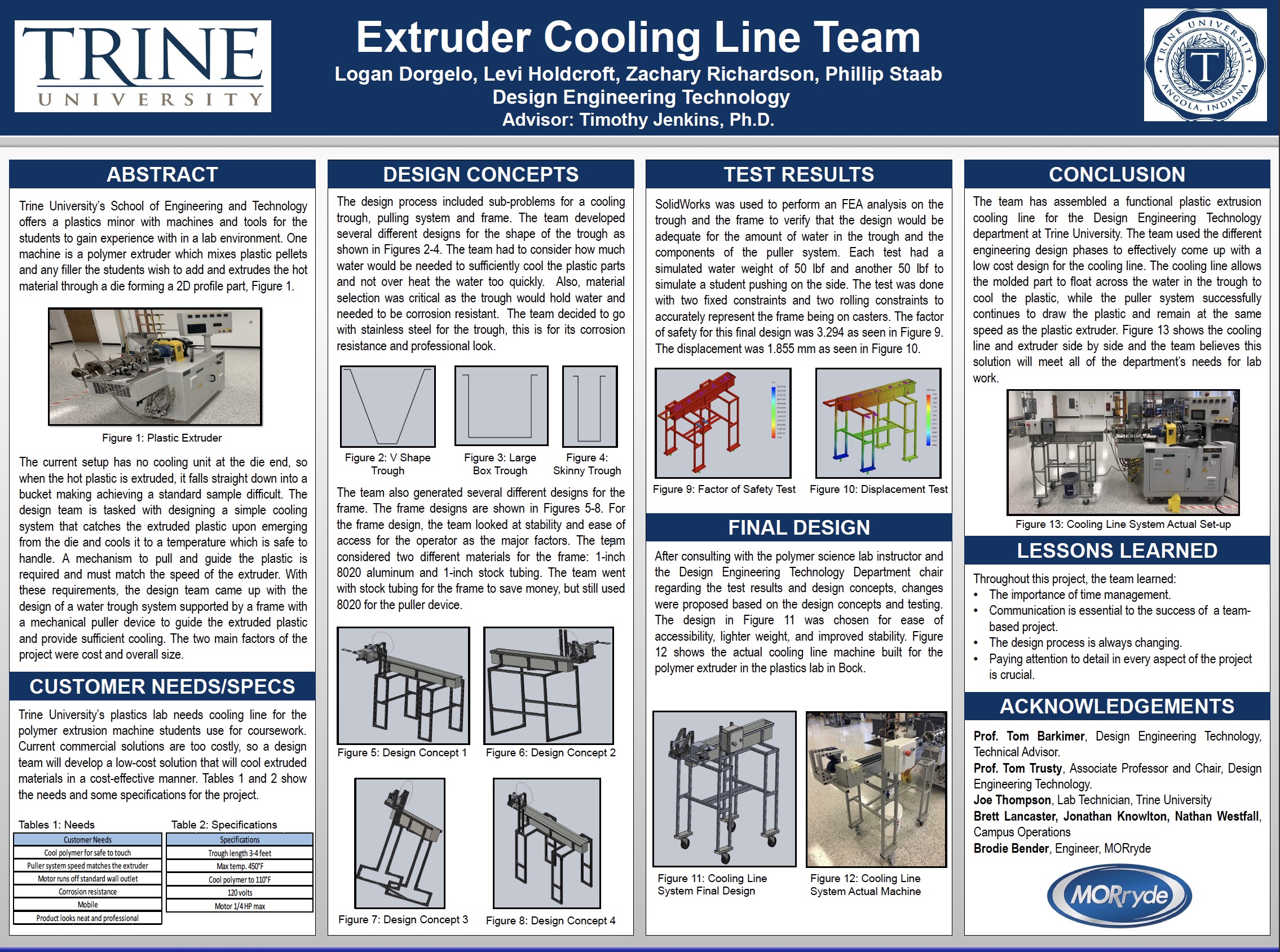
Trine University's Allen School of Engineering and Computing offers a plastics minor with machines and tools for the students to gain experience within a lab environment. One machine is a polymer extruder, which mixes plastic pellets and any filler the students wish to add and extrudes the hot material through a die, forming a 2D profile part. The current setup has no cooling unit at the die end, so when the hot plastic is extruded, it falls straight down into a bucket, making achieving a standard sample difficult. The design team is tasked with designing a simple cooling system that catches the extruded plastic upon emerging from the die and cools it to a temperature which is safe to handle. A mechanism to pull and guide the plastic is required and must match the speed of the extruder. With these requirements, the design team came up with the design of a water trough system supported by a frame with a mechanical puller device to guide the extruded plastic and provide sufficient cooling.
Members: Logan Dorgelo, Levi Holdcroft, Zachary Richardson and Phillip Staab
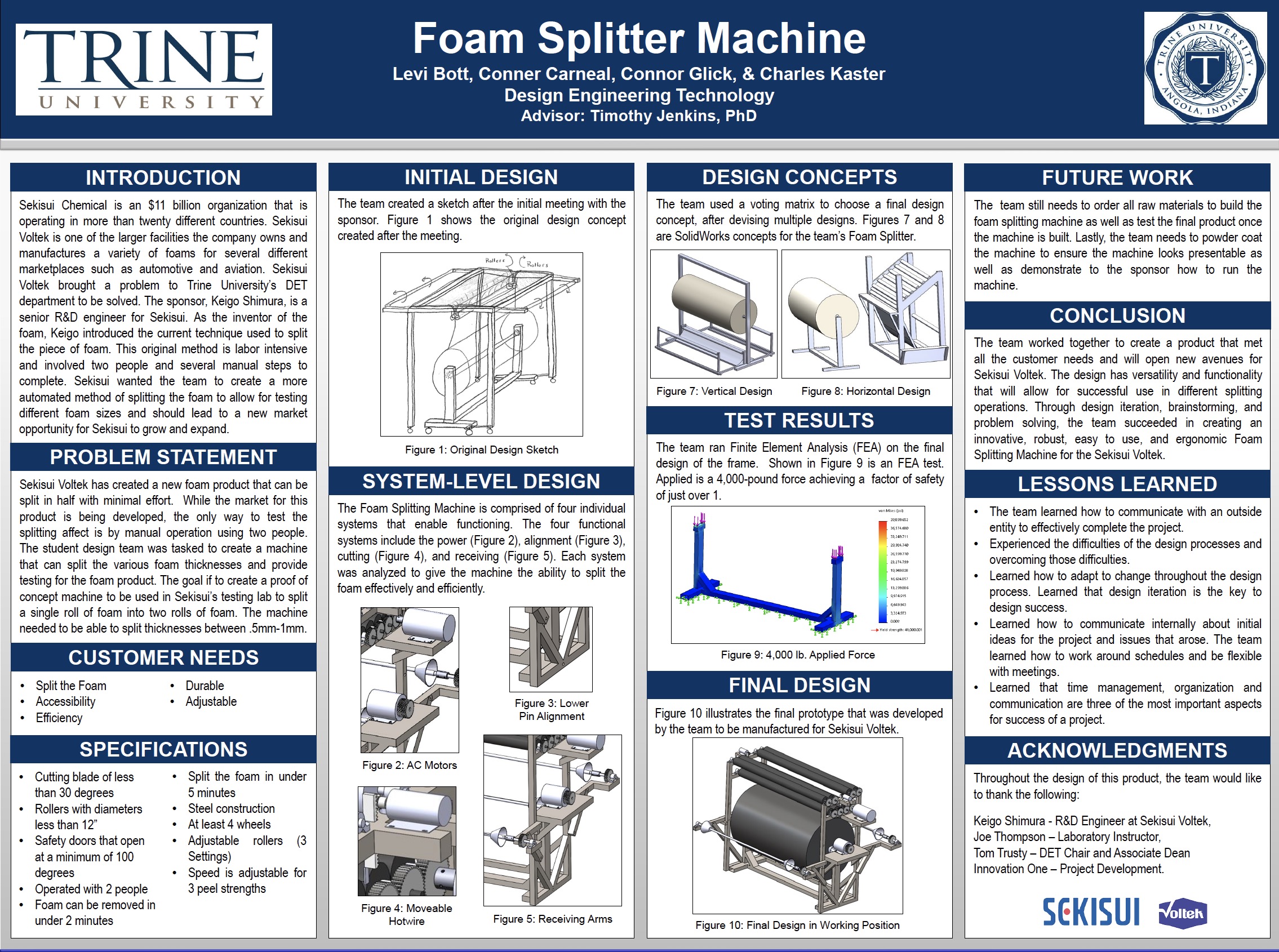
Sekisui Chemical is an $11 billion organization that is operating in more than 20 different countries. Sekisui Voltek is one of the larger facilities the company owns and manufactures a variety of foams for several different marketplaces, such as automotive and aviation. Sekisui Voltek's senior R&D engineer, and inventor, introduced the current technique used to split the piece of foam. This original method is labor intensive and involved two people and several manual steps to complete. Sekisui wanted the team to create a more automated method of splitting the foam to allow for testing different foam sizes and should lead to a new market opportunity to Sekisui to grow and expand.
Members: Levi Bott, Conner Carneal, Connor Glick and Charles Kaster
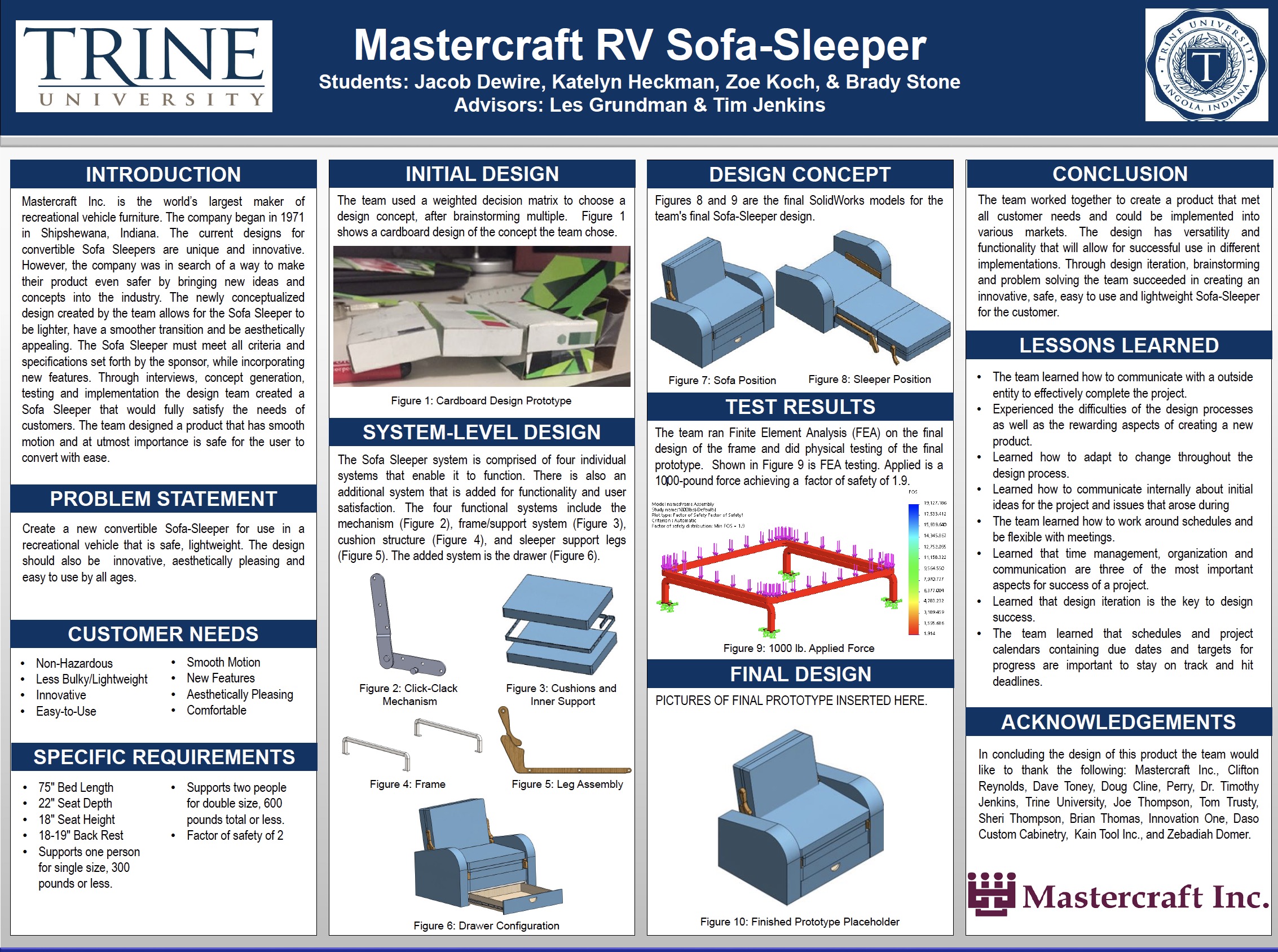
Mastercraft Inc. is the world's largest maker of recreational vehicle furniture. The company began in 1971 in Shipshewana, Indiana. The current designs for convertible Sofa Sleepers are unique and innovative. However, the company was in search of a way to make their product even safer by bringing new ideas and concepts into the industry. The newly conceptualized design created by the team allows for the Sofa Sleeper to be lighter, have a smoother transition and be aesthetically appealing. The Sofa Sleeper must meet all criteria and specifications set forth by the sponsor, while incorporating new features. Through interviews, concept generation, testing and implementation, the design team created a Sofa Sleeper that would fully satisfy the needs of customers. The team designed a product that has smooth motion and at utmost importance is safe for the user to convert with ease.
Members: Jacob Dewire, Katelyn Heckman, Zoe Koch and Brady Stone
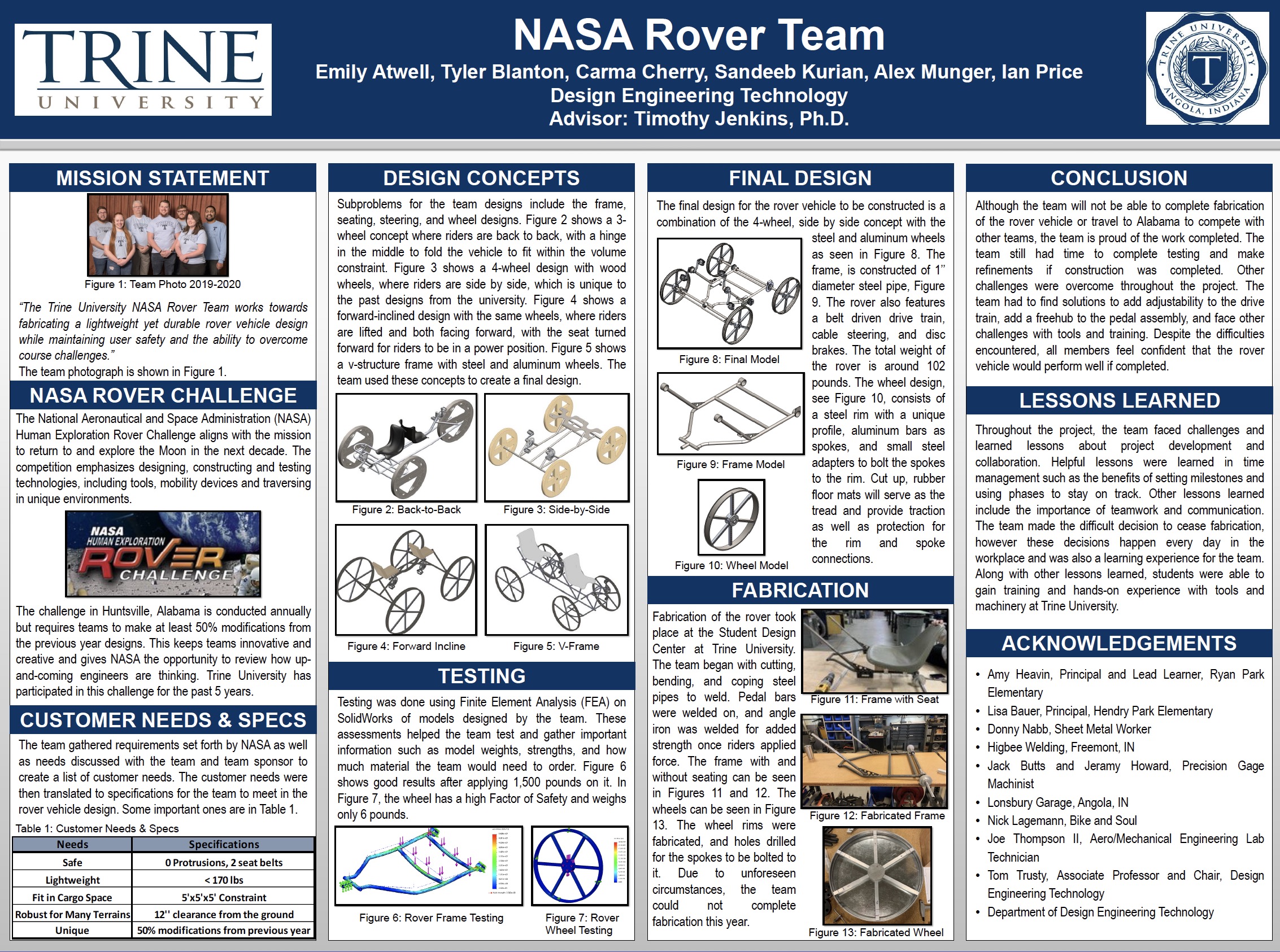
The National Aeronautical and Space Administration (NASA) Human Exploration Rover Challenge aligns with the mission to return to and explore the Moon in the next decade. The competition emphasizes designing, constructing and testing technologies, including tools, mobility devices and traversing in unique environments. The challenge in Huntsville, Alabama, is conducted annually but requires teams to make at least 50% modifications from the previous years' designs. This keeps teams innovative and creative and gives NASA the opportunity to review how up-and-coming engineers are thinking. Trine University has participated in this challenge for the past five years.
Members: Emily Atwell, Tyler Blanton, Carma Cherry, Sandeeb Kurian, Alex Munger and Ian Price
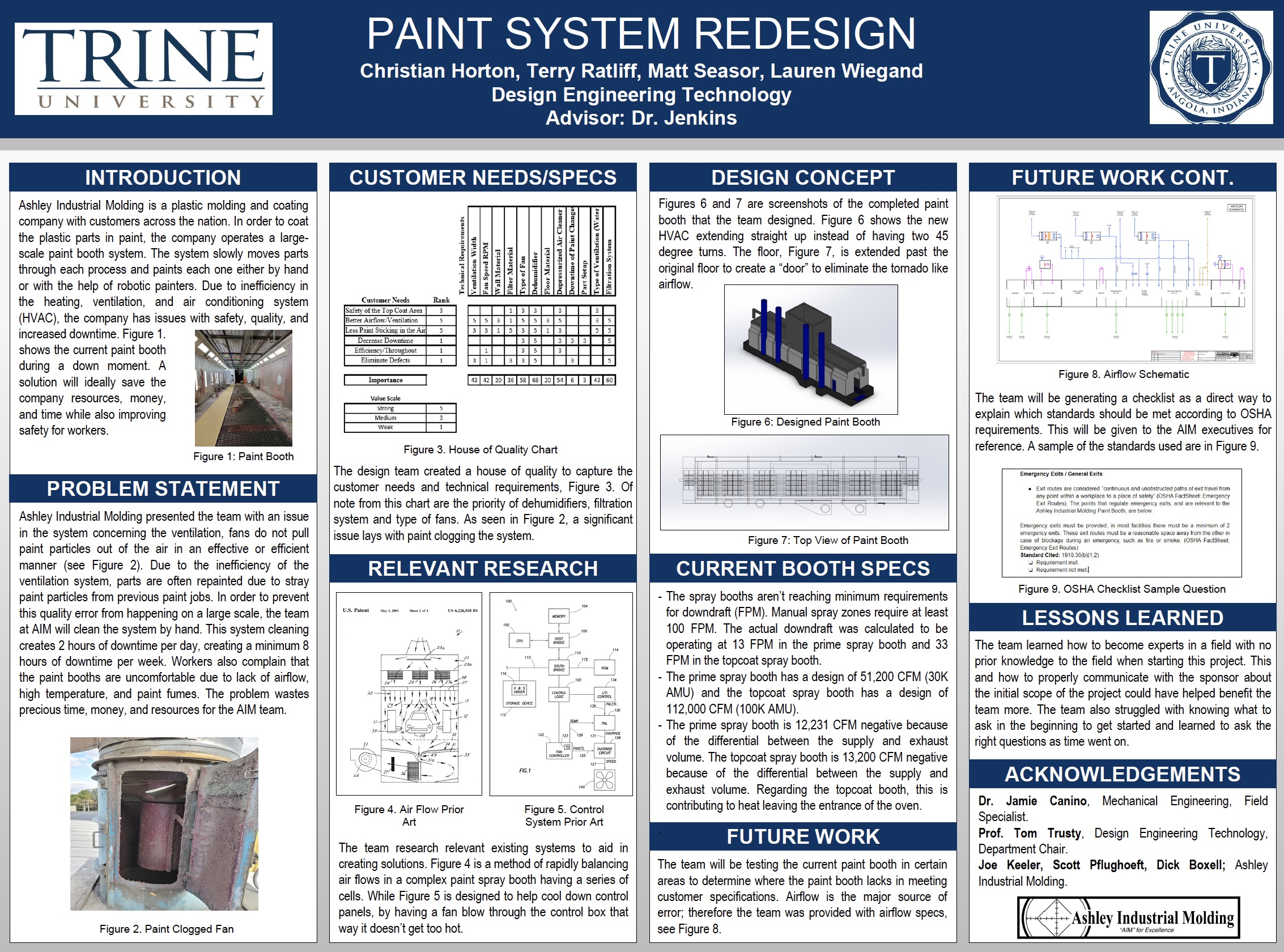
Ashley Industrial Molding is a plastic molding and coating company with customers across the nation. In order to coat the plastic parts in paint, the company operates a large-scale paint booth system. The system slowly moves parts through each process and paints each one either by hand or with the help of robotic painters. Due to inefficiency in the heating, ventilation and air conditioning system (HVAC), the company has issues with safety, quality and increased downtime. A solution will ideally save the company resources, money and time while also improving safety for workers.
Members: Christian Horton, Terry Ratliff, Matt Seasor and Lauren Wiegand
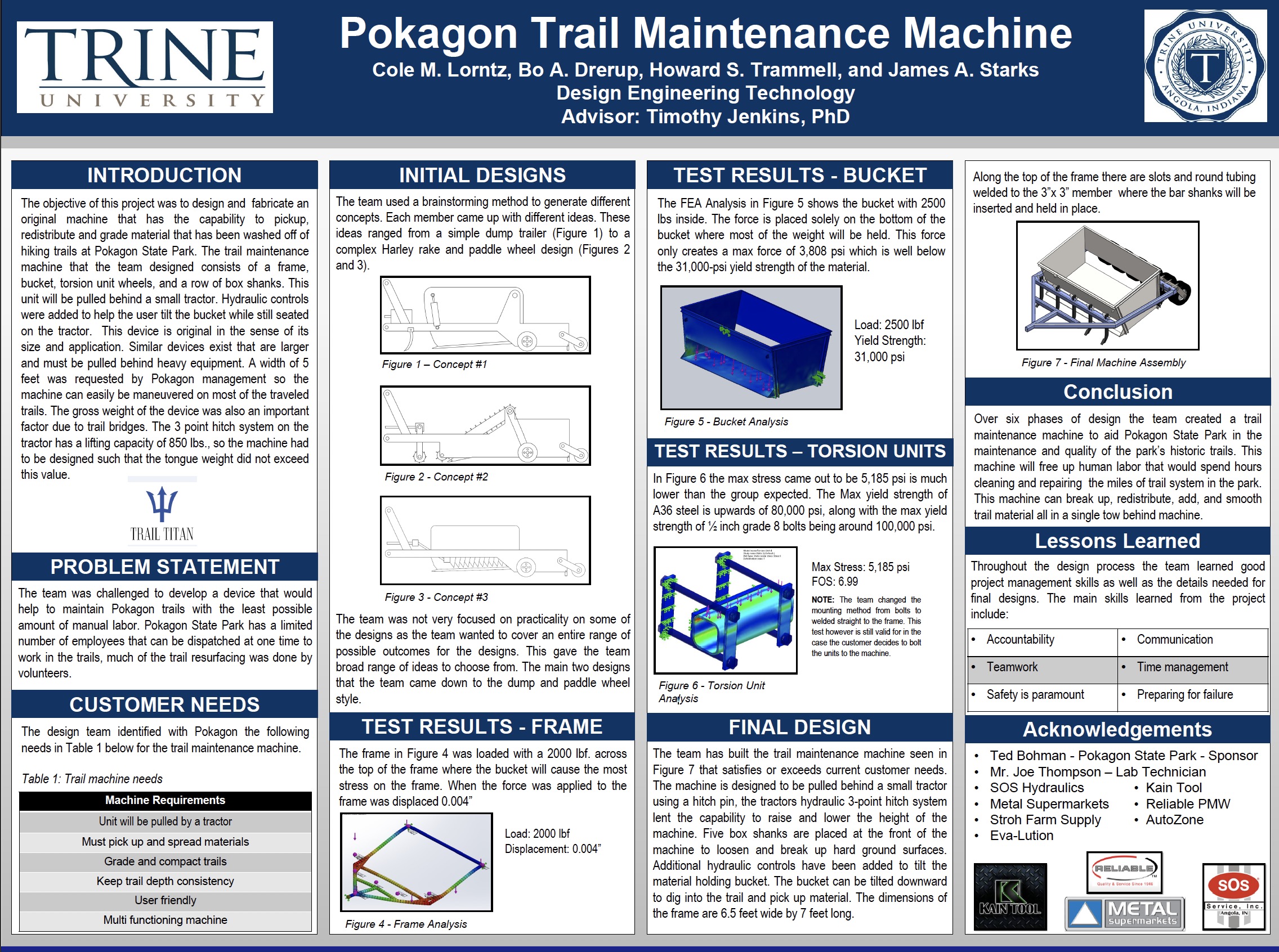
The objective of this project was to design and fabricate an original machine that has the capability to pickup, redistribute and grade material that has been washed off of hiking trails at Pokagon State Park. The trail maintenance machine that the team designed consists of a frame, bucket, torsion unit wheels and a row of box shanks. This unit will be pulled behind a small tractor. Hydraulic controls were added to help the user tilt the bucket while still seated on the tractor. This device is original in the sense of its size and application. Similar devices exist that are larger and must be pulled behind heavy equipment. A width of 5 feet was requested by Pokagon management so the machine can easily be maneuvered on most of the traveled trails. The gross weight of the device was also an important factor due to trail bridges. The three-point hitch system on the tractor has a lifting capacity of 850 lbs., so the machine had to be designed such that the tongue weight did not exceed this value.
Members: Cole M. Lorntz, Bo A. Drerup, Howard S. Trammell and James A. Starks
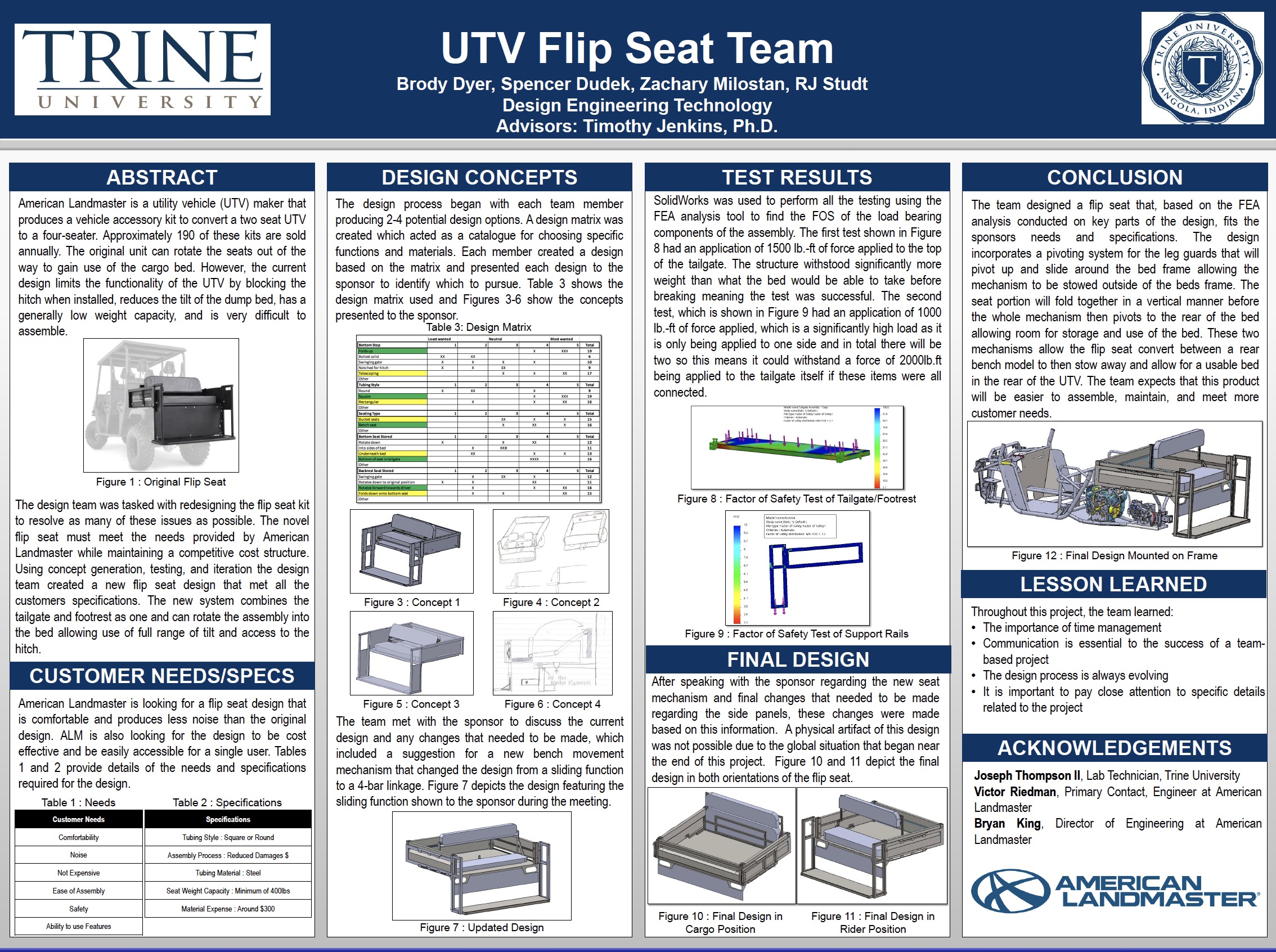
American Landmaster is a utility vehicle (UTV) maker that produces a vehicle accessory kit to convert a two-seat UTV to a four-seater. Approximately 190 of these kits are sold annually. The original unit can rotate the seats out of the way to gain use of the cargo bed. However, the current design limits the functionality of the UTV by blocking the hitch when installed, reduces the tilt of the dump bed, has a generally low weight capacity and is very difficult to assemble. The design team was tasked with redesigning the flip seat kit to resolve as many of these issues as possible. The novel flip seat must meet the needs provided by American Landmaster while maintaining a competitive cost structure. Using concept generation, testing and iteration, the design team created a new flip seat design that met all the customer's specifications. The new system combines the tailgate and footrest as one and can rotate the assembly into the bed, allowing use of full range of tilt and access to the hitch.
Members: Brody Dyer, Spencer Dudek, Zachary Milostan and RJ Studt
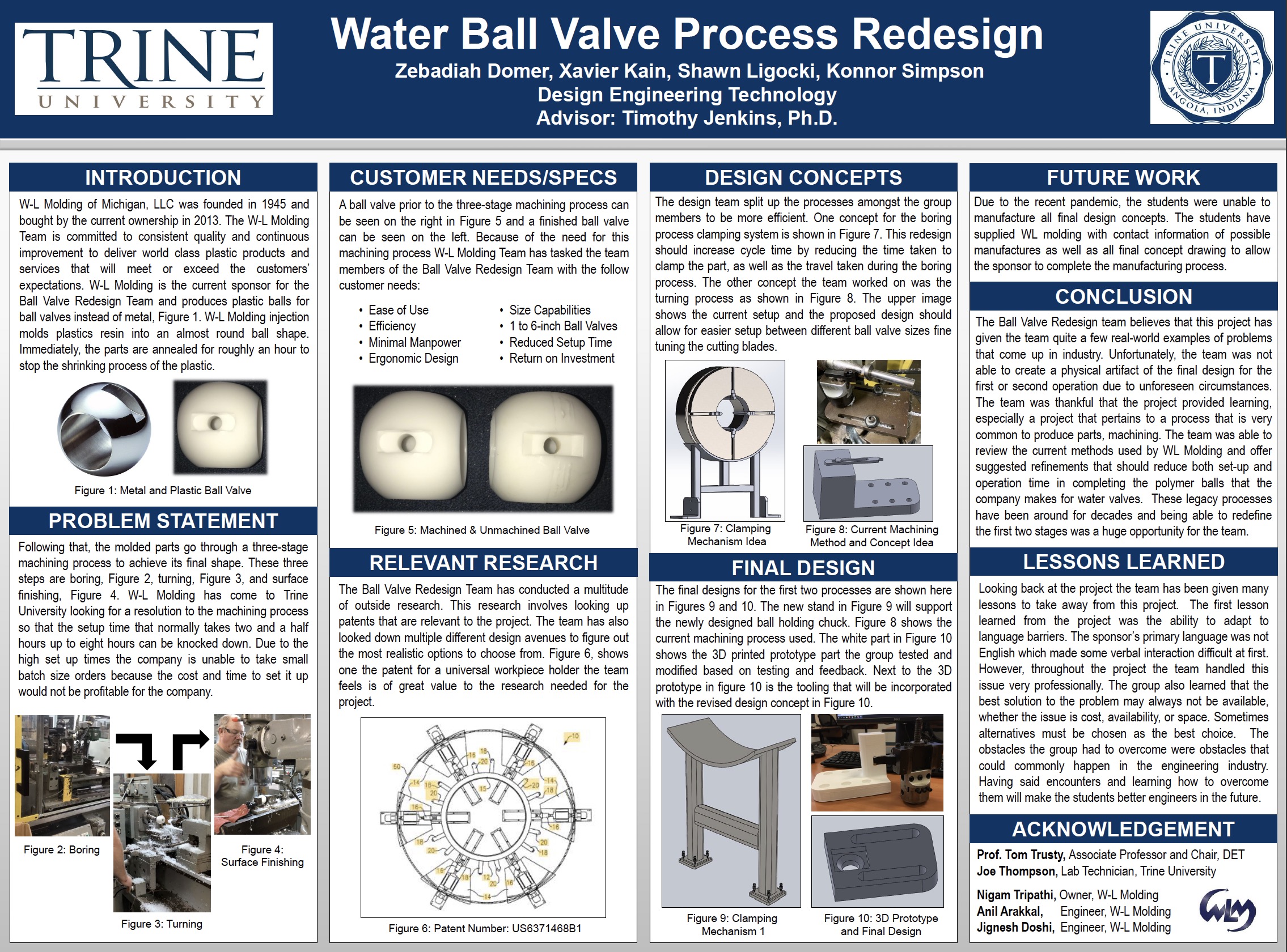
W-L Molding of Michigan, LLC was founded in 1945 and bought by the current ownership in 2013. The W-L Molding Team is committed to consistent quality and continuous improvement to deliver world class plastic products and services that will meet or exceed the customers' expectations. W-L Molding is the current sponsor for the Ball Valve Redesign Team and produces plastic balls for ball valves instead of metal. W-L Molding injection molds plastics resin into an almost round ball shape. Immediately, the parts are annealed for roughly an hour to stop the shrinking process of the plastic.
Members: Zebadiah Domer, Xavier Kain, Shawn Ligocki and Konnor Simpson
Department of Electrical and Computer Engineering
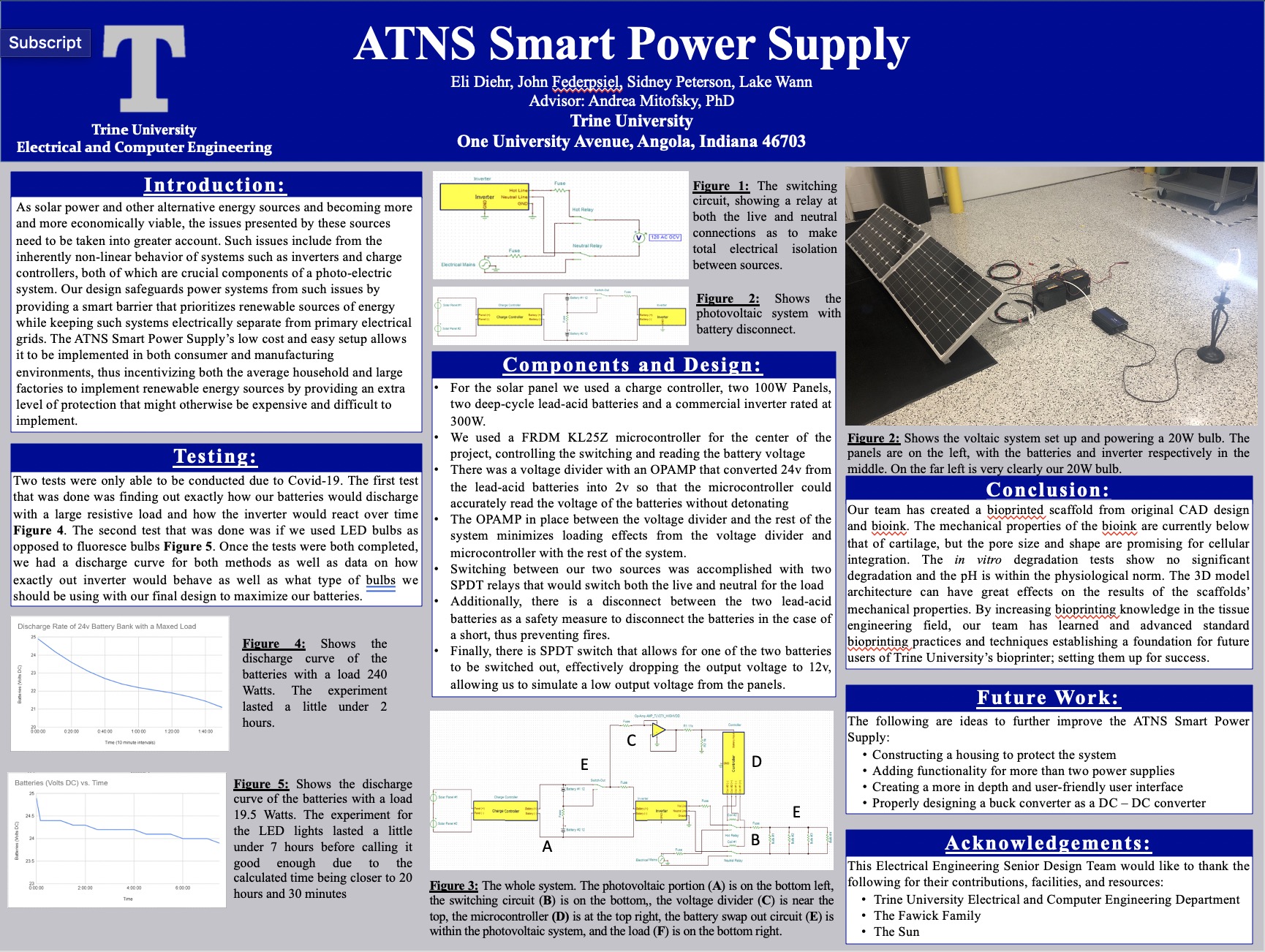
As solar power and other alternative energy sources are becoming more and more economically viable, the issues presented by these sources need to be taken into greater account. Such issues include from the inherently non-linear behavior of systems, such as inverters and charge controllers, both of which are crucial components of a photo-electric system. Our design safeguards power systems from such issues by providing a smart barrier that prioritizes renewable sources of energy while keeping such systems electrically separate from primary electrical grids. The ATNS Smart Power Supply's low cost and easy setup allows it to be implemented in both consumer and manufacturing environments, thus incentivizing both the average household and large factories to implement renewable energy sources by providing an extra level of protection that might otherwise be expensive and difficult to implement.
Members: Eli Diehr, John Federpsiel, Sidney Peterson and Lake Wann
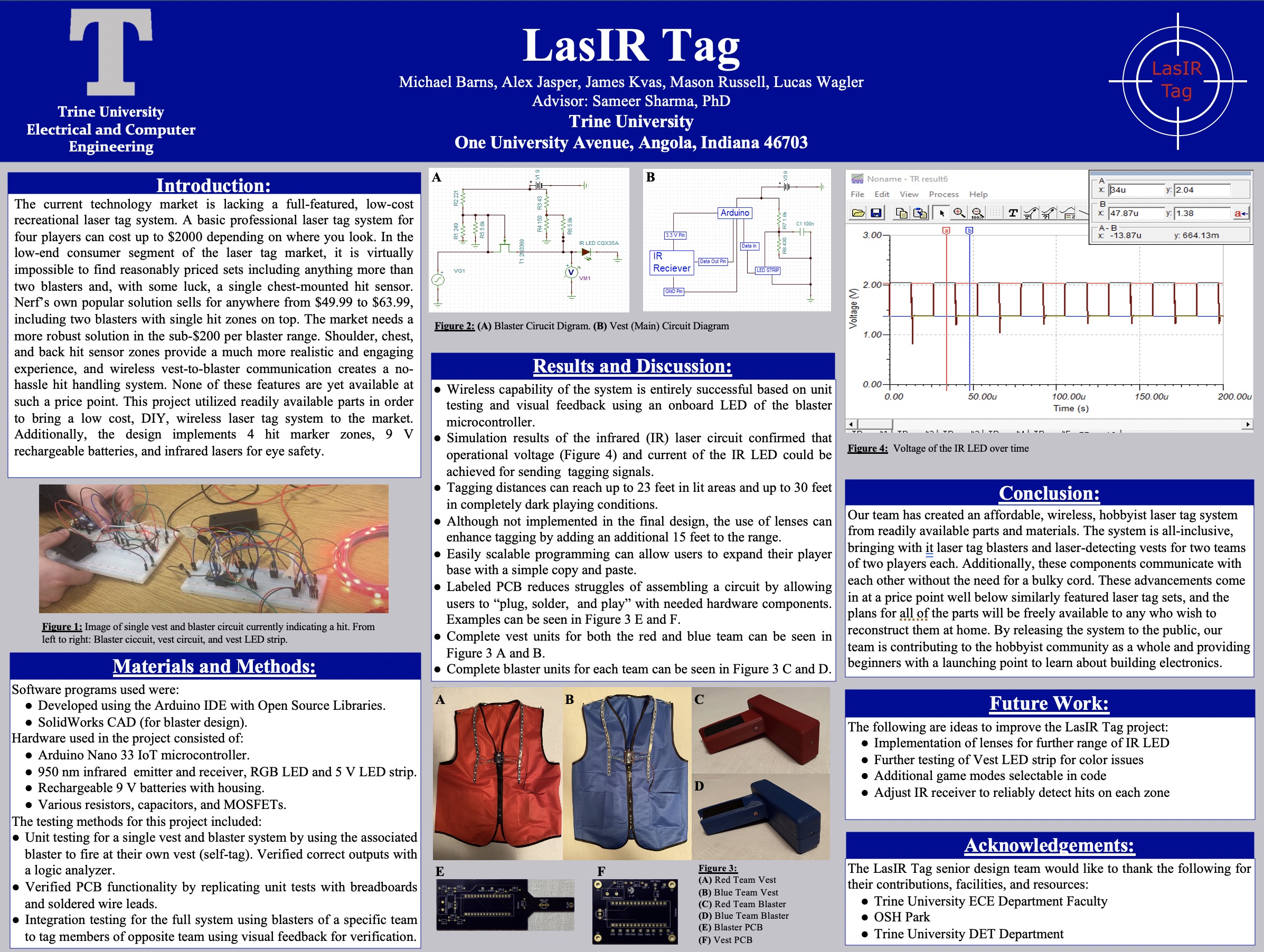
The current technology market is lacking a full-featured, low-cost recreational laser tag system. A basic professional laser tag system for four players can cost up to $2,000, depending on where you look. In the low-end consumer segment of the laser tag market, it is virtually impossible to find reasonably priced sets including anything from than two blasters and, with some luck, a single chest-mounted hit sensor. Nerf's own popular solution sells for anywhere from $49.99 to $63.99, including two blasters with single hit zones on top. The market needs a more robust solution in the sub-$200 per blaster range. Shoulder, chest and back hit sensor zones provide a much more realistic and engaging experience, and wireless vest-to-blaster communication creates a no-hassle hit handling system. None of these features are yet available at such a price point. This project utilized readily available parts in order to bring a low cost, DIY, wireless laser tag system to the market. Additionally, the design implements four hit marker zones, 9 V rechargeable batteries and infrared lasers for eye safety.
Members: Michael Barns, Alex Jasper, James Kvas, Mason Russell and Lucas Wagler
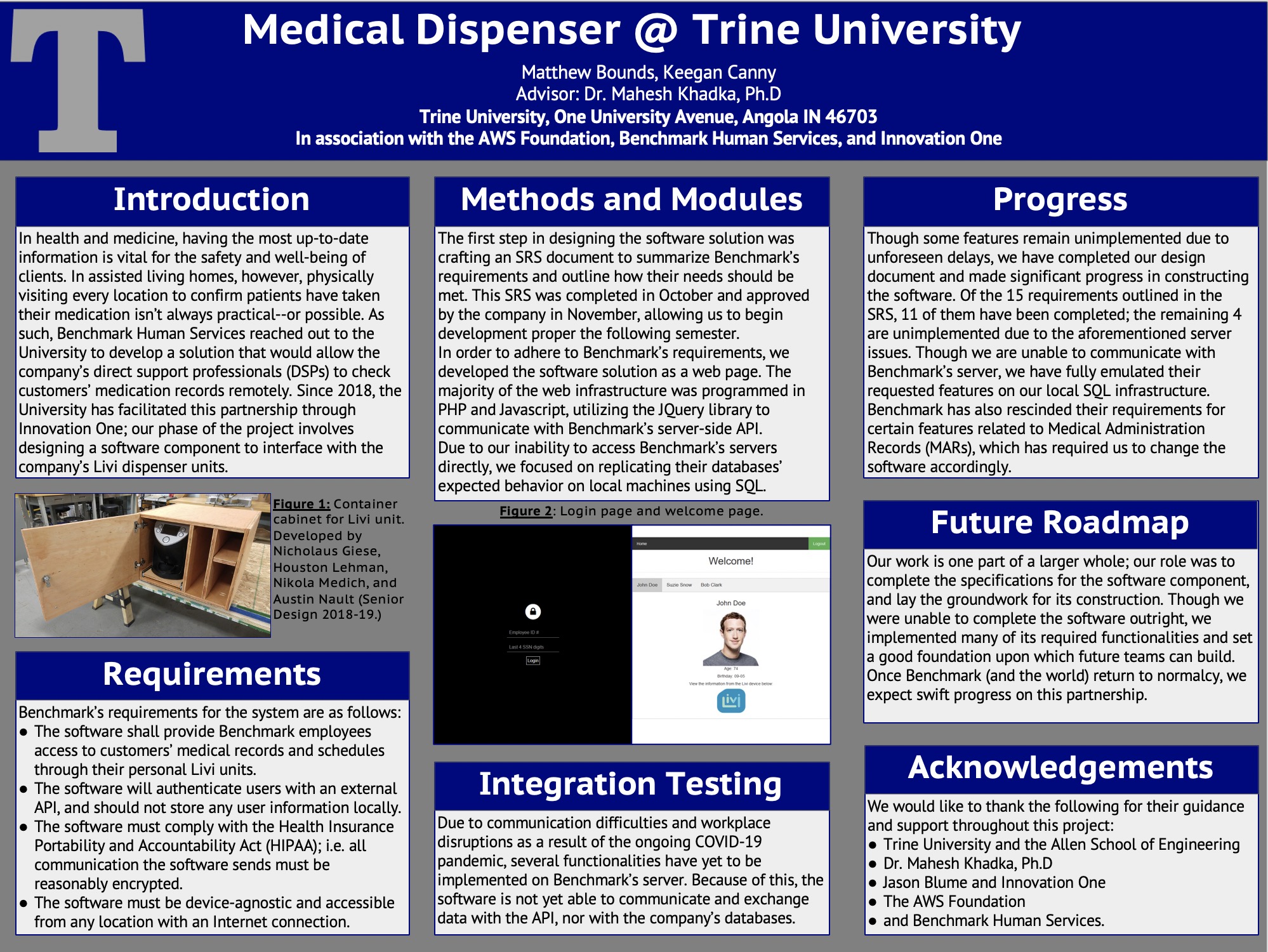
In health and medicine, having the most up-to-date information is vital for the safety and well-being of clients. In assisted living homes, however, physically visiting every location to confirm patients have take their medication isn't always practical - or possible. As such, Benchmark Human Services reached out to Trine University to develop a solution that would allow the company's direct support professionals (DSPs) to check customers' medication records remotely. Since 2018, the university has facilitated this partnership through Innovation One; our phase of the project involves designing a software component to interface with the company's Livi dispenser units.
Members: Matthew Bounds and Keegan Canny
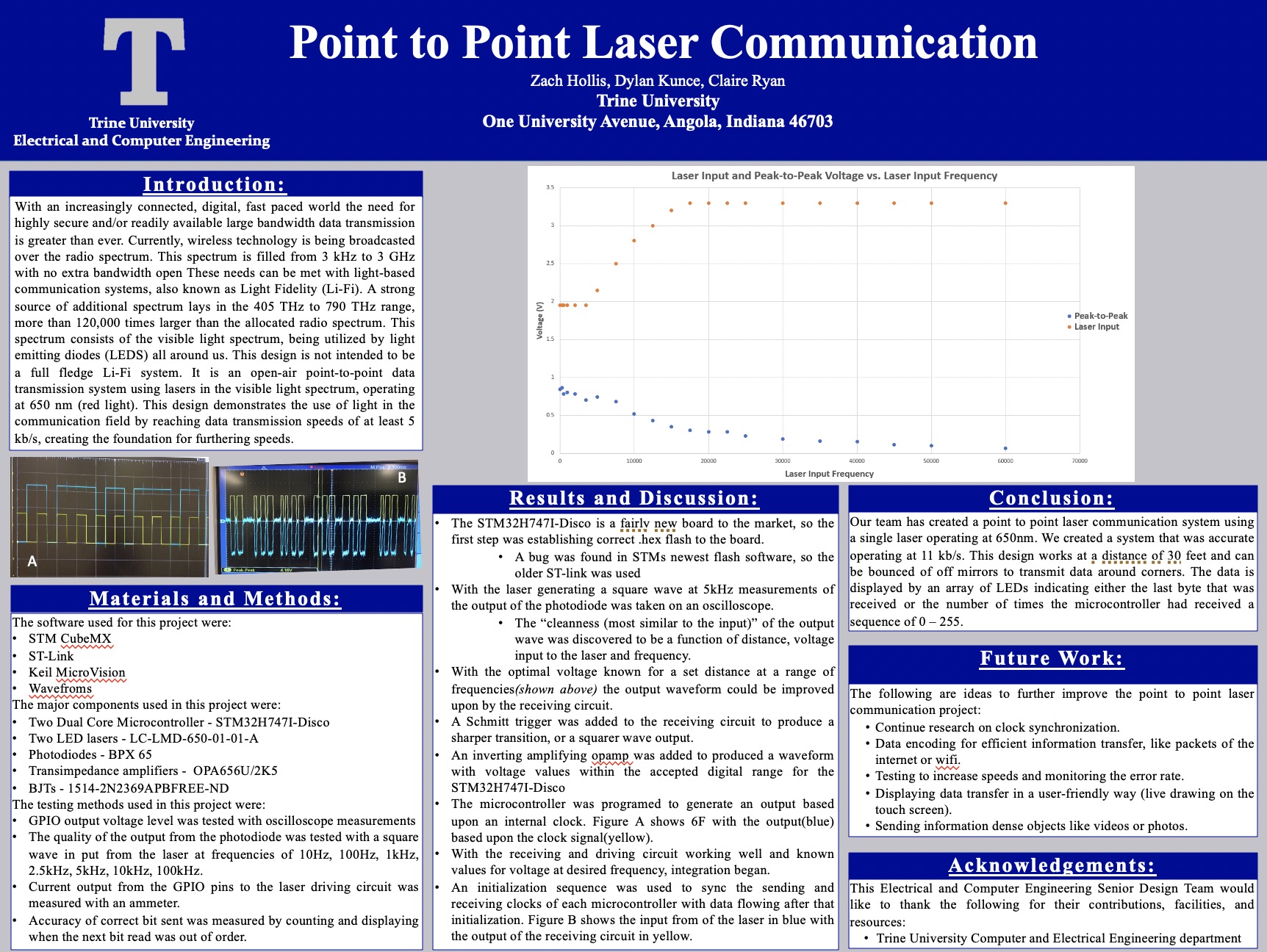
With an increasingly connected, digital, fast paced world, the need for highly secure and/or readily available large bandwidth data transmission is greater than ever. Currently, wireless technology is being broadcasted over the radio spectrum. This spectrum is filled from 3 kHz to 3 GHz with no extra bandwidth open. These needs can be met with light-based communication systems, also known as Light Fidelity (Li-Fi). A strong source of additional spectrum lays in the 405 THz to 790 THz range, more than 120,000 times larger than the allocated radio spectrum. This spectrum consists of the visible light spectrum, being utilized by light emitting diodes (LEDS) all around us. This design is not intended to be a full fledge Li-Fi system. It is an open-air point-to-point data transmission system using lasers in the visible light spectrum, operating at 650 nm (red light). This design demonstrates the use of light in the communication field by reaching data transmission speeds of at least 5 kb/s, creating the foundation for furthering speeds.
Members: Zach Hollis, Dylan Kunce and Claire Ryan
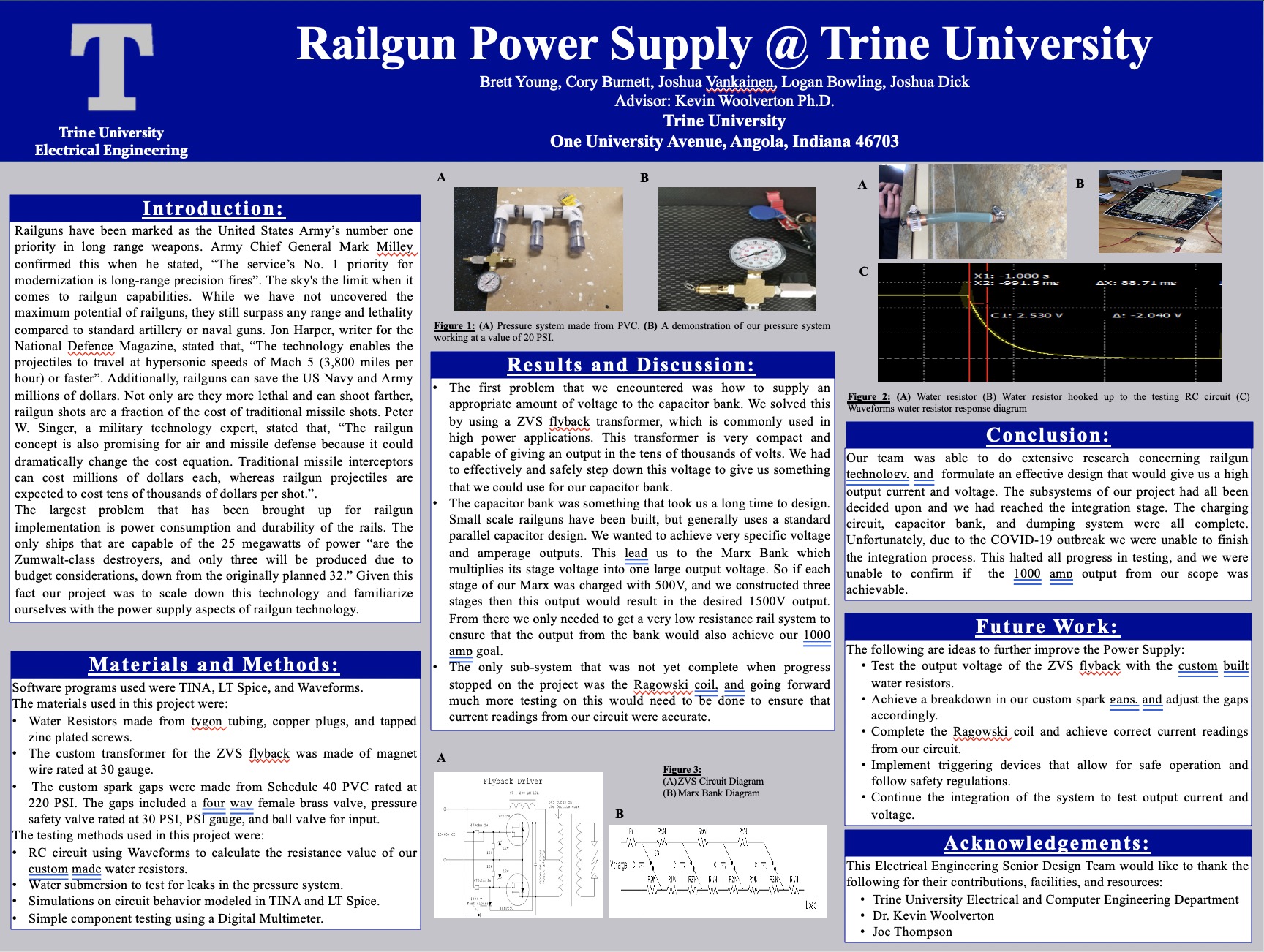
Railguns have been marked as the United States Army's number one priority in long range weapons. Army Chief General Mark Milley confirmed this when he stated, "The service's No. 1 priority for modernization is long-range precision fires." The sky's the limit when it comes to railgun capabilities. While we have not uncovered the maximum potential of railguns, they still surpass any range and lethality compared to standard artillery or naval guns. Jon Harper, writer for the National Defense Magazine, stated that, "The technology enables the projectiles to travel at hypersonic speeds of Mach 5 (3,800 miles per hour) or faster." Additionally, railguns can save the U.S. Navy and Army millions of dollars. Not only are they more lethal and can shoot farther, railgun shots are a fraction of the cost of traditional missile shots. Peter W. Singer, a military technology expert, stated that, "The railgun concept is also promising for air and missile defense because it could dramatically change the cost equation. Traditional missile interceptors can cost millions of dollars each, whereas railgun projectiles are expected to cost tens of thousands of dollars per shot." The largest problem that has been brought up for railgun implementation is power consumption and durability of the rails. The only ships that are capable for the 25 megawatts of power, "are the Zumwalt-class destroyers, and only three will be produced due to budget considerations, down from the originally planned 32." Given this fact, our project was to scale down this technology and familiarize ourselves with the power supply aspects of railgun technology.
Members: Brett Young, Cory Burnett, Joshua Vankainen, Logan Bowling and Joshua Dick
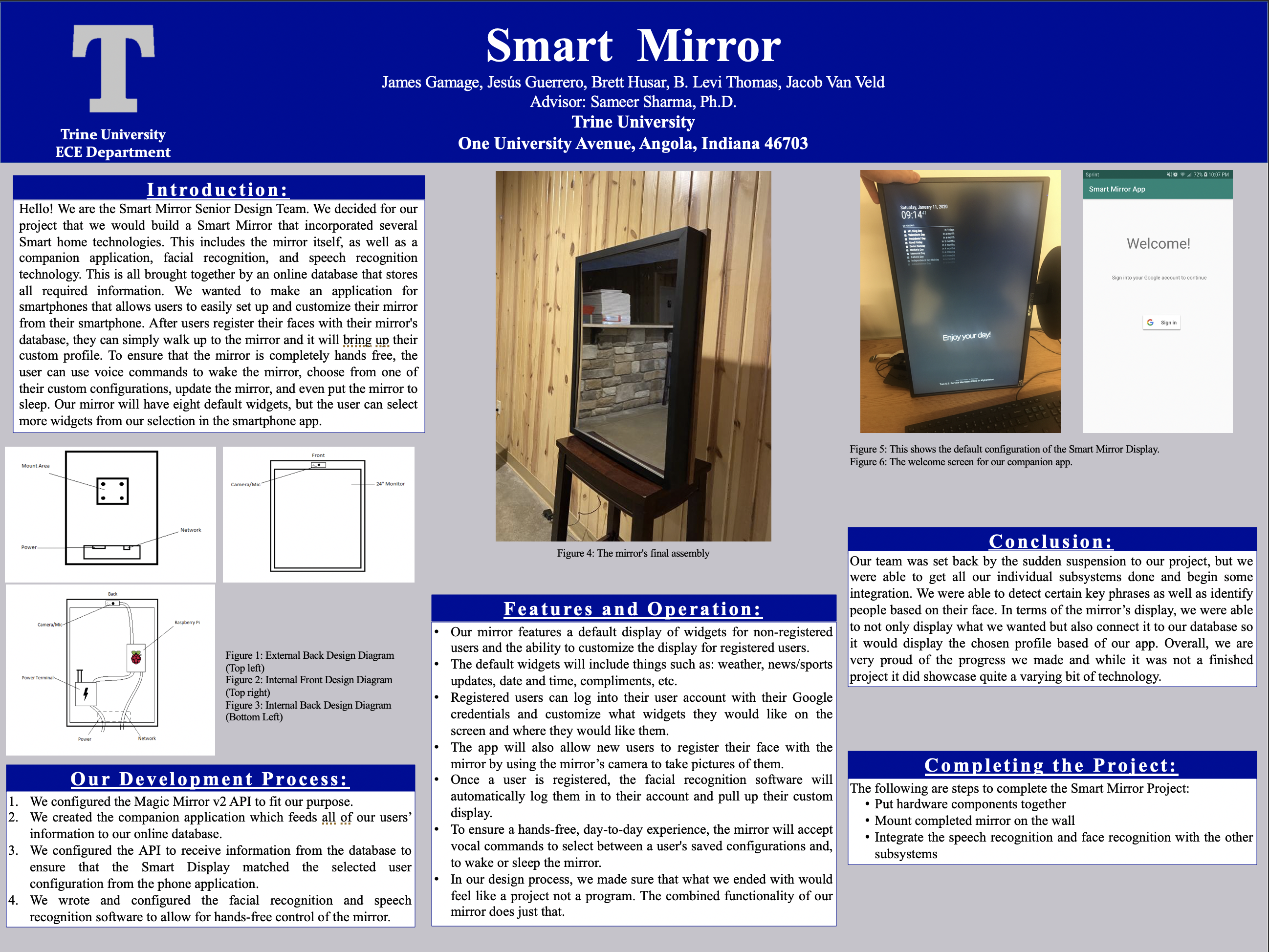
We decided for our project that we would build a Smart Mirror that incorporated several Smart home technologies. This includes the mirror itself, as well as a companion application, facial recognition and speech recognition technology. This is all brought together by an online database that stores all required information. We wanted to make an application for smartphones that allows users to easily set up and customize their mirror form their smartphone. After users register their faces with their mirror's database, they can simply walk up to the mirror and it will bring up their custom profile. To ensure that the mirror is completely hands free, the user can use voice commands to wake the mirror, and even put the mirror to sleep. Our mirror will have eight default widgets, but the user can select more widgets from our selection in the smartphone app.
Members: James Gamage, Jesús Guerrero, Brett Husar, B. Levi Thomas and Jacob Van Veld
Wade Department of Mechanical and Aerospace Engineering
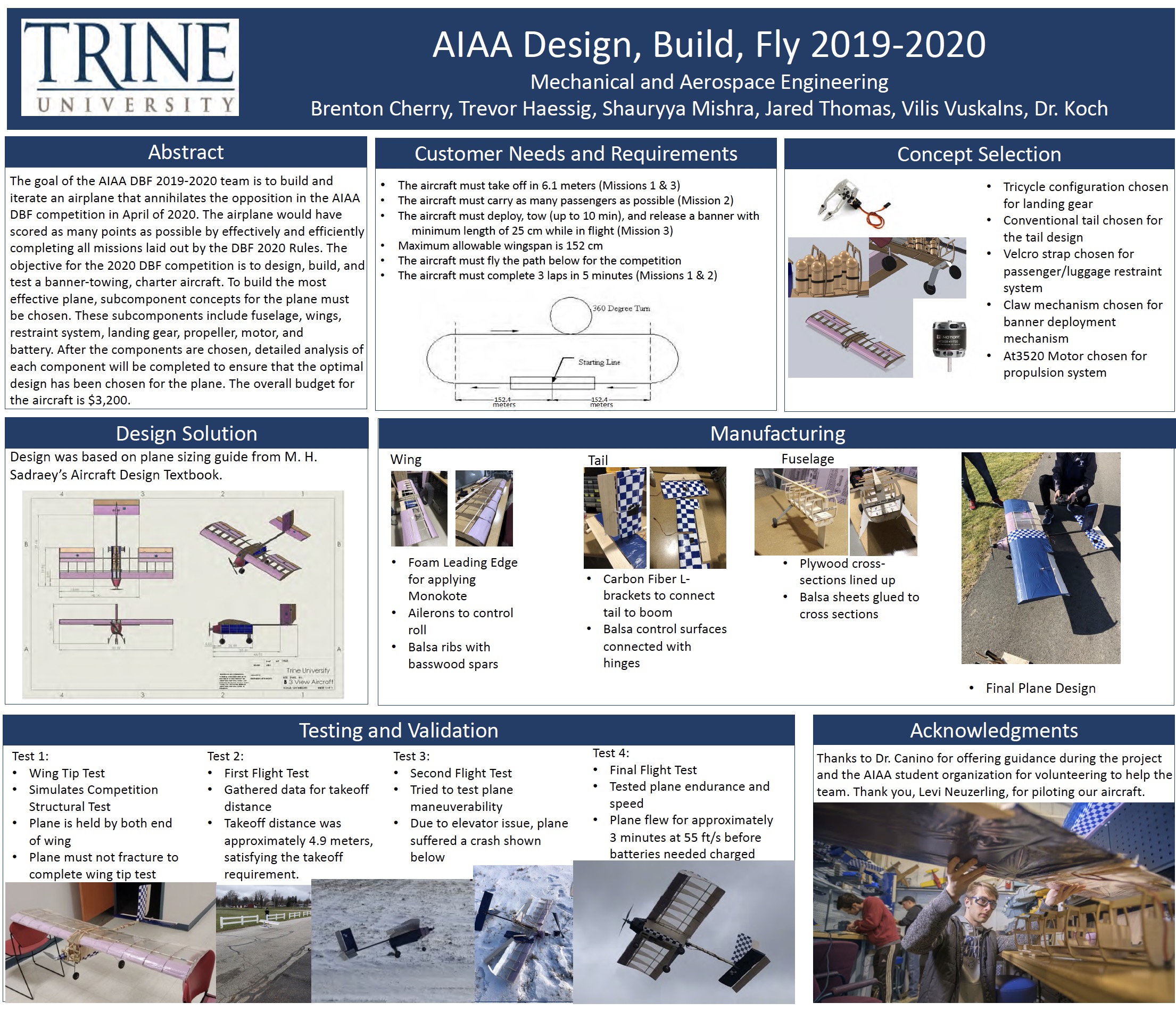
The goal of the AIAA DBF 2019-2020 team is to build and iterate an airplane that annihilates the opposition in the AIAA DBF competition in April of 2020. The airplane would have scored as many points as possible by effectively and efficiently completing all missions laid out by the DBF 2020 Rules. The objective for the 2020 DBF competition is to design, build and test a banner-towing, charter aircraft. To build the most effective plane, subcomponent concepts for the plane must be chosen. These subcomponents include fuselage, wings, restraint system, landing gear, propeller, motor and battery. After the components are chosen, detailed analysis of each component will be completed to ensure that the optimal design has been chosen for the plane.
Members: Brenton Cherry, Trevor Haessig, Shauryya Mishra, Jared Thomas and Vilis Vuskalns
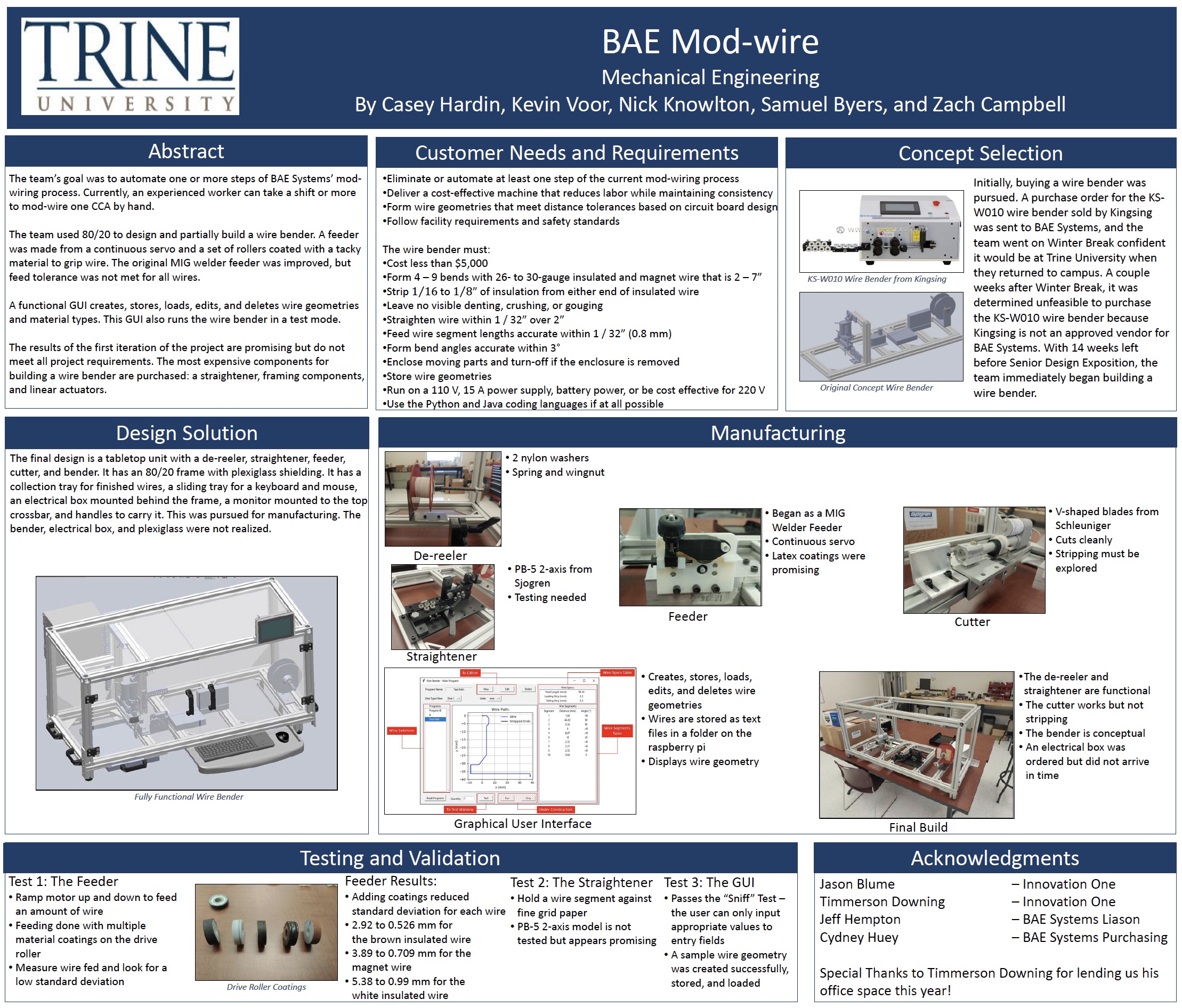
The team's goal was to automate one or more steps of BAE Systems' mod-wiring process. Currently, an experienced worker can take a shift or more to mod-wire one CCA by hand. The team used 80/20 to design and partially build a wire bender. A feeder was made from a continuous servo and a set of rollers coated with a tacky material to grip wire. The original MIG welder feeder was improved, but feed tolerance was not met for all wires. A functional GUI creates, stores, loads, edits and deletes wire geometries and material types. This GUI also runs the wire bender in a test mode. The results of the first iteration of the project are promising but do not meet all project requirements. The most expensive components for building a wire bender are purchased: a straightener, framing components and linear actuators.
Members: Casey Hardin, Kevin Voor, Nick Knowlton, Samuel Byers and Zach Campbell
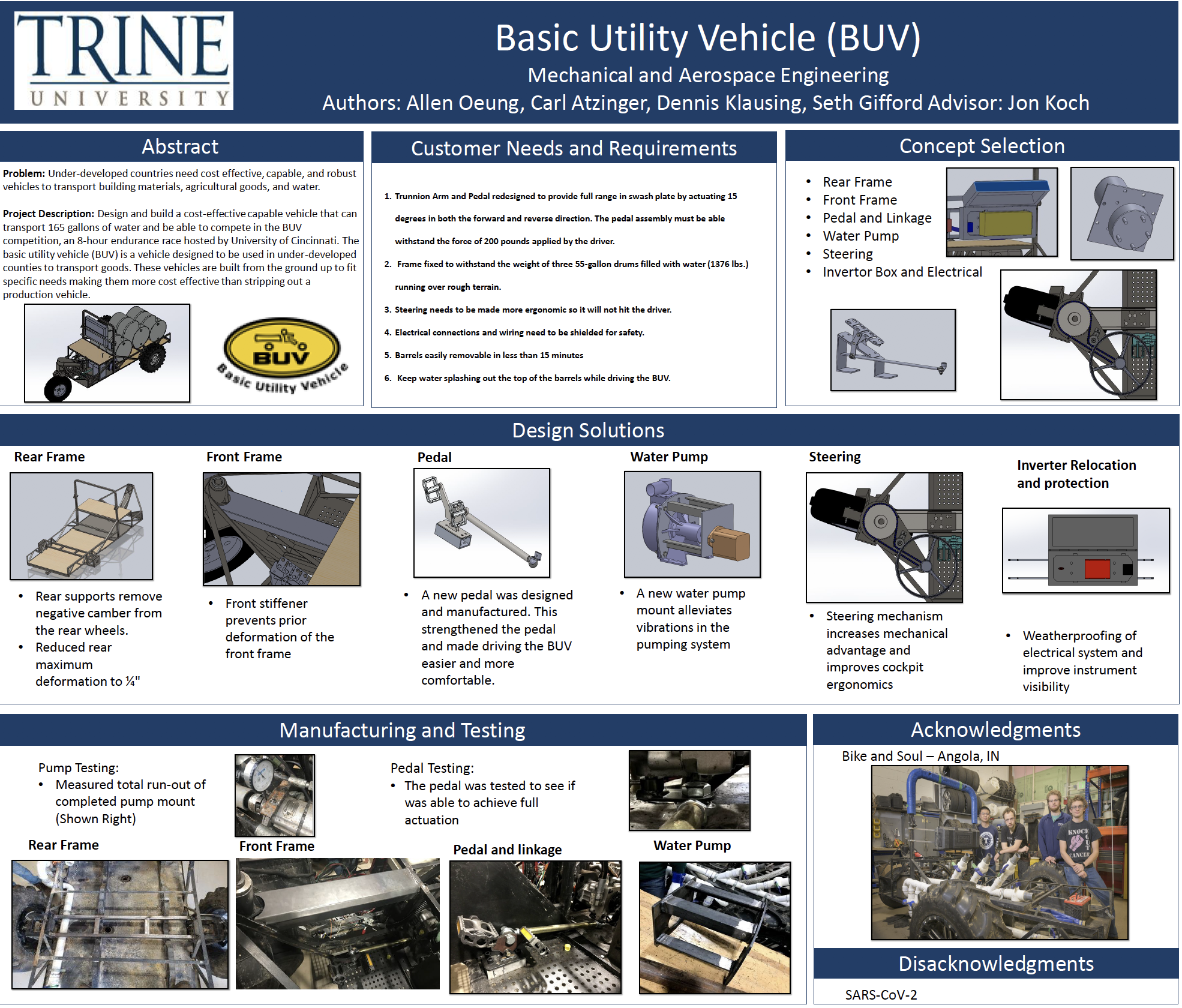
Under-developed countries need cost-effective, capable and robust vehicles to transport building materials, agricultural goods and water. The senior design team was tasked with designing and building a cost-effective, capable vehicle that can transport 165 gallons of water and be able to compete in the BUV competition, an eight-hour endurance race. The basic utility vehicle (BUV) is a vehicle designed to be used in under-developed countries to transport goods. These vehicles are built from the ground up to fit specific needs, making them more cost effective than stripping out a production vehicle.
Members: Allen Oeung, Carl Atzinger, Dennis Klausing and Seth Gifford
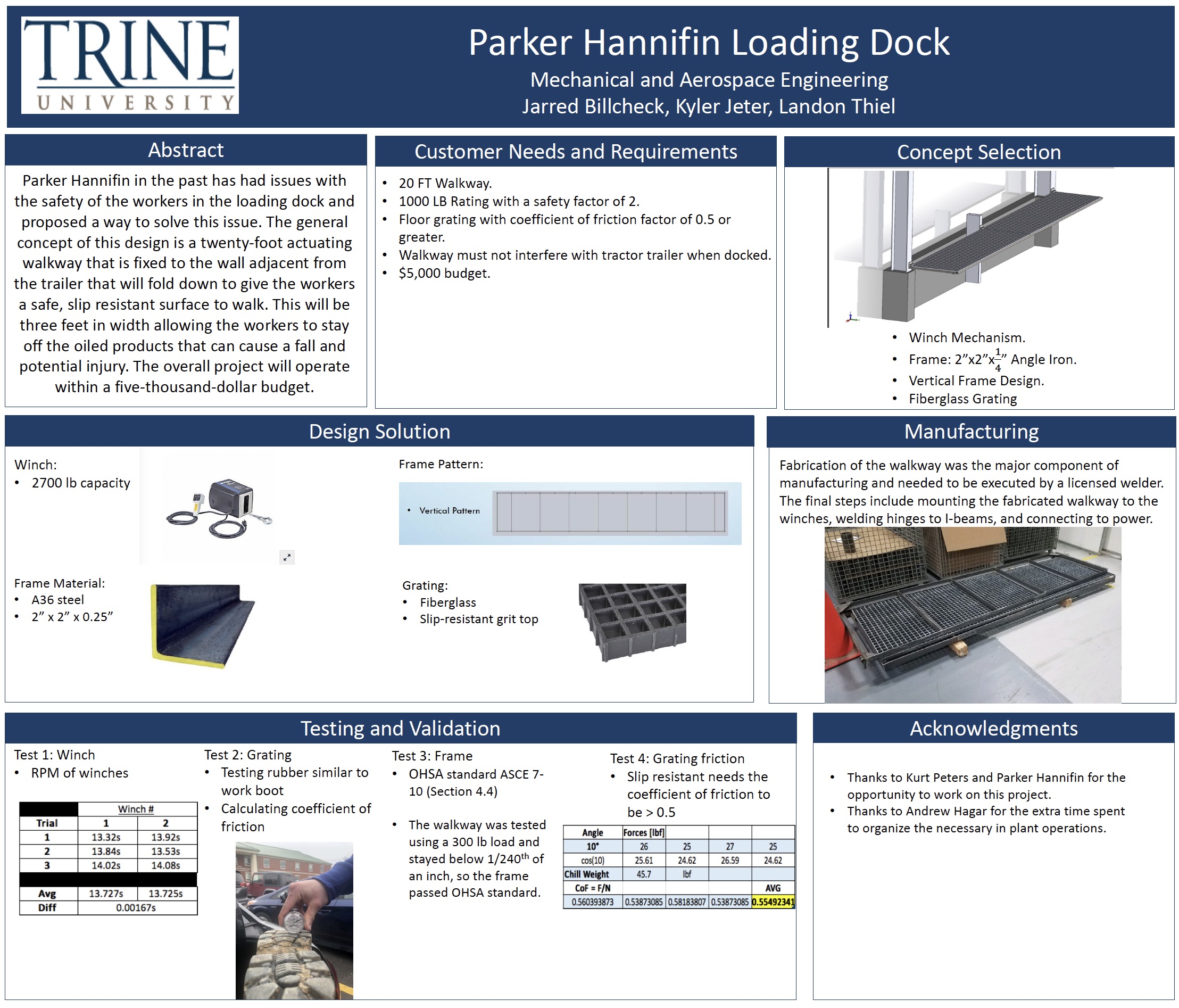
Parker Hannifin, in the past, has had issues with the safety of the workers in the loading dock and proposed a way to solve this issue. The general concept of this design is a 20-foot actuating walkway that is fixed to the wall adjacent from the trailer that will fold down to give the workers a safe, slip resistant surface to walk. This will be 3 feet in width, allowing the workers to stay off the oiled products that can cause a fall and potential injury.
Members: Jarred Billcheck, Kyler Jeter and Landon Thiel
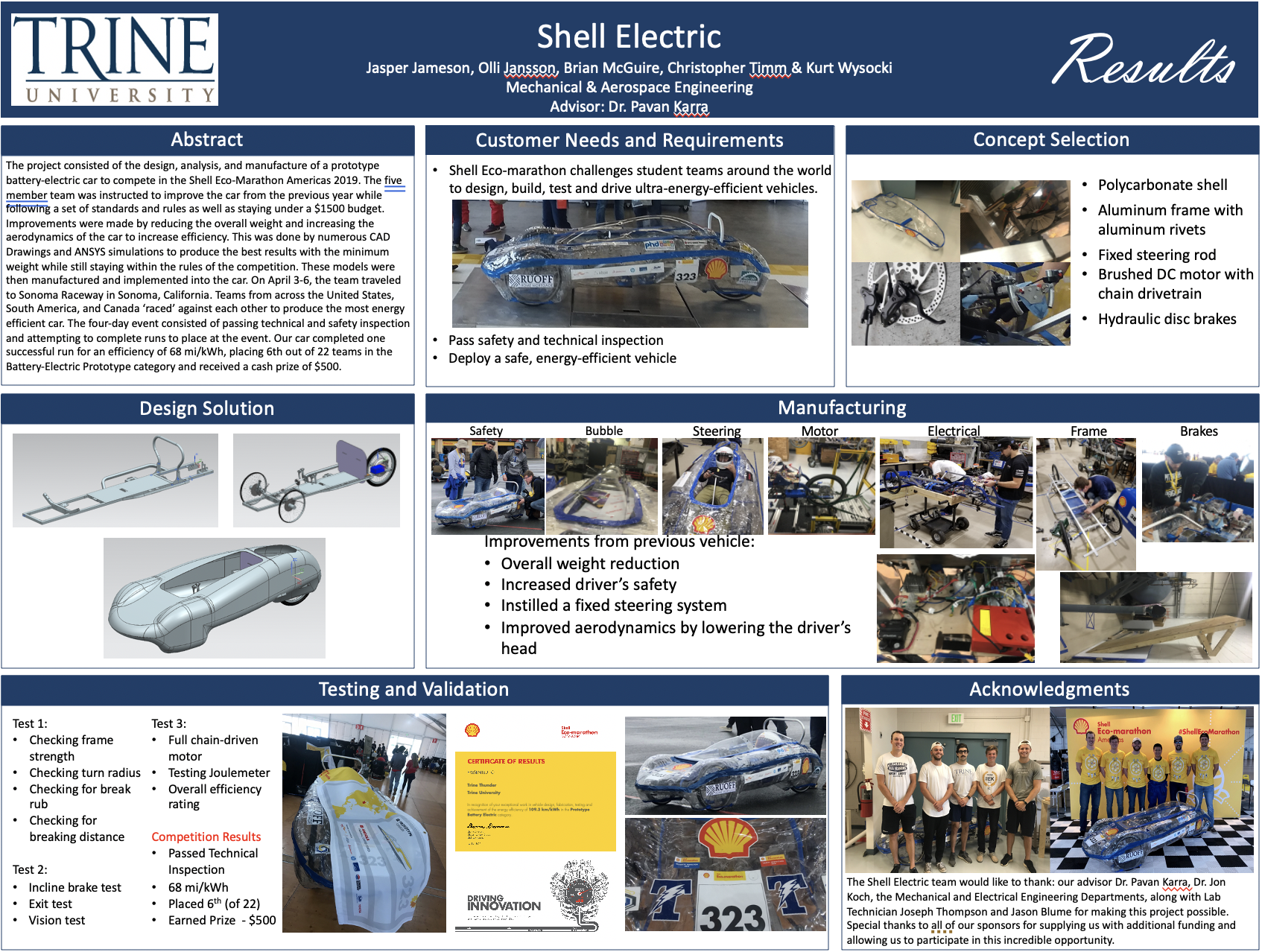
The project consisted of the design, analysis and manufacture of a prototype battery-electric car to compete in the Shell Eco-marathon Americas 2019. The five-member team was instructed to improve the car from the previous year while following a set of standards and rules as well as staying under a $1,500 budget. Improvements were made by reducing the overall weight and increasing the aerodynamics of the car to increase efficiency. This was done by numerous CAD Drawings and ANSYS simulations to produce the best results with the minimum weight while still staying within the rules of the competition. These models were then manufactured and implemented into the car. On April 3-6, the team traveled to Sonoma Raceway in Sonoma, California. Teams from across the United States, South America and Canada "raced" against each other to produce the most energy-efficient car. The four-day event consisted of passing technical and safety inspections and attempting to complete runs to place at the event. Our car completed one successful run for an efficiency of 68 mi/kWh, placing sixth out of 22 teams in the Battery-Electric Prototype category and received a cash prize.
Members: Jasper Jameson, Olli Jansson, Brian McGuire, Christopher Timm and Jurt Wysocki
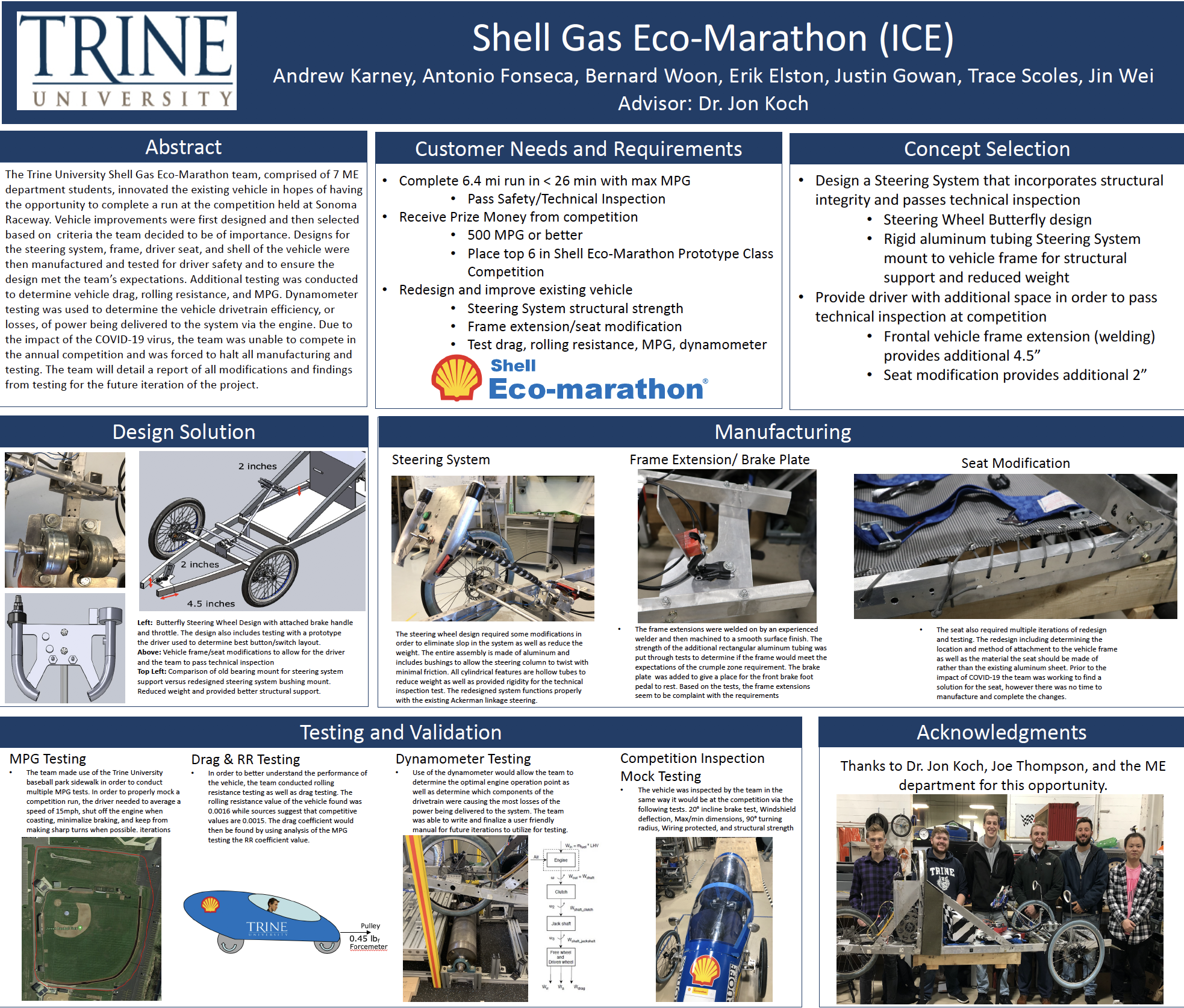
The Trine University Shell Gas Eco-marathon team, comprised of seven ME department students, innovated the existing vehicle in hopes of having the opportunity to complete a run at the competition held at Sonoma Raceway. Vehicle improvements were first designed and then selected based on criteria the team decided to be of importance. Designs for the steering system, frame, driver's seat and shell of the vehicle were then manufactured and tested for driver safety and to ensure the design met the team's expectations. Additional testing was conducted to determine vehicle draft, rolling resistance and MPG. Dynamometer testing was used to determine the vehicle drivetrain efficiency, or losses, of power being delivered to the system via the engine. Due to the impact of the Covid-19 virus, the team was unable to compete in the annual competition and was forced to halt all manufacturing and testing. The team will detail a report of all modifications and findings from testing for the future iteration of the project.
Members: Andrew Karney, Antonio Fonseca, Bernard Woon, Erik Elston, Justin Gowan, Trace Scoles and Jin Wei
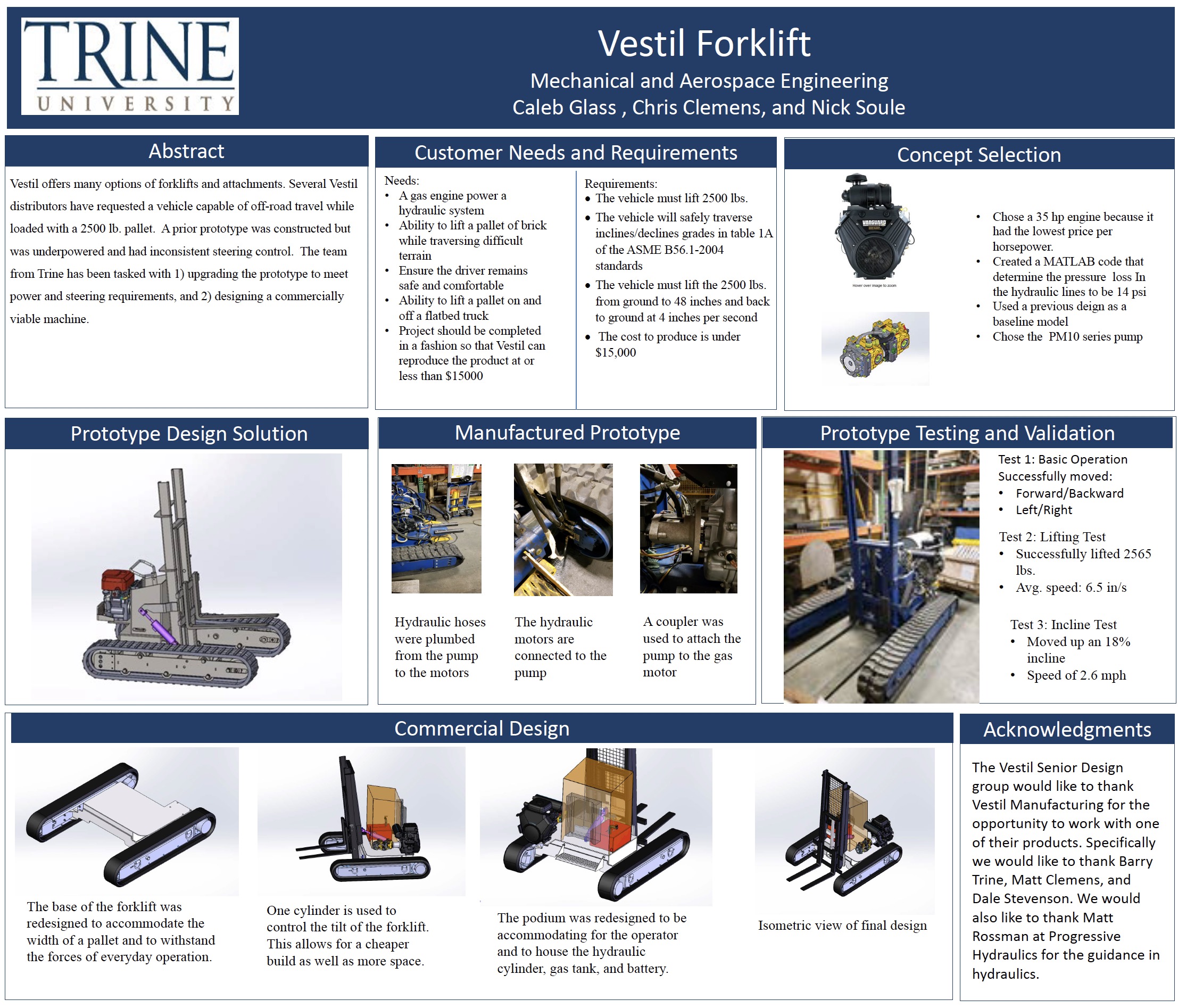
Vestil offers many options of forklifts and attachments. Several Vestil distributors have requested a vehicle capable of off-road travel while loaded with a 2,500 lb. pallet. A prior prototype was constructed but was underpowered and had inconsistent steering control. The team from Trine has been tasked with upgrading the prototype to meet power and steering requirements, and designing a commercially viable machine.
Members: Caleb Glass, Chris Clemens and Nick Soule